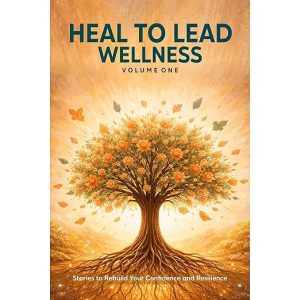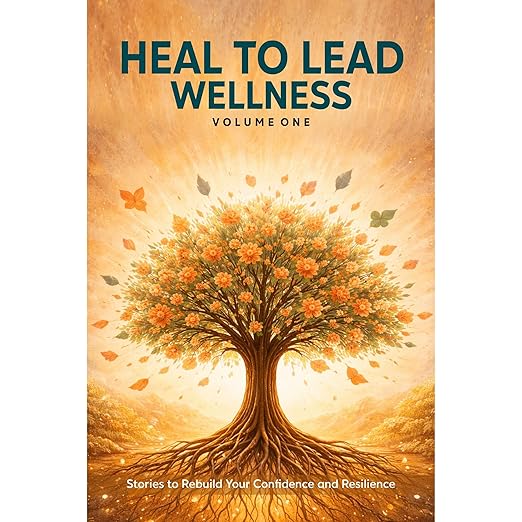
Jennifer Grace and the nineteen co-contributors behind the audiobook Heal to Lead Wellness: Stories to Rebuild Your Confidence and Resilience make a collective case that has rarely felt more necessary: the personal cost of ignoring your own health never stays personal. This is not a leadership manual that tells you to push through. It is, instead, a collection of voices that demonstrate, through raw first-person testimony, what it looks like when leaders finally stop running on fumes and start making decisions from a place of actual wholeness. The verdict arrives before the first chapter ends: this kind of honesty has been missing from the business and wellness space for a very long time.
The stories span a striking range of experience. Hay House author Jennifer Grace contributes her own chapter alongside corporate executives, holistic practitioners, a woman navigating 9/11-related autoimmune recovery, others working through breast cancer and perimenopause, and contributors who address nervous system dysregulation, Ayurveda, and even the reframing of addiction. What ties them together is not genre or industry but the specific moment each author chose transparency over performance. One reader noted that the book hooked her immediately through the transparency and authenticity of the women writing it, and that is exactly right. Another listener highlighted the chapter by Jenny Lang specifically, calling out the wisdom passed on through vulnerability. These are not abstract leadership principles delivered from a podium. These are people who were broken, rebuilt themselves, and are now articulating what that process actually required.
Collections like this live or die by the quality of individual voices, and Heal to Lead Wellness largely succeeds because the contributors do not retreat into abstraction. The chapter described by one listener as "Panic to Purpose" draws in part on a mother's experience with her son's health challenges, and the emotional specificity is what elevates it beyond motivational-speak. The book is organized into five thematic sections: the wisdom of nature, body intelligence, the science of regulation, conscious living, and holistic leadership. That structure gives the listener clear entry points while leaving each story room to breathe on its own terms.
Where anthology collections sometimes falter is tonal inconsistency, and there are moments here where the shift from one contributor's register to another is noticeable. Some chapters read as polished professional narrative; others feel closer to personal journal. For many listeners, that range will be a feature, not a flaw, because it mirrors the actual diversity of experience the book is trying to represent. The section on conscious living, which addresses diet culture, addiction reframing, and purpose through service and motherhood, is particularly varied in tone, and that variation gives it texture that a more uniform book would sacrifice. The five-hour-and-thirty-minute runtime makes it a manageable listen across a few sessions without losing the cumulative emotional weight.
Virtual Voice Can't Color These Words With Warmth
The audiobook is narrated by Virtual Voice, Audible's AI narration system, which means the delivery is clean and intelligible but lacks the warmth that a human narrator would bring to material this emotionally charged. For a book built on vulnerability, that gap is real. The writing carries the weight regardless, and for listeners who are comfortable with AI narration, nothing here will obstruct the content. But it is worth knowing going in that the intimacy of these stories relies entirely on the words themselves rather than a narrator's voice coloring them with lived humanity.
Worth noting separately: 100 percent of net proceeds from this book are donated to BRA, Breast Cancer Recovery in Action, a Nashville-based organization supporting survivors through physical and emotional recovery. That context is not decoration. It anchors what might otherwise feel like a self-help anthology to something tangible and collectively meaningful. For listeners who weight the social dimension of what they spend money on, this is one of the clearer examples in the leadership wellness space of a book whose commercial existence directly funds something concrete.
Some Chapters Instruct, Others Only Offer Invitation
Listeners who come to this book expecting uniform polish may find the anthology format slightly uneven, as each contributor brings a different level of writing craft. The book works best when you treat it less like a continuous argument and more like a set of separate conversations at a gathering where everyone has survived something. The chapter on perimenopause and hormonal leadership, and the ones addressing nervous system regulation and Ayurveda, are particularly substantive for listeners who want practical frameworks alongside personal narrative. The rewilding and herbal medicine sections are shorter and more impressionistic, functioning more as invitation than instruction.
Pay attention to how the book frames setbacks as catalysts rather than detours. That reframing, repeated across multiple contributors in different industries and with genuinely different kinds of setbacks, becomes persuasive through sheer accumulation. The holistic leadership section at the end of the book synthesizes the individual stories into guidance for navigating high-stakes environments with well-being as the foundation rather than an afterthought. It is one of the stronger closing movements in a business wellness anthology, precisely because the stories that precede it make the guidance feel earned rather than asserted.
Mid-Career Burnout Is the Book's Real Target
This audiobook will resonate most with mid-career professionals who have started to notice the physical and psychological cost of sustained high-performance without recovery. If you work in leadership, health, or wellness and are looking for personal narrative alongside frameworks rather than a conventional business book, this delivers on that combination. Listeners who want a single authoritative voice with a consistent argument from start to finish may find the multi-contributor format harder to settle into. The AI narration is also something to weigh against your own tolerance for synthesized voice in emotionally weighted material. But for anyone who has quietly wondered whether the burnout they are carrying is something that can be transformed into something useful, there are specific stories here that speak to that question with unusual directness and without the performance of having already figured everything out.
Key Details
- Read by: Virtual Voice AI narration keeps the delivery clear and steady but adds no warmth to stories that earn warmth; the writing compensates.
- At its heart: Burnout recovery, embodied leadership, women's health and hormonal wellness
- Vibe: Vulnerable and galvanizing
- Short version: A raw anthology for leaders who want honesty about the body and mind behind the title, not just better productivity habits.