In Brief
- Themes: Cold case, marriage under strain, small-town secrets, inherited reputation.
- Mood: Tense, wintry, claustrophobic.
- Verdict: A clean standalone entry point for the author, sold on a page that names nobody as its reader.
Mountain towns in crime fiction always know more than they let on, and Shereford, New Hampshire runs true to type in this audiobook. Raquel and Theo Collins married inside a few months, met a terrible tragedy soon afterward, and have arrived in the mountains to start again inside a derelict lodge where a family of six vanished thirty years ago, leaving bloody footprints and nothing else behind. Lisa Gardner sets twelve hours running on that arrangement, with a newly appointed police chief across town who is also starting over.
Marriage Secrets Stack on a Cold Case
Two mysteries get stacked on top of each other, and the stacking is the craft here. One is the marriage: a renowned interior designer and a brash financial wizard who moved from meeting to wedding in a matter of months, each carrying secrets, now painfully aware of the distance between them. The other is the Dixon place, once a crown jewel of the mountains, where both parents and four children disappeared on an August night three decades back. Each secret makes the other harder to look at directly, which is a more economical design than running a cold case alongside a marriage and hoping they rhyme.
Amanda Grady supplies the third leg. Newly appointed chief in a village where her father held the same job, she has an inheritance of her own to reckon with, and the setup makes her professional judgment about the newcomers inseparable from her standing among the neighbors. Small-town policing stories usually give the chief either authority or outsider status; giving Amanda both, through a father's reputation she did not choose, is the sort of detail that keeps twelve hours from settling into routine.
Twelve Hours with No Series Homework
Standalone status is worth more than the marketing gives it credit for. The description flags it in the first line, and for anyone who has ever opened a thriller to discover it was book nine of something, twelve self-contained hours with no homework attached is a real selling point. Grand Central published it, the byline carries the weight, and nothing on the page asks you to have read anything else first.
Village Warns Newcomers Through Its Own Title
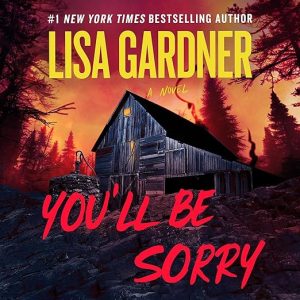
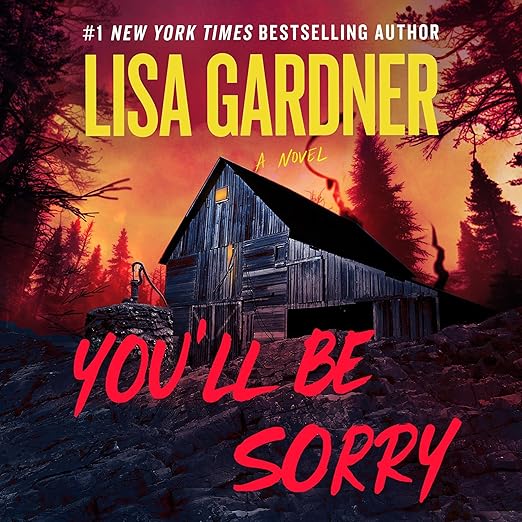
Threat is built into the title and the copy uses it structurally, closing the description on the same three words the cover carries. That is a neat piece of construction, because it reframes the phrase from something a character says into something the village itself says to newcomers. Domestic suspense welded to a thirty-year-old disappearance is a familiar combination, and the specific weld here, with residents who believe they know everything about their neighbors and are wrong, is the version that tends to work.
Setting carries an unusual share of the load, and the copy shifts register to let it. The lodge is introduced in real-estate language, perched on a ledge with stunning views, once the crown jewel of the mountains, and then the description turns and says the derelict place is stirring to life again with its latest occupants inside. That is a gothic sentence sitting in the middle of a procedural blurb, and it signals which tradition the book intends to draw on when the investigation slows down. Twelve hours gives a house that much time to become a character.
Nobody Credited to Read Three Points of View
Nobody is credited with reading it. Grand Central published this on August 4, 2026 and the narrator field on the page sits empty, which is unusual for a major house and genuinely costly here, because the book runs at least three separate points of view. Whether Raquel, Theo and Amanda are handled by one reader or shared across a cast is the single largest variable in how these twelve hours will feel, and a buyer choosing thrillers by narrator, as a great many do, has nothing to go on.
Publisher copy gives away more than some listeners will want. It hands you the vanishing, the bloody footprints, the tragedy inside the marriage, and the moment a stray dog leads to a skeleton on the property, which in most thrillers would arrive as the end of an early act rather than as a bullet point on the sales page. Anyone who prefers going in cold should read the first two paragraphs of the copy and stop there.
Smaller defects sit on the listing as well. Twelve hours appears in the duration field with no minutes attached, an estimate rather than a measurement, and the copy fumbles a possessive when it refers to the Dixon's family lodge for a household of six. Nine days on sale means no ratings and no responses have arrived yet, which is entirely normal for a book this new but does mean early buyers are working from the byline and the blurb alone.
Newcomers Get an Unusually Clean Entry Point
Domestic suspense readers who want the marriage to be as unstable as the crime scene are the obvious audience, along with anyone who reads cold cases for the archaeology of a town rather than the forensics. The New Hampshire setting, a lodge on a ledge with stunning views gone to ruin, gives the atmosphere somewhere specific to live, and twelve hours is the standard commitment for this kind of book rather than an unusual one.
First-time readers of this author get an unusually clean entry point, since a standalone asks nothing of you and the premise explains itself inside ten minutes. Listeners who follow long-running investigators may find a self-contained story less satisfying for the same reason, because nobody here arrives with a history you already care about, and the emotional shorthand a series builds up over years has to be earned from scratch inside a single book.
Skip it if you have no patience for the small-town-with-secrets template, however well executed, or if unresolved endings in this subgenre have burned you before. Check the credits before you commit, because a thriller with three viewpoints and no named reader is a purchase made partly blind, and on a book this new the page cannot yet tell you whether anyone else minded.
Good to Know
Why does the You'll Be Sorry audiobook page list no narrator?
The listing gives no reason. Grand Central Publishing released the twelve-hour edition on August 4, 2026 and the reader credit never appeared, which weighs heavier on a book carrying three points of view than it would on a single-voice story. Check the credits at the retailer before buying.
Is You'll Be Sorry part of a series?
No. The description calls it a standalone in its opening line and the series fields on the record are empty, so nothing has to be read first. That makes it a straightforward entry point for listeners who have never tried this author, and a complete story in twelve hours.
How much of the plot does the description reveal?
A fair amount. The publisher copy discloses the thirty-year-old disappearance, the bloody footprints, the tragedy behind the marriage and the discovery of a skeleton on the property. Listeners who like entering a thriller cold should stop reading after the paragraph introducing Raquel and Theo.
Is this audiobook a good starting point for a new listener?
Yes, largely because of the standalone structure. The premise establishes itself quickly, the cast stays small, and no earlier volume supplies context you would otherwise miss. Anyone who prefers recurring investigators may find the emotional groundwork lighter than a long-running series provides.