At a Glance
- Narrator: Gabriel Danes voices both Xel's practiced seductiveness and Cole's guarded grief with clear, unhurried delivery.
- Subjects: Captivity to genuine partnership, found family, trust after trauma
- Tone: Charged and tender in equal measure
- Bottom line: A satisfying sci-fi romance entry for readers already invested in the Rogue Bonds world.
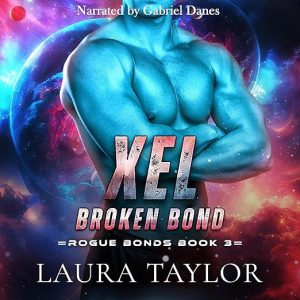
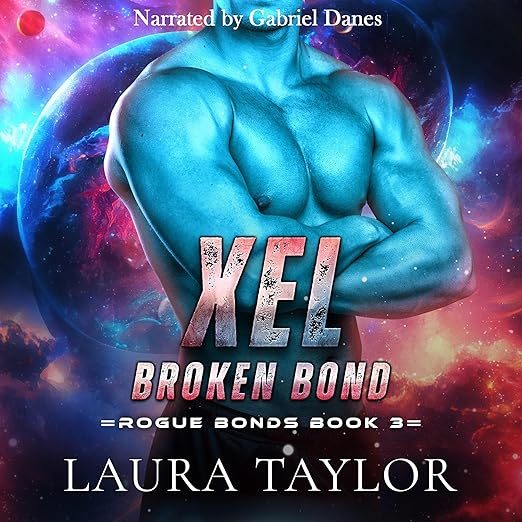
Xel has spent three years learning to anticipate a master's every want before it's spoken, a skill built entirely around erasing his own, and Laura Taylor's real craft challenge in this audiobook is making that erasure feel like a wound rather than a kink footnote once Xel's master dies and he's shipped off to a stranger's animal sanctuary. Cole, grieving a family tragedy from five years back and more comfortable with injured animals than people, has no idea what to do with a supposed slave who keeps behaving like an actual person underneath him. Xel: Broken Bond is book three of the Rogue Bonds series, though Taylor writes it to work as a standalone, and narrator Gabriel Danes takes on the job of voicing both Xel's practiced seductiveness and the uncertainty underneath it.
Xel's Grief for a Master He Served
One reviewer makes a sharp point about what this entry adds to the series: for the first time, the books show how someone genetically engineered and trained from childhood for a life of servitude actually reacts when the master he'd imprinted on dies suddenly. That's a genuinely different emotional starting point than a typical captivity romance, since Xel isn't escaping a villain, he's grieving a complicated attachment while trying to figure out who he is without it.
Cole's animal sanctuary work becomes the emotional architecture of the whole book once you notice the parallel: he already knows how to care for lost and abandoned creatures, and the story's real question is whether he can extend that same patience to a person rather than a rescued animal, and whether Xel can accept being cared for rather than simply obeyed.
Taylor's choice to name Xel's species 'dimari' rather than leaving the genetic engineering vague creates useful distance: this reads as science fiction worldbuilding with its own internal rules about breeding and training for servitude, not a thin allegory laid directly over real-world slavery. That specificity lets Taylor explore consent and agency as a science fiction problem with its own logic rather than borrowing weight from history it isn't actually engaging with directly.
The hotel manager who wants to keep Xel rather than send him to Cole, a small detail from one reviewer's summary, hints at a found-family thread extending beyond the central couple: other people in Xel's orbit recognize something worth caring for in him too, which reinforces that his value was never really about his training as a companion in the first place.
The series name itself, Rogue Bonds, does double duty: 'rogue' signals characters operating outside expected social structures, whether as a transferred dimari or as a grieving recluse avoiding normal human connection, while 'bonds' points toward the found-family and romantic attachments that eventually form despite that starting isolation. The tension between those two words is essentially the series' whole emotional engine in miniature.
Handed to a New Owner Instead
One reviewer, who says she's picky about sci-fi and alien romance specifically and rarely leaves reviews, calls this entry well written, thoughtful, and engaging, with enough plot and conflict to hold real interest without ever losing its easy readability. That's meaningful praise coming from someone who's clearly read widely enough in the genre to know what sets a strong entry apart from a forgettable one.
The found-family-under-threat structure, a wounded outsider slowly earning trust from someone equally wounded, is the genre's core emotional engine, and this book leans into it fully rather than treating the science fiction setting as pure decoration. The genetic engineering and hotel-manager plot mechanics matter less than the two central people slowly recognizing each other.
This entry sits within a much broader science fiction romance tradition built around captive-companion premises, a lineage that includes some of the genre's most prolific ongoing series. What distinguishes Xel's specific version is the inheritance mechanic: he doesn't escape captivity, he's handed to a new owner as property, which forces the found-family arc to happen entirely within Cole's home rather than through a rescue or escape narrative.
Reviewer Lisa P specifically praises the book as 'unique, action-packed, exciting,' a reminder that this isn't purely an interior character study; real plot mechanics, the master's sudden death, the transfer of ownership, the adjustment to a new household, keep the story moving forward rather than settling into static romantic tension for its full runtime.
Power Imbalance Gives Way to Mutual Choice
The premise starts from a real power imbalance, an owned companion inherited like property, and listeners sensitive to dubious-consent-adjacent setups should know that going in, even though reviewers consistently describe the arc as ultimately about mutual choice rather than continued control. Taylor doesn't shy away from where the story begins; she just doesn't leave it there.
This is book three, and while it's built to work as a standalone, one reviewer specifically mentions wanting to jump straight into the next entry after finishing, which suggests real momentum builds once you're invested in this particular corner of the series. Newcomers will follow the plot fine, but longtime readers of the earlier Rogue Bonds books will likely get more out of the specific callbacks.
Cole's five years of isolation since his family tragedy is a specific, meaningful detail rather than a vague backstory gesture: it signals a man who has had enough time to fully build a life around avoidance before Xel arrives and disrupts it. That timeline gives his eventual openness real weight, since the book isn't asking readers to believe someone snaps out of years of deliberate withdrawal in a matter of days.
Eleven Hours With an Untested New Narrator
Eleven hours and twenty-one minutes is a fairly typical length for this specific romance subgenre, long enough for the trust-building arc between Xel and Cole to develop gradually rather than rushing the emotional payoff, which several reviewers cite as a genuine strength relative to shorter entries in similar series.
Gabriel Danes is new to this specific catalog's narrator roster, without prior performance data to compare against here, so listeners deciding based on narration quality alone should treat the casting as a reasonable bet based on genre fit rather than a confirmed known quantity.
A rating count of 150 is modest relative to some longer-running romance series, reflecting this specific entry's position as book three in a smaller, more niche corner of the science fiction romance category rather than any quality concern, and the 4.4 average holds up well within that smaller sample.
Rogue Bonds Fans Will Want This Entry
Fans of science fiction romance built around captivity-to-partnership arcs, existing Rogue Bonds readers, and listeners wanting a male/male romance with genuine emotional stakes alongside the heat will find a satisfying entry here.
Skip this one if a master and slave premise, regardless of where the story ultimately goes, isn't something you want to spend eleven hours with, or if you're looking for standalone science fiction without the romance and explicit content built into its foundation.