Before You Press Play
- Read by: Sebastian Brown delivers the gothic tension of 1890s Buffalo with brooding authority, handling Silas's predatory menace and Alina's fierce interiority with equal conviction.
- At its heart: obsession and power, found family under threat, the cost of survival
- Vibe: Dark and intoxicating, laced with dread
- Short version: Readers who loved The Poisoner will find this second installment delivers more of what made the first compelling, though the emotional payoff depends on patience with a slow-building triangle.
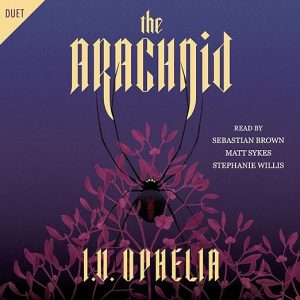
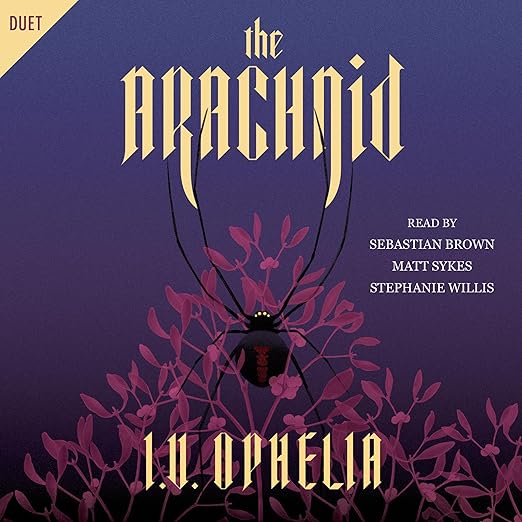
Alina Lis is not a woman who waits to be found. That premise is what makes the audiobook version of The Arachnid, the second installment in I.V. Ophelia's gothic romance Poisoner series, so immediately absorbing. Narrated by Sebastian Brown, this follow-up to The Poisoner picks up two years after Alina's flight from London, dropping listeners into a Buffalo commune where she has built something rare and hard-won among women like herself. Ophelia gives us a protagonist who is no longer running but governing, experimenting, protecting. That shift in agency sets the stage for everything that follows.
The setting matters more than it might initially seem. The 1890s United States is a strange, violent country for someone carrying the secrets Alina carries, and Buffalo in particular carries a gothic weight that Ophelia leans into deliberately. The city is industrial, half-finished, buzzing with an anxious modernity that sits uneasily alongside the creature world operating in its shadows. Brown's narration captures that layered unease beautifully, grounding the supernatural elements in a period atmosphere that never quite lets you feel safe.
Luka Novikov Complicates an Already Crowded Triangle
What Ophelia does well in The Arachnid is refuse easy resolutions. Silas Forbes, the Vipera Alina escaped, has not simply remained bitter and distant. His return is complicated by the fact that his obsession with her has damaged things he built in her absence, and the book is honest about what that kind of fixation costs a person, even an undead one. The introduction of Luka Novikov is the structural gamble of this second book. He is the man who once betrayed Alina, now bound to both her and Silas by wounds and debts that haven't healed. A triangle with this much history between all three points risks becoming crowded, but Ophelia uses the constraint well. Every scene between the three of them carries the weight of prior damage, and Brown voices the distinctions between Silas's cold hunger and Luka's more conflicted presence with enough texture that they never blur into a single antagonist.
The commune storyline, centered on Alina's experiments with the Vipera, is the element that elevates this beyond standard gothic romance. Alina is not simply surviving. She is doing science, in her own dangerous and morally ambiguous way, and the women she leads form a found family that feels genuinely at stake when Silas arrives. That grounding in community is what gives the threat its teeth.
Sebastian Brown Paces Tension Over Action
The audiobook format suits this story particularly well. Ophelia's prose has a quality that reads slowly on the page but moves with real propulsion when voiced, and Brown understands how to pace a chapter that is more about tension than action. The 13 hours and 33 minutes runtime is well-earned rather than padded. There are action sequences, particularly as human and Vipera worlds collide in the second half, but the book's real pleasures are in quieter confrontations, in rooms where everyone knows what everyone else is capable of and no one has decided yet whether to act on it.
The explicit content in The Arachnid is woven into the power dynamics rather than grafted onto them. This is a book about obsession, about the difference between desire and ownership, and the heat reflects that. It is not gratuitous in the sense of being disconnected from character, but listeners who prefer their gothic romance to stay suggestive should know that Ophelia does not shy away from what the genre promises. Brown handles those passages with the same confidence he brings to the horror elements, which makes a difference.
Start With The Poisoner Before This One
New listeners should absolutely start with The Poisoner before picking up this audiobook. Ophelia does not spend significant time re-establishing her world or her character histories, and the emotional stakes of Alina's choices depend on understanding what she left behind in London. For series readers, the payoff of returning to these characters is real, but it is not immediate. The first quarter of the book is deliberately disorienting, reflecting Alina's own fragile equilibrium, and some listeners may find the pacing front-heavy before the plot fully engages.
The three-way dynamic that the book promises takes time to fully assemble. Silas and Luka's arrival does not happen simultaneously, and the slow layering of that situation is intentional but demanding of patience. Readers who found the first book's worldbuilding to be the main draw will find plenty to sustain them in the meantime. Those who came primarily for the romance should expect a slow burn before the more volatile second half catches fire.
Poisonous Obsession Beats Sparkling Vampire Romance
This audiobook belongs squarely in the hands of readers who came to the Poisoner series for its specificity: the period setting, the creature mythology, the morally compromised leads. If you are a fan of gothic romance that takes its horror seriously and its protagonists seriously alongside it, Ophelia's second book delivers. Readers looking for a standalone entry point or a lighter paranormal romance will find the book asks too much prior knowledge and rewards too slowly.
Listeners comfortable with explicit content, dark power dynamics, and a love story that is not particularly interested in being comfortable will find The Arachnid rewarding. If your appetite for vampire fiction runs more toward sparkling romance than poisonous obsession, Ophelia's world is probably not for you. But for those who have been waiting to return to Alina's dangerous, intoxicating orbit, Sebastian Brown's narration makes this a genuinely immersive listen from the first chapter to the last.
Common Questions
Do I need to listen to The Poisoner before starting The Arachnid audiobook?
Yes, firmly. The Arachnid picks up two years after the first book and does not pause to re-establish the world, the character relationships, or the stakes. Jumping in without The Poisoner will leave you missing the emotional weight of almost every scene.
How explicit is The Arachnid audiobook, and how does Sebastian Brown handle those sections?
The explicit content is integral to the story's themes of desire and power, not incidental. Brown narrates those passages with the same composure and authority he brings to the horror sequences, which keeps the balance between seduction and menace consistent throughout.
Is The Arachnid part of a completed series or still ongoing?
The Poisoner series is ongoing. The Arachnid is the second installment, and while it advances the central storylines significantly, it does not resolve the Silas and Luka dynamic. Be prepared for an open ending that sets up the next volume.
Does the audiobook include the same Vipera creature mythology as the first book?
Yes, and it expands on it. Alina's commune experiments on the Vipera are a significant thread, so the creature lore gets more depth here than in the first book. Brown handles the terminology and mythology naturally, without it feeling like a glossary recitation.