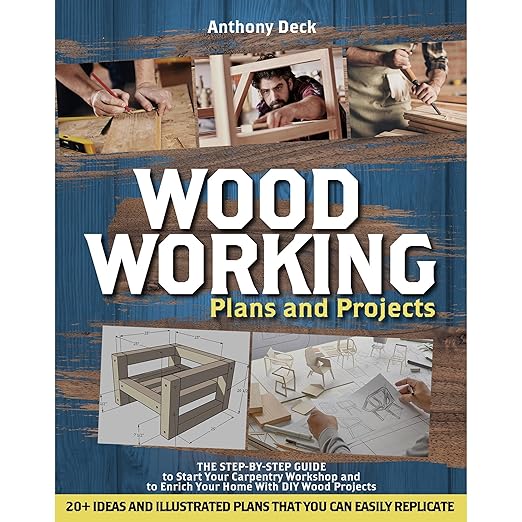
Anthony Deck's WOODWORKING PLANS AND PROJECTS, narrated by Virtual Voice in three hours and one minute, presents itself as a step-by-step guide to twenty-one furniture projects with 230-plus illustrated instructions. That description is doing significant work: the illustrations and 3D plans with measurements are the book's primary deliverable, and they do not translate to audio. This audiobook version of what is explicitly a visual reference creates a specific problem that is worth addressing directly. Listeners considering this title should understand that the format mismatch is real, and that the reviews - which range from five stars to one star with no middle ground - largely reflect disagreement about whether the text descriptions survive the loss of the visual component.
The 230 Illustrations That Don't Survive Audio
The disconnect between what the product promises and what the audio format can deliver is the central issue here. Deck's book was designed around its illustrated instructions: the synopsis specifies "230+ illustrated instructions in 3D with all the measures" as the lead value proposition. In audio, those measurements and instructions are read aloud without the visual context that makes them usable at a workbench. A listener hearing dimensions for a shelf bracket without the accompanying diagram is receiving partial information, and one reviewer makes this precise objection with some force, noting that the project instructions essentially amount to "use tool to cut all wood" without the guidance that the illustrations were supposed to provide. That critique is specific to the format, not the book itself.
The five-star reviewers occupy a different use case. One reader who completed a project from the book describes it as "a great book for those just starting out in their woodworking journey" and plans to build several more projects from it. That positive experience almost certainly involves consulting the physical or Kindle version alongside the audio, or using the audio primarily for the project descriptions and motivational framing while working from print plans. Deck's twenty-one projects cover a range of difficulties, and the selection - furniture pieces designed for living spaces - is genuinely practical rather than decorative. For a listener who approaches this as supplementary material to a visual reference rather than as a standalone guide, the audio has real value in the introductory framing and project overviews.
Virtual Voice Narration Fits This Three-Hour Guide
The Virtual Voice narration reads the text cleanly and at a comprehensible pace. For a reference title, that functional delivery is probably sufficient; you are not expecting emotional performance or nuanced characterization from a woodworking guide. The three-hour runtime makes this a short investment, and the project overview sections - which describe the category of furniture, the skill level required, and the general approach - are comprehensible in audio format. If you are evaluating which projects to attempt before purchasing the illustrated print edition, listening to the audio to understand the scope and range of the twenty-one projects is a legitimate use case.
The book's framing around stress relief and the psychological benefits of craft work is earnest and not wrong. Deck makes the case that scheduled creative time reduces tension and builds self-confidence, and while this is not new information, it contextualizes the project catalog as part of a broader wellness argument. That framing translates to audio reasonably well. The motivational register of those sections is accessible and specific to woodworking as a practice rather than generic self-help language. Listeners who are just entering the craft and want to understand why woodworking is worth taking seriously as a leisure activity will find those sections genuinely useful, even if the technical instructions remain format-limited.
A Rating Split That Signals Format Mismatch
The most important caveat for potential listeners is the format limitation. This audiobook is described on some platforms as a Kindle eBook version; the available editions include Kindle, paperback, and hardcover in both black-and-white and color. The audio version strips the visual component that was central to the original design. Listeners expecting detailed, followable instructions from the audio alone will find the experience frustrating in the way one reviewer describes precisely: project summaries, two photographs referenced but not visible, cut sheets read without species guidance. For practical woodworking instruction, the print editions are clearly the appropriate format.
The rating split in the reviews - sharply positive or sharply negative, very little in between - is informative. It typically signals a product that works well for one use case and poorly for another, rather than a product with consistent moderate performance. Listeners who identify with the one-star use case (wanting a standalone audio guide to actual technique) should look elsewhere. Those who identify with the five-star use case (wanting an accessible, motivating overview of projects to attempt) and are willing to acquire the visual materials separately will get real value from the three-hour runtime.
Reasonable Companion to the Print Edition Only
Listeners who already own the print edition and want to supplement their reading with audio while away from their workbench will find this a reasonable companion. Beginners curious about whether woodworking is an accessible hobby will find the project overviews and motivational framing helpful before committing to more detailed technical resources. Anyone expecting this audiobook to function as a complete guide to building the twenty-one projects described without reference to the illustrations should look for a different title. The Virtual Voice narration is functional but lacks the personality of a skilled human narrator; for a three-hour reference title, it is adequate rather than engaging.
- Read by: Virtual Voice narration is AI-generated and functional but lacks the warmth and craft vocabulary nuance that a human narrator would bring to hands-on instruction; adequate for listening to project descriptions but not ideal for technical guidance.
- At its heart: furniture building for beginners, project-based skill development, home improvement through craft
- Vibe: Variable - the book promises a practical workshop companion but delivers something closer to a project catalogue
- Short version: Listeners who want guided instruction should note that the reviews are split sharply, and the audiobook format limits the illustrated 3D plans that are this title's primary value proposition.
Good to Know
Can I follow the woodworking instructions from this audiobook alone?
Not practically. The book's value proposition centers on 230-plus illustrated 3D plans with measurements, which are visual by nature. Reviewers who found the audio unsatisfying specifically note that the project instructions without illustrations are too sparse to be actionable at a workbench.
Is the Virtual Voice narration in this audiobook adequate for the content?
For a reference title, the AI narration reads the text clearly and at a useful pace. It lacks the warmth of human narration and handles technical terminology without craft vocabulary nuance, but for listening to project descriptions, it is functional.
How many projects does this audiobook describe?
Twenty-one projects across different difficulty levels, from novice-appropriate pieces to more experienced builds. The projects focus on furniture for living spaces rather than outdoor or decorative items.
Should I buy this audiobook if I already have the print edition?
As a supplementary listening companion when away from the print plans, it has moderate value. The project overviews and motivational framing are accessible in audio, and the three-hour runtime makes it a light investment alongside the illustrated edition you would use at the workbench.