At a Glance
- Read by: Eunice Wong brings controlled tension to Vanessa Castro's investigation, sustaining the creeping dread of Wonderland's dark-park setting without overstating it.
- At its heart: Institutional corruption, family under pressure, the violence hidden inside community landmarks
- Vibe: Creepy, propulsive, with a soap-opera undertow that some listeners will love and others will resist
- Short version: Jennifer Hillier at her Pacific Northwest gothic best, Vanessa Castro is a detective worth following, and the amusement park setting delivers on its unsettling promise.
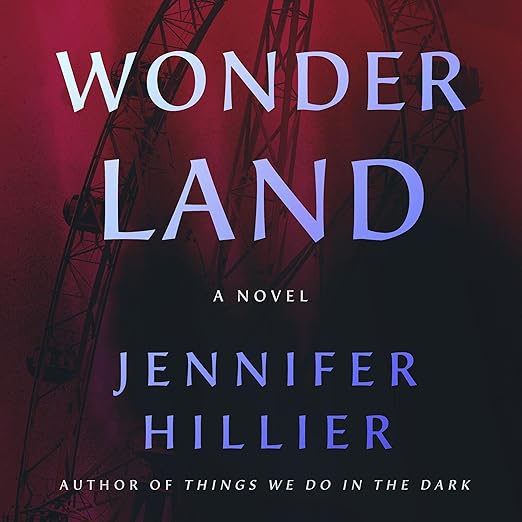
Jennifer Hillier's Wonderland arrives as the author's first audiobook, and it makes the leap into audio with a premise that seems purpose-built for the format: a detective story set inside a sprawling Pacific Northwest amusement park where the fun-house atmosphere and the menace underneath it share the same real estate. This audiobook, a Macmillan Audio production, marks Hillier's move beyond the domestic thriller mode of her earlier work, including "Things We Do in the Dark," "Little Secrets," and "Jar of Hearts," into something that hybridizes serial-killer procedural with small-town corruption narrative, and the result is one of the more absorbing crime audio productions in recent memory.
Vanessa Castro arrives in Seaside, Washington, as the town's new Deputy Chief of Police, carrying a personal tragedy and a professional scandal from Seattle. Her first day on the job produces a dead body at Wonderland, the region's largest amusement park. A teenage park employee then goes missing. The investigation meets institutional resistance immediately, Wonderland employs thousands of locals, draws tourists from across the country, and any scandal that damages the park damages the entire economy of the town that depends on it. It is a closed-system premise, and Hillier uses it with skill.
Dots That Refuse to Connect Until the Reveal
Reviewer Justina describes finishing the book with her brain wired like a crime-show evidence board, strings between pegs, dots refusing to connect until the reveal. That is an accurate description of the structural experience Hillier builds. The misdirection is deliberate and sustained. Reviewer Presea, who gave the book four stars, flags a tension that runs through all of Hillier's work: the prose is polished, the character work is strong, but the pacing can tilt toward soap-opera drama, intrigue and emotional complication layered heavily over the thriller mechanics. That critique has merit. Wonderland is not a stripped-down, momentum-only crime novel. Hillier writes domestic and interpersonal texture into her investigations, and the result is a book that requires patience from listeners who want pure procedural velocity.
The amusement park setting is the book's real achievement. Hillier uses Wonderland, the park within the novel, as a sustained metaphor: a place designed to generate joy that has been producing harm beneath the surface for years. The "dark past" the synopsis references is not simply a plot twist but an atmosphere that builds across the investigation. When Vanessa learns that the missing teenage boy is not the first park employee to disappear, the horror is retroactive, the park's cheerful surface becomes actively sinister rather than merely suspicious.
Wong Grounds Vanessa Without Overplaying the Damage
Eunice Wong's narration is precisely calibrated for this material. She keeps Vanessa's voice grounded, the detective is competent, protective of her family, and carrying visible damage from her Seattle past, and Wong plays all three dimensions without letting any one dominate. The creeping dread that accumulates as Vanessa uncovers layers of corruption is conveyed through restraint in Wong's delivery rather than heightened performance, which is the correct choice. Hillier's prose does not need overselling; it needs a narrator who trusts the text and holds the atmosphere steady.
The audio production, credited to Macmillan Audio, is clean. Wonderland was released in audio first, the synopsis specifically notes "now in audio for the first time", which means the listening experience is the primary format rather than an adaptation of a print original. That distinction sometimes produces a slightly different kind of prose rhythm, and Hillier's writing in this book does feel slightly more scene-and-dialogue-driven than her earlier work, which suits audio well. Wong moves through the short chapters at a pace that keeps momentum even during the relationship and family scenes that Presea identified as soap-opera-adjacent.
Reviewer Jessica Heatherly, who had previously read Wonderland in print before the audio release, revisited the story specifically for the audio version and found it a satisfying second experience, which is the kind of endorsement that speaks directly to what Wong brings to the narration. Returning to a story you already know reveals what a narrator is actually doing with the text, and Heatherly's enthusiasm suggests Wong adds something rather than simply conveying it.
Seaside's Gothic Atmosphere Earns the Closed System
Two cautions worth naming: first, the serial killer third-act revelation requires some tolerance for escalation. Hillier writes toward big reveals, and Wonderland's climax is large-scale. Listeners who prefer their crime fiction restrained and realistic may find the resolution more cinematic than plausible. Second, Vanessa's teenage daughter subplot, one strand of the family-in-danger narrative, gets significant page time. Hillier invests in the Castro family dynamics in ways that not all crime readers will value equally.
The Pacific Northwest gothic atmosphere is well-executed. Seaside, Washington, as a setting carries the right combination of natural beauty, small-town insularity, and economic dependence on a single employer, the park, that makes the institutional corruption plausible. Hillier does not romanticize the setting; she uses it architecturally, as a container that makes the plot's closed-system logic feel earned. For listeners who have read her earlier work and expect Seattle's urban geography, the coastal beach-town register of Wonderland is a genuine and productive shift.
Lisa Gardner Fans Will Feel at Home Here
Readers of Hillier's earlier thrillers who want to follow her into a new detective-led series format will find this a natural next step. The book also works for fans of authors like Lisa Gardner or Karin Slaughter who balance domestic emotional stakes with procedural investigation. If you want Pacific Northwest atmospheric crime fiction that takes its setting seriously and delivers a genuine mystery structure, Wonderland delivers on both counts.
Pass on this one if pure procedural efficiency is your priority, the character and relationship material takes up real space and the pacing reflects that. Listeners who found Hillier's earlier domestic thrillers too emotionally dense will likely find the same quality here. But for the right reader, Vanessa Castro is a detective worth investing in, and the amusement park as sustained menace is one of the more original settings in recent crime fiction audio.
Before You Listen
Does the Wonderland audiobook work as a standalone, or is it part of an ongoing Vanessa Castro series?
Wonderland introduces Vanessa Castro as a new series character, but the novel is self-contained, the central mystery resolves fully within this book. No prior Hillier reading is required. The synopsis suggests the author intends to continue the character, but this entry stands on its own.
How intense is the violence and horror content in this audiobook?
The content is squarely in the commercial crime thriller range, disturbing subject matter including a serial killer and missing teens, but not gratuitously graphic. Hillier's approach emphasizes psychological menace and institutional corruption over visceral horror. Mature listeners comfortable with the genre will find it within standard parameters.