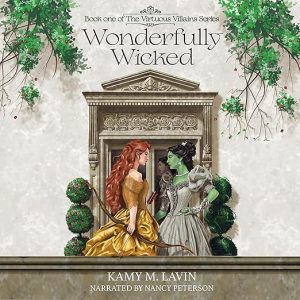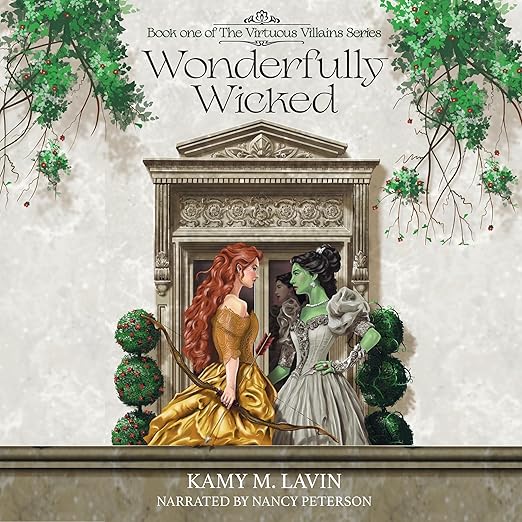
My resistance to Cinderella retellings is fairly consistent: the original story's power is in its passivity, and the moment you give Cinderella agency, you are telling a different story. The more interesting question is whether the new story justifies the scaffolding it borrows. Wonderfully Wicked takes the more radical approach of handing the perspective not to the princess but to Annalie, a girl who discovers that her stepmother is both literally a witch and the murderer of a series of wealthy husbands, including, it turns out, her father.
I picked this up on a Thursday evening looking for something with forward momentum, and it delivered. Kamy Lavin has a talent for the mid-chapter pivot, the moment where you think you have understood what is happening and the story shifts. Reviewers consistently describe the experience as thinking they had the plot figured out and being wrong, which is harder to engineer than it sounds.
The premise is nimble. Annalie's newly awakened magic does not make her powerful in the conventional sense. It makes her able to see through Elzbeth's illusions, which means she cannot pretend not to know what she knows. The story becomes a mystery-thriller hybrid within the fairy-tale frame: Annalie needs to prove Elzbeth's guilt without access to the institutional support that would make that proof easy, and she needs to do it before Elzbeth strikes again. The green skin revealed through the illusions, a winking nod to a more famous green-skinned villain, is the novel's most confident piece of self-awareness.
The novel's claim that good and evil are not always what they seem is tested by the morally grey characterization. Elzbeth is not simply evil. Her agenda has a logic that the novel takes time to develop, and Annalie's growing understanding of that logic is part of what makes the investigation interesting. Several reviewers describe unexpected twists and emotional hits alongside the action, and the balance between those elements is where Lavin demonstrates the most promise as a debut novelist.
What Kamy Lavin Gets Right
Lavin's prose is plot-first, and Peterson's narration reflects that priority: she keeps the pace up through the twist-heavy chapters without sacrificing the moments of genuine emotion that anchor the plot mechanics. Annalie's voice in Peterson's hands is appropriately sixteen: not preternaturally wise, but smart enough and scared enough that her choices feel grounded. At twelve hours, the runtime is comfortable for the amount of story being told.
Where Kamy Lavin Loses Some Ground
This is Lavin's debut, and some of the plotting efficiency comes at the cost of depth. The secondary characters, the wealthy suitors, the social world Elzbeth moves through, are functional rather than fully realized. The novel also wears its twist structure on its sleeve: reviewers who describe being surprised by the pivots are telling you that the plot is designed around those surprises, which means listeners who are actively anticipating misdirection may see some of them coming. The retelling is also positioned as the beginning of the Virtuous Villains series, and the ending reflects that: satisfying but open.
What Lavin gets right, and what is easy to underestimate in a debut, is the pacing. The chapters are short and end with enough forward pull that the audiobook format rewards marathon listening rather than session-based progress. At twelve hours, this is a comfortable weekend listen, and Nancy Peterson's even, propulsive delivery makes that marathon feel like an investment rather than an endurance test.
Who Should Pick Up Wonderfully Wicked
This is a strong choice for YA listeners who want their fairy-tale retellings plot-driven rather than lyrical, who enjoy mystery mechanics woven into fantasy, and who are comfortable with morally grey characterizations within an otherwise familiar genre frame. It is also a good debut discovery: the strengths suggest an author worth following into subsequent books. Skip it if you want a slow-burn or emotionally complex examination of the Cinderella myth; this is a thriller wearing the retelling's clothes, and it is better understood in those terms.