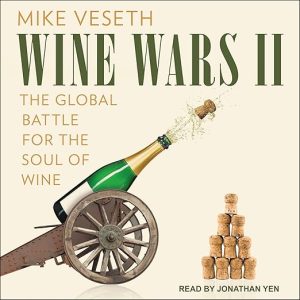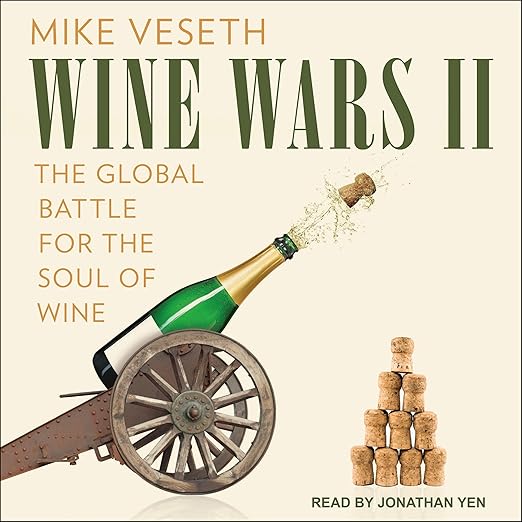
Wine Wars arrives via Mike Veseth, who writes under the name the Wine Economist, and the dual identity explains everything you need to know about the audiobook's approach. Veseth loves wine the way a wine person loves it, with attention to regional character, producer reputation, and the almost theological arguments about terroir that animate serious wine culture. He also loves economics the way an economist loves it, with an interest in market structure, global trade, and the forces that shape what ends up on a shelf and what does not. The audiobook is what happens when those two enthusiasms are turned on the same subject simultaneously, and the result is sharper and more entertaining than either would produce alone.
Jonathan Yen's narration is well-matched to the material. Veseth writes with wit and a fondness for the digressive example, and Yen reads with the kind of light touch that allows the humor to land without overselling it. A 10-hour audiobook on the economics of a beverage industry could easily become a slog. Yen keeps it moving, maintaining the conversational register that Veseth's prose establishes and preserving the sense of a writer who is genuinely enjoying the analysis he is sharing.
Terroirists Meet Globalization in the DaVino Code
The book's organizing tension is between globalization and what Veseth calls the terroirists, the producers, critics, and consumers who resist the homogenizing pressure of global wine markets in favor of place-specific, tradition-rooted expressions of wine's character. Veseth is clearly sympathetic to the terroirists without being credulous about them. He understands that a Burgundy producer invoking the sacred specificity of their vineyard is also making an economic argument about price premiums and market differentiation. The book holds both things true simultaneously, which is the intellectually honest position and also a more interesting one than either pure market analysis or pure terroir advocacy would offer.
The audiobook takes listeners from New Zealand to local wine walls, from the history of wine missionaries and migrant labor to the puzzle of why consumers reliably choose the moderately priced option when given a range. The DaVino Code section, which uses a riff on Dan Brown's novel to decode the labeling conventions of wine retail, is the kind of set piece that converts an abstract economic point into something a listener can actually use the next time they are standing in a wine shop trying to decide between two bottles they know nothing about. Veseth is good at these practical translations.
Jonathan Yen Narrates Wine's Triple Crisis
Veseth's great skill is translation. He takes concepts from trade economics, agricultural market theory, and environmental science and makes them legible to wine lovers who have no particular interest in economics as a discipline. The analysis of why the global wine market creates both more access and more uniformity, offering consumers a world of wine while flattening the distinctions that make wine interesting, is one of the cleaner explanations of globalization's paradox available in any food and drink context. The reader comes away understanding why the wine wall in their local supermarket looks the way it does, and why that is not entirely a good thing.
The final section's attention to wine's triple crisis is worth the whole audiobook. Veseth identifies three converging threats to wine as we understand it: environmental crisis driven by climate change that is already altering which regions can grow wine grapes at what quality level; economic crisis shaped by shifting global consumption patterns and generational changes in drinking behavior; and identity crisis, the question of what wine even means in a world where it has been simultaneously elevated into a luxury category and reduced to an algorithmic retail purchase. These are not cheerful topics, but Veseth handles them with the same wit that characterizes the earlier sections without minimizing what is genuinely at stake.
One reviewer identifies this as the most informative book on wine published, which reflects the unusual combination of accessibility and depth Veseth achieves. Another notes its value for both industry professionals and regular consumers who are interested in understanding the wine world from the inside out. The audiobook earns both descriptions because it genuinely serves both audiences without condescending to either or oversimplifying for one at the expense of the other.
New Zealand Gets More Detail Than Europe
Veseth's focus is primarily structural and economic rather than sensory or regional. Listeners who come to the audiobook hoping for guidance on specific wine regions, producer recommendations, or tasting notes will find that the book operates at a different altitude entirely. It tells you why the wine wall in your grocery store looks the way it does, not what to buy from it. Supplementing this audiobook with a more regionally specific wine guide gives listeners both the structural understanding and the practical navigation tools for their next bottle purchase.
The coverage of New Zealand and a handful of other New World regions is more detailed than the treatment of many European wine cultures, reflecting Veseth's particular research focus and the chapter structure he built around globalization's impact on wine-producing regions that were transformed most dramatically by it. Listeners with a primary interest in European wine traditions may find certain sections more developed than others, though the triple crisis section applies globally.
Industry Structure Over Tasting Notes and Regions
This audiobook is for wine drinkers who want to understand the industry that produces what they drink, the trade structures, the environmental pressures, the marketing mechanisms, and the cultural forces that shape what ends up in their glass. It is also for listeners interested in globalization as a general phenomenon who want a specific, well-narrated case study in how global market forces reshape a traditional artisanal industry. Wine industry professionals will find Veseth's analytical framework a useful outside perspective, particularly the sections on commodification and the triple crisis. Listeners who want pure wine education focused on tasting, regions, or varietals rather than economics and market structure should look to a more conventional wine audiobook for that kind of content.
Questions Listeners Ask
Does the audiobook cover the environmental challenges facing the wine industry?
Yes. The final section on wine's triple crisis addresses climate change and its effects on wine-growing regions as one of three converging threats to the industry, alongside economic and identity crises. Veseth treats these themes with the same analytical rigor as the earlier economic content.
How does Jonathan Yen's narration handle Veseth's wit and the digressions in the audiobook?
Yen reads with a light, conversational energy that suits Veseth's style well. He allows the humor to land without overplaying it, and maintains pacing through the more discursive sections that could otherwise slow the listening experience.