- Narration: Della Thielamay delivers the field-guide material clearly, though the format cannot replace visual plant identification on its own.
- Themes: Ethical foraging, sustainable herbalism, safety-first plant identification
- Mood: Practical and grounded, with a genuine safety-conscious undercurrent rather than breezy lifestyle content
- Verdict: A solid beginner foraging guide, but pair it with the companion PDF before identifying any plant from audio alone.
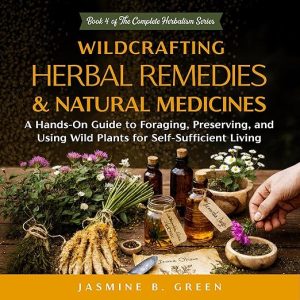
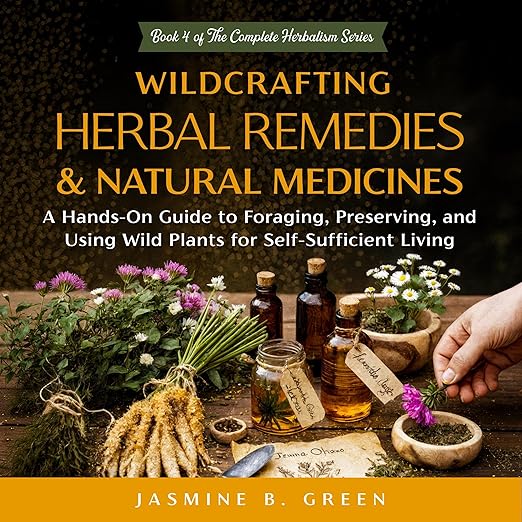
Toxic look-alikes are the first real danger this audiobook addresses, and that safety-first framing sets the tone for everything that follows. Wildcrafting Herbal Remedies and Natural Medicines, part of Jasmine B. Green's Complete Herbalism Series, walks beginners and experienced foragers alike through identifying, harvesting, and preparing wild herbs safely and ethically. Narrator Della Thielamay reads a guide built around field technique rather than abstract wellness philosophy, covering everything from drying and storing herbs to blending a first tincture from what grows nearby.
Reviewer John J DeGuire praised the book's approach for combining detailed guides on identification, timing, location, and application in what he called a Zen of herbology viewpoint, a description that fits a text this attentive to both the practical and the ethical sides of foraging. SharonLB88's review adds real substance too, warning that overharvesting is already destroying beneficial wild herb populations and crediting the author's ethical approach to wildcrafting as a way to preserve these plants for future generations rather than just extracting value from them.
At 4 hours and 25 minutes, the runtime is efficient without feeling rushed, moving through brewing teas and infusions, crafting tinctures and vinegars, and navigating herb-drug interactions with enough specificity to function as an actual working reference rather than a general lifestyle pitch.
The book also carries real cultural weight beyond pure technique, tracing herbal healing's own history across different traditions rather than presenting wildcrafting as a purely modern lifestyle trend. SharonLB88's review picks up on this directly, framing the practice as something 'ancestors did for thousands of years' rather than a recent wellness fad, which gives the more procedural chapters deeper context than a typical how-to guide offers.
Timing gets real, specific attention throughout, when to harvest a given plant for maximum potency, which seasons suit which preparations, rather than treating foraging as available identically year-round. That seasonal specificity separates a working reference from a general wellness lifestyle book. The book also explicitly addresses both city and countryside listeners, rather than assuming access to wild rural land as a prerequisite, since urban foraging carries its own considerations around contamination risk and park restrictions.
Foraging as Relationship, Starting With a First Aid Kit
Beyond the practical skills, the book makes a values-forward case for foraging as an act of ethical relationship with the land rather than pure extraction. SharonLB88's review captures this directly, framing wildcrafting as something ancestors practiced for thousands of years and crediting the author with pushing sustainable methods specifically because overharvesting already threatens beneficial wild herb populations. That ethical framing runs through the more practical chapters too, on spotting allergy risks, assembling a home apothecary, and integrating herbs into a daily routine, rather than treating sustainability as a single disclaimer chapter.
The reviewer response backs up the book's practical value as much as its philosophy. John J DeGuire's review credits it with genuine comprehensiveness in how it layers those practical categories together rather than treating each in isolation, useful language for a listener trying to gauge whether this is a shallow overview or an actual working reference before committing four and a half hours to it.
As part of the broader Complete Herbalism Series, this volume works as a starting point for listeners new to the subject rather than assuming prior knowledge from earlier entries. Anyone who finishes this and wants to go deeper into a specific technique or plant family has a clear next step within the same series rather than having to search out an unrelated author's work.
Building a natural first aid kit from wildcrafted essentials is one of the more immediately actionable sections for a beginner, giving listeners a concrete, achievable early project rather than requiring mastery of the entire book before applying anything. Understanding evidence-based herbal use is named directly in the synopsis's own list of topics too, a meaningful inclusion given how much herbal-remedy content skips scientific grounding in favor of pure tradition or anecdote.
Thielamay's Narration Cannot Replace a Photograph
The unavoidable limitation of any foraging guide in audio form is visual identification, and it is worth naming directly here: telling a toxic look-alike apart from a safe medicinal plant depends on seeing the two side by side, not just hearing them described. The listing includes a companion PDF available alongside the audio for exactly this reason, and reviewer K's feedback reinforces the point directly, wishing for more illustrations and in color even in the print edition. Treat the audio as the framework and the PDF as required reading before foraging anything based on this book alone.
Listeners should also know this sits within a broader Complete Herbalism Series, so some sustainable-living and herbal-history material may echo across other entries in the same line.
The safety material extends beyond plant identification specifically into spotting allergy risks and understanding how certain herbs can interact with prescription drugs, both genuinely important for listeners taking medication who want to add herbal remedies without a dangerous overlap. That level of caution throughout is consistent with the book's own safety-first framing rather than an afterthought chapter tacked onto the end.
Della Thielamay's narration does real work compensating for what visuals cannot provide, leaning into precise, descriptive language when identification details matter most, though no amount of vivid verbal description fully substitutes for a side-by-side photograph when a toxic look-alike is involved. That gap is a format limitation rather than a narration failure, and it is worth separating the two when weighing this edition against the PDF or print alternatives.
Zen of Herbology, but Never Without the PDF
Beginner and intermediate foragers who want a structured, safety-conscious introduction, and anyone drawn to the ethical and sustainability angle SharonLB88 highlighted around protecting wild plant populations, are the clearest audience. Listeners already deep into herbalism with an established field guide may find the beginner-friendly pacing more of a refresher than new territory.
Anyone planning to identify and harvest plants using audio alone, without downloading the companion PDF first, should reconsider that approach entirely. This is a case where the safety stakes of misidentifying a plant make the visual companion material non-optional rather than a nice bonus.
Reviewer K received this as a gift and still concluded it was worth the purchase price on its own merits, a useful data point for anyone considering it as a gift themselves for a gardening or wellness-minded friend or family member. That kind of unprompted endorsement, from someone who did not choose the book themselves, is a reasonably strong signal of broad appeal within its niche.
The Zen of herbology framing John J DeGuire's review uses captures something real about the book's pacing, unhurried and attentive to process rather than rushing toward a finished remedy.