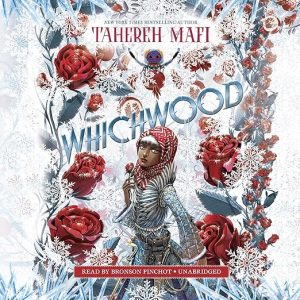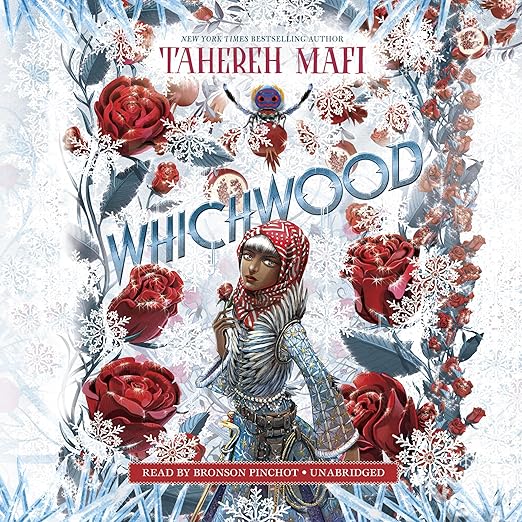
Washing the dead is Laylee's inherited job, and she is the only person left in her village who still does it. Tahereh Mafi opens on a frosty night and hands us a girl whose mother has died, whose father lost his wits and wandered off after her, and whose hands have started stiffening and turning silver from the work. Seven hours and five minutes of audiobook follow that premise into a Persian winter that is far colder than the children's category implies.
The Verdict, Briefly
The storytelling voice is the first thing you notice and the thing that will decide the purchase. A reader writing in November 2017, five stars, puzzles over it openly, describing a story told by somebody speaking directly to the reader and admitting uncertainty about whether that presence is the author's persona or a character due to be revealed later. Mafi writes in asides, cautionary warnings and confiding little interruptions, and the effect is a fireside teller rather than an invisible camera.
Listening Library credits Bronson Pinchot with the reading, and one four-star response from September 2018 is the only visible reader to discuss the recording in any detail. That review calls his telling of the tale a pleasure to listen to, describes the narration as engaging, and adds that he reads Furthermore as well, which makes the pair consistent for anyone working through both. The same reviewer notes recognizing the name from a wildly successful 1980s television show.
The copy quotes a starred Kirkus review praising the deliciously descriptive prose and, notably, the explanatory footnotes. Footnotes in an audio edition are always an interesting problem, since a printed aside that a reader's eye can skip becomes a spoken interruption everyone has to sit through. Here they suit the material, because the whole book is built on interruption, but listeners who find digressions irritating should know the digressions are structural rather than occasional.
What Makes Whichwood Worth Hearing
The premise is genuinely strange, and strangeness is the selling point. A mordeshoor scrubs the skins and souls of the dead so they can move on properly, and Laylee inherited the entire village's workload at an age when other children are complaining about chores. Mafi treats the labor concretely: the cold, the backlog of bodies, the physical toll registering as silver creeping through hair and joints. Fantasy rarely takes work this seriously.
The setting does not resemble the usual middle-grade fantasy geography either. This is described as a dark, Persian fantasy, and the details of food, custom and weather come from somewhere specific rather than from the generic pseudo-medieval default. Winter presses on everything. The village is unhelpful, occasionally cruel, and entirely dependent on a child it declines to support, which gives the book a social sharpness underneath the magic.
Mafi's sentences are the other draw, and the critics quoted on the page all reach for the same register: deliciously descriptive from Kirkus, visually arresting from Shelf Awareness, with a starred notice apiece and a place on a best-of-the-year list. That kind of unanimity usually signals prose doing something unusual, and here the unusual thing is how ornamental language gets applied to unglamorous labor. Bodies get washed in sentences built like jewelry.
Then the rescue arrives in the form of company rather than power. A pair of familiar strangers turn up, and what they offer Laylee is not a weapon or a prophecy but attention, color and the possibility of resting. Booklist singled out her personal transformation as what shines brightest in the novel, and that is the right emphasis: the arc runs on being noticed by somebody, not on defeating anybody.
Points to Consider
The fable register creates distance, and not every listener wants it. A reader writing in February 2018, five stars, puts the caution precisely while still loving the book: some readers may feel more space between themselves and the characters than they are used to. That is inherent to the form. You are being told about Laylee by somebody who already knows how it ends, which produces enchantment and reduces immediacy in equal measure.
Category placement is the bigger warning. This title sits in children's audiobooks under a growing up and facts of life tag, and the actual content includes corpse washing, a dead mother, an absent father who lost his mind to grief, ghosts with opinions, and a child working herself into physical damage. Mafi handles all of it with wit rather than gloom, but a parent choosing by category alone could be caught out.
The series labeling contradicts itself as well. The publisher's copy calls this a companion to Furthermore, the series line numbers it as the second volume, and at least one reader describes it flatly as the sequel. Those are three different promises. In practice the story stands alone while the returning characters carry history you will not have, so the honest answer sits somewhere between the marketing and the shelf number.
Who Should Listen to Whichwood
Older children and teenagers are the natural audience, whatever the category says. A January 2018 reader, five stars, describes it as everything the writer of that review wished had existed back in their own teenage years, praising the strong female protagonist, the life lessons and the ghosts, and vowing to press it on every adult and young person within reach. That is the right reader: someone old enough for the mortuary premise and young enough to be changed by it.
Anyone who liked being read to as a child will recognize what the book is doing. The interruptions, the warnings, the sense of someone shaping the tale as it goes and enjoying the shaping: that is oral storytelling technique translated into print and then translated back again. In audio the device lands closer to its natural home than it does on the page, which is a decent argument for choosing this edition.
Listeners who want brisk plotting should look elsewhere, because the pleasures here are textural and the asides slow everything down. Children sensitive to death and bodies are an obvious exclusion. Anyone starting with volume two will meet returning figures without their context. And adults expecting the drive of contemporary fantasy should prepare for something arch, ornate and considerably more playful.
What makes this one stick is the refusal to make the job metaphorical. Laylee is not sad in a poetic way; she is exhausted, unsupported by a village that depends on her, and going silver from the overwork. A children's fantasy about labor, obligation and the friends who finally make you stop is rarer than another chosen-one story, and it earns the winter it spends on the subject.
Before You Press Play
- Narrator: Bronson Pinchot reads a story that keeps interrupting itself to address you directly, which is a specific test for any reader.
- Subjects: Inherited duty, grief, friendship as rescue, a dark Persian winter, being noticed
- Tone: Wintry, macabre, unexpectedly warm
- Bottom line: Darker than the children's shelf suggests and better for it, so long as the asides suit you.
Do I need Furthermore before starting this audiobook?
Helpful, not required. One reader came to it straight from the first book, posted five stars in January 2018, called this the sequel and reported staying up all night with it. Newcomers can follow the plot without difficulty, since Laylee's situation is explained from the ground up, but the pair who arrive to help her carry a history you will not share.
How dark is this audiobook for something filed under children's listening?
Considerably darker than the category implies. The heroine washes corpses for a living, her mother is dead, her father has lost his mind and disappeared, and ghosts are a working condition rather than a scare. The telling is witty and the tone is playful, which carries it, but the subject matter is mortality throughout.
Which house made the recording, and how has it held up?
Listening Library, dated November 14, 2017, running seven hours and five minutes. An average of 4.6 drawn from 241 voters is high for a fantasy this odd, and the visible written responses stretch from release week itself through to the following fall.