Before You Press Play
- Performance: Jane Copland reads with the warmth and conviction of someone who believes in the project, her delivery makes the ecological urgency feel like an invitation rather than an indictment.
- What it covers: Rewilding and native ecosystem restoration, individual action at scale, human relationship to land as guardian rather than controller
- Feel: Hopeful and grounded, rare in ecological writing, with a genuine sense of what is possible
- Our call: One of the more genuinely motivating environmental audiobooks in recent years, specific enough to be actionable, passionate enough to make you want to start immediately.
I have been reading and reviewing environmental nonfiction long enough to have developed a reflex response to a certain category of book. You know the one. It establishes the scale of ecological damage comprehensively enough to be undeniable, and then offers personal action steps so clearly insufficient to the problem that the gap between diagnosis and prescription produces something close to despair. The books mean well. The science is usually solid. But the effect, for me and for many of the readers I talk to, is paralysis rather than action.
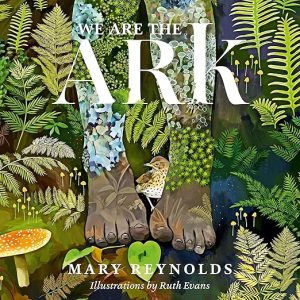
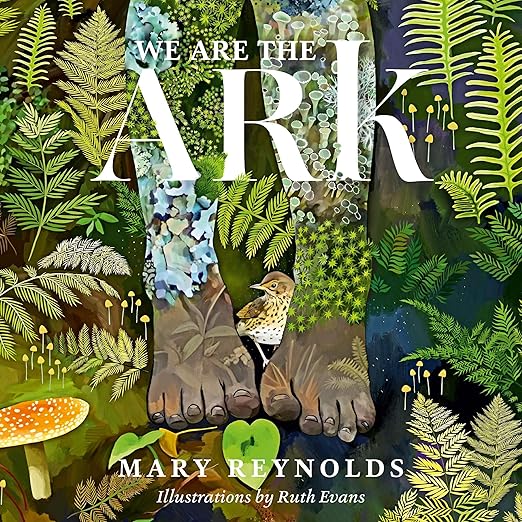
We Are the ARK is not that book. Mary Reynolds, an Irish gardener and landscape designer who won the Chelsea Flower Show at a remarkably young age (the film Dare to Be Wild tells her story), has written something harder to pull off: an ecological call to action that is specific, achievable, and genuinely hopeful without minimizing the problem. The Jane Goodall endorsement on the cover is not decorative. Goodall's framing, that thousands of even small wildlife-friendly gardens can provide habitat for embattled wildlife around the world, is exactly the argument Reynolds makes and substantiates.
What an Act of Restorative Kindness Actually Means
The concept of an ARK, an Act of Restorative Kindness, is the book's central organizing idea, and it is well-named. Reynolds is asking each reader to consider their patch of land, no matter how small, as a potential native ecosystem. The argument has two parts. First, that the standard gardening practices most people default to, removing weeds, planting non-native ornamentals, using pesticides, maintaining clipped lawns, are deeply harmful to pollinators and wildlife. Second, that the alternative is not abandonment but active restoration: choosing native plants, allowing natural succession processes, creating habitat structure that supports the creatures whose populations are collapsing.
Reviewer Paula Robinson Rossouw describes this as an eye-opener and wake-up call, particularly regarding what gardening practices are doing to the web of life. Reviewer SH notes that scientifically backed narratives are informative and leave you thinking, while the presentation is easy to understand. That combination of scientific grounding and accessibility is what Reynolds achieves, and it is harder than it sounds.
Jane Copland's Narration, and a Yard Full of Bees
Jane Copland's narration carries a conviction that matches the material. Reynolds has a distinctive voice in writing: personal, specific, sometimes fierce, occasionally lyrical. Copland honors that without performing it. The passages where Reynolds talks about her own relationship to land, her sense that humans are guardians of place rather than controllers of it, are among the most resonant in the book, and Copland handles them with the appropriate weight without overdoing it.
Reviewer J mill describes already having a patch of unmowed land in their small yard and witnessing the butterflies, dragonflies, bees, and other wildlife that has appeared there. That testimony from someone already doing the thing the book describes, and finding it confirmed, is more persuasive than any abstract argument. Reviewer E&J bought the book for Reynolds's personal story and kept it for the artwork, which speaks to the print edition's beauty but also to the layers of the book that audio listeners access through the writing itself.
Inspirational More Than Instructional, and Distinctly Irish
At four hours and twenty minutes, this is a short listen for the ambition of its subject. Some listeners looking for comprehensive horticultural guidance, detailed plant lists, or region-specific rewilding protocols will find it more inspirational than instructional. Reynolds mentions available YouTube videos and related resources, which suggests she understands that the book is an entry point rather than a complete manual. Reviewer Laura W. notes recommending the book highly while also pointing to those video resources, which suggests the two work well together.
The book is written from an Irish context, and some of the specific plant and ecosystem references are most directly applicable to temperate Atlantic climates. Listeners in North America, Australia, or other regions will need to identify native equivalents for their specific locations, which the book acknowledges but does not do for you. That gap between inspiration and local application is the primary practical limitation.
Restorative Hope for Any Patch of Land
Anyone with any outdoor space, from a window box to several acres, who is interested in contributing to ecological health without needing to become an expert first will find this transformative. Gardeners who are already moving away from conventional practices will find it affirming and deepening. Environmental pessimists who have been ground down by apocalyptic framing may find Reynolds's restorative hope genuinely restorative. Listeners wanting region-specific planting guides should follow up with local resources after using this book as the motivational foundation it is designed to be.