In Brief
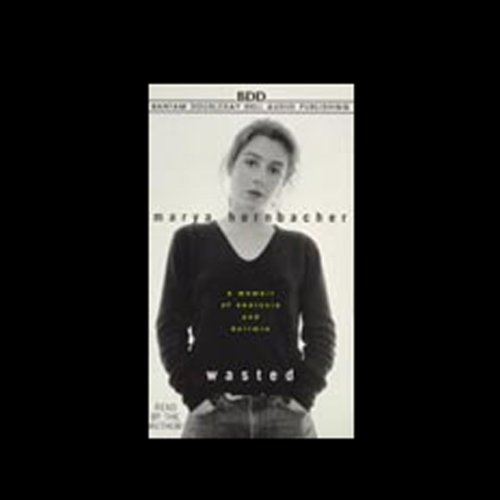
- Narrator: Marya Hornbacher reading her own memoir is a distinctive and occasionally unsettling listening experience, her voice carrying the detachment she writes with.
- Subjects: Eating disorders and cultural pressure, the body as contested territory, survival without a clean resolution
- Tone: Raw, unflinching, intellectually fierce, and not cathartic in the way most illness memoirs aim to be
- Bottom line: One of the most formally accomplished eating disorder memoirs in print, essential for those who want the insider experience and deeply uncomfortable for anyone expecting a redemption arc.
I need to say something careful before this review: Wasted by Marya Hornbacher is a book that has a complicated relationship with its own readership. It was published in 1998 and remains in print and active in audiobook form, but it has also been discussed at length in eating disorder recovery communities as a book that can function as triggering or instructional for readers still in the depths of disorder rather than at a safe distance from it. I am raising this not to perform a content warning but because it is a genuine part of any honest account of what this book is and does.
With that said: as a piece of writing, Wasted is remarkable. Hornbacher was twenty-two when she wrote it, and the prose she produced at that age has a technical ambition and formal intelligence that most career writers never reach. She was using the confessional memoir as a vehicle for something closer to cultural criticism, weaving her own history with an analysis of the 1990s cultural apparatus of body obsession that made her way of thinking feel natural to her even as it destroyed her physically.
Our Take on Wasted
The book begins when Hornbacher is four years old, deciding in front of a mirror that she is fat. By nine she is bulimic. By twelve, anorexic. By eighteen she has been hospitalized five times. The trajectory is told without the distancing mechanisms most illness memoirs deploy, the clinical retrospect, the wiser narrator looking back on a past self with therapeutic insight. Hornbacher is almost uncomfortably inside the experience as she recounts it, which is what one reviewer calls the book's disturbing asset. The lack of attachment is not a failure of the writing. It is the point.
What she is doing formally is refusing the recovery narrative that the genre typically requires. This is not a book that offers the reader the comfort of a character who has been saved. Hornbacher is explicit about this: she did not recover cleanly, and she is not going to pretend she did to make the book feel satisfying. That honesty is bracing, and it is the quality that makes the book significantly more true than most eating disorder narratives.
There is something specific about listening to Hornbacher narrate her own work that does not exist in the read version. Her voice carries the detachment she writes with. The self-observation is audible in the delivery, not as performance but as the genuine register of a person who has been examining herself with clinical ferocity since she was a child. Some listeners will find this alienating. Others will find it the most accurate possible translation of the text's interior experience.
The five-and-a-half-hour runtime is appropriate for the material. Longer would have required more resolution than Hornbacher was willing to provide. The brevity is part of the book's formal integrity.
What to Watch For in Wasted
The sections where Hornbacher situates her experience within the broader cultural obsession with body, diet, and gender are the ones that have aged best. She is writing about the 1990s specifically, but the pressures she describes have not diminished. The specific media landscape has changed; the underlying dynamic she identifies has not. These passages, which braid her personal history with a genuinely sharp analysis of the systems that shaped it, are what elevate Wasted above the more limited category of illness memoir.
Who Should Listen to Wasted
This is for readers and listeners who want to understand eating disorders from the inside rather than from the clinical or familial perspective that most accounts privilege. It is particularly valuable for those who work in mental health, who have family members navigating these conditions, or who are far enough along in their own recovery that the candor is illuminating rather than destabilizing.
This is explicitly not a recovery text and should not be treated as one. Hornbacher does not provide a roadmap out. If you or someone you know is actively struggling, this book is not the appropriate starting point. The clinical detail and the refusal of resolution can function as reinforcement rather than witness in that context.
Does Wasted have a recovery message or does it leave things unresolved?
Hornbacher is explicit that she decided to live, but the book does not offer a clean recovery narrative. She remains honest about the fact that the conditions she describes do not simply resolve, and the audiobook ends without the catharsis that most illness memoirs build toward.
How does Hornbacher's self-narration compare to what a professional narrator would bring to the same material?
The self-narration adds a layer of authenticity that a professional narrator simply could not replicate. Hornbacher's voice carries the specific quality of detachment she writes with, which is central to the book's method. It is an unusual listening experience, and deliberately so.
Is the cultural criticism integrated throughout or does it appear separately from the memoir sections?
It is woven throughout. Hornbacher moves between personal narrative and cultural analysis within chapters and sometimes within paragraphs, which is part of the book's formal ambition. The cultural argument is not an appendix to the personal story. It is the frame that gives the personal story its meaning.