Quick Take
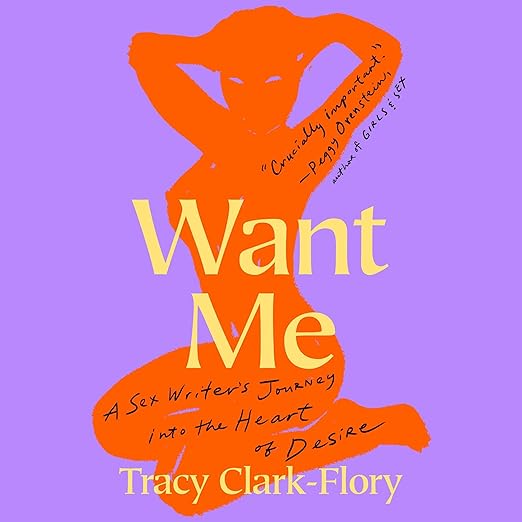
- Narration: Tracy Clark-Flory narrates her own memoir, and it is the only version worth hearing, the self-narration transforms reported experience into something that feels like direct confession.
- Themes: Female desire in a culture of contradictory expectations, the gap between performed and felt sexuality, journalism as a vehicle for self-inquiry
- Mood: Searching, funny, occasionally uncomfortable, in the productive way
- Verdict: One of the more genuinely honest memoirs about female sexuality published in the last decade, and Clark-Flory’s own voice makes the audio version the superior format for experiencing it.
I was somewhere between my third cup of coffee and the end of a complicated Tuesday when I started Want Me, and I remember thinking it would be a quick spin through familiar feminist-sexuality memoir territory, the kind of book that has a lot to say about Cosmopolitan magazine and not much that surprises. Three hours in, I was still listening. Tracy Clark-Flory’s memoir is better than its category would suggest, and the audio version, narrated by Clark-Flory herself, is a materially different experience from the print text.
The book sits in an interesting position: it was an NPR Best Book of the Year and a New York Times “New and Noteworthy” selection, earning endorsements from Jessica Valenti and Rebecca Traister, two writers who occupy very different positions in contemporary feminist discourse. That those two writers both praised it suggests Clark-Flory is doing something more complex than either earnest empowerment narrative or feminist polemic. She is. The memoir does something genuinely unusual: it holds the author in the text as a subject of inquiry as much as the culture is.
The Self-Narration That Changes Everything
Clark-Flory is a journalist, not a professional narrator, and there are moments in the audio where that shows. But for a memoir this intimate, adult film sets, fetish conventions, orgasmic meditation retreats, a frank account of her own confusion and agency in sexual encounters across years of professional sex-beat coverage, the author’s voice is not optional. The slight roughness in delivery, the places where you can hear that she is reading something that is genuinely uncomfortable to say aloud, the moments of dry humor that land perfectly because she wrote them and knows where the comedy lives, these are not features a hired narrator could replicate. The self-narration here is the product.
At nine hours and two minutes, this is a full commitment. The length is appropriate, Clark-Flory covers significant emotional and chronological ground, and rushing the memoir would undercut the quality of its self-examination. The pacing varies deliberately, slower and more reflective in the personal sections, more journalistic and data-driven in the research passages. That variation of register is something the narration handles naturally because Clark-Flory lives in both modes.
What the Memoir Actually Does
Clark-Flory grew up in the cultural gap between third-wave feminist “girl power” framing and the saturation of sexual objectification in 2000s pop culture. That gap, between what feminism told her about her own worth and what the culture told her she was worth for, is the emotional engine of the book. Her method for examining it is through her own choices and experiences as someone who covered the sex industry professionally: what she did, why she thinks she did it, what it meant, and what it cost.
One reviewer called this “one of the most important books I’ve ever read” and noted feeling “seen, heard, or understood” in ways that suggest the memoir is reaching something genuinely resonant for women who grew up in the same cultural moment. A more skeptical reviewer noted that the perspective is “wealthy, western, socially liberal” in ways that limit its representational scope, a fair criticism. Clark-Flory’s experience is specific, and the book does not pretend otherwise, but it does sometimes speak in generalizations about women’s experience that the specificity does not fully support.
The Journalist in the Mirror
The most distinctive structural feature of the memoir is that Clark-Flory uses her journalistic skills on herself. She weaves statistics, expert voices, and cultural analysis into what is also an intensely personal narrative. This is a harder trick than it sounds, the tonal whiplash between the personal and the analytical can be jarring, but she manages it better than most. The journalism adds credibility and context; the personal narrative provides the emotional access that makes the analysis feel grounded rather than academic.
Who Should Listen and Who Should Skip
Listen if you came of age during the 2000s and have your own unresolved feelings about the cultural contradictions Clark-Flory is excavating. The memoir has genuine resonance for women who navigated the same messaging gap between empowerment and objectification. Also listen if you appreciate journalism-informed personal essays that hold their own premises up for scrutiny. Skip if you want a more systematic feminist analysis, Clark-Flory is doing memoir, not theory. The wealthy, Western, socially liberal perspective is real, and readers who want broader representational scope will want to pair this with other voices.
Frequently Asked Questions
Does the NPR Best Book designation give a sense of what kind of feminist memoir this is, political manifesto, personal confession, or something else?
Something else, primarily. Clark-Flory uses her own experiences as a journalist covering the sex industry as the vehicle for examining cultural contradictions around female desire. It is neither pure manifesto nor pure confession but a hybrid form that holds the author as a subject of inquiry alongside the culture. The NPR recognition suggests it earned a broad readership beyond any single ideological tribe.
How explicit is the sexual content in the memoir?
Candid and specific rather than gratuitous. Clark-Flory writes about adult film sets, fetish conventions, and her own sexual experiences with journalistic frankness. The content would be appropriate for most adult readers, though listeners who are uncomfortable with explicit discussion of sexual experience should know the memoir does not shy away from it.
Is the audio meaningfully better than the print version, or is this one of those self-narrated memoirs where the author is clearly a non-professional?
Better, genuinely. The roughness of Clark-Flory’s narration in places is part of what makes it feel authentic rather than produced. This is a memoir about things that are uncomfortable to talk about, and hearing her read those passages is materially different from reading them. The audio is the superior format for this specific book.
A reviewer mentioned that the perspective is limited to wealthy, western, socially liberal women, is that a significant limitation for the book?
It is an honest limitation worth acknowledging. Clark-Flory’s experience is specific: educated, coastal, financially secure, professionally credentialed. She sometimes extrapolates to broader conclusions about women’s experience that the specificity does not fully support. Readers who are aware of this constraint can still find genuine value in the memoir; readers who want representative scope should know it is not that.