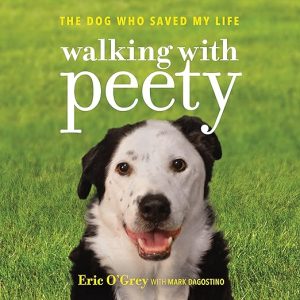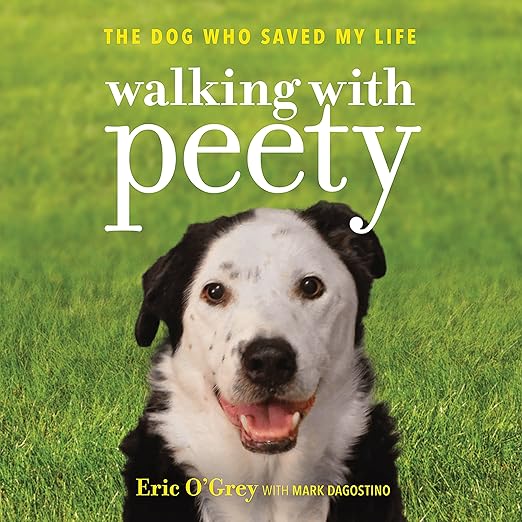
I finished Walking with Peety on a Sunday afternoon when I had nothing pressing and the light was doing that late-autumn thing where everything looks a little tender. I hadn't planned to cry. I did anyway, somewhere around the point when Eric O'Grey describes coming home to Peety's enthusiasm after the worst days and realizing the dog didn't care about the 150 extra pounds or the type 2 diabetes or the depression that had settled in like furniture. That specificity is what separates this memoir from the dozens of inspirational pet books that line airport display tables.
O'Grey is a former pharmaceutical sales executive who spent decades failing at diets and succeeding at self-loathing. When a new doctor prescribes not a drug but a shelter dog, the setup sounds like a Hallmark pitch. What follows is something considerably more grounded. Peety is not a miraculous golden retriever. He's an overweight, middle-aged dog with his own adjustment period, his own distrust of strangers, his own damage. The parallel between owner and animal is never belabored, but it's always there, and it deepens the book in ways that a more polished treatment of this material would have flattened out.
The structural choice that makes this book work is refusing to present either Eric or Peety as fully healed before the midpoint. The weight loss, all 150 pounds of it, mirrored by Peety's 25, happens through the unglamorous accumulation of daily walks, not through revelation. One reviewer called it a Herculean effort to become a more perfect example of himself, and that phrasing feels right. There is no single transformative moment. There is just Tuesday's walk and Wednesday's walk and the slow erosion of old habits that held both of them in place.
The plant-based diet element is where opinions diverge. One reader noted that the second half of the book reads in parts like an advertisement for vegan recipes, and that's not entirely unfair. O'Grey becomes evangelical about his dietary shift in a way that occasionally pulls the reader out of the story and into something closer to a wellness lecture. If you approach this book primarily as a narrative and not as a lifestyle guide, those passages can feel like detours. That said, they're also honest: the diet was part of the transformation, and erasing it would have been a kind of dishonesty about how this particular recovery actually worked.
Mark Dagostino Trusts the Material, No Embellishment
Mark Dagostino, credited as co-author on the print edition, handles narration duties here with steady competence. His voice has a conversational quality that suits the material, this isn't a performance audiobook, and Dagostino doesn't try to make it one. He reads O'Grey's story with respect and without embellishment, which is exactly the right call. Where some narrators of memoir-style books push emotion at you, Dagostino trusts the material. The result is something that feels less like a celebrity story and more like a friend talking you through something important that happened to him.
At seven hours and 43 minutes, the pacing is comfortable. This is not a book that demands sprinting. You can put it down and pick it back up, and the emotional throughline will still be there waiting. The runtime also allows O'Grey to develop the texture of daily life with Peety rather than compressing the year of transformation into a highlight reel, which is what the story requires to actually land.
How the Book Handles Peety's Death, and After
I want to address this directly because several reviewers mention being blindsided by the ending. Peety dies. This is not a spoiler in any meaningful sense, the book's arc makes it clear this is coming, and the cover blurb's description of an incredible journey rather than a permanent happy ending is itself a quiet signal. But the emotional weight of that loss, particularly for anyone who has buried a dog, is real. One reviewer described bawling and connecting it to the loss of her own dog, Barkley. I found the passage handled with exactly the right restraint: O'Grey doesn't perform grief, he describes it, and the difference between those two approaches matters considerably in audio.
The book continues past Peety's death, following Eric through his reconnection with his high school sweetheart and his eventual work as a nonprofit partner and speaker. Some readers find this second act less compelling than the first, the human love story doesn't quite have the emotional specificity that the man-and-dog story carries. But as a complete portrait of a life rebuilt, the final chapters earn their place in the larger arc.
Rebuilding Health or Spirit, Minus the Heroics
If you are a dog owner or have been one, this book will land harder than it probably should. If you are someone who has struggled with weight, chronic illness, or depression, it offers something more useful than a success story: it offers a process, one that required no heroics, only consistency. If you go in expecting a tight literary memoir with complex structural architecture, you will be disappointed, this is a plainspoken book that does exactly what it sets out to do and nothing more. That is not a flaw. It is a choice that serves the story well.
Listeners who struggle with dietary advocacy woven into personal narrative may find the plant-based sections heavy-handed. Those who need a pet memoir to end on an unqualified happy note should proceed with tissues nearby. Everyone else will find an honest, specific, and quietly moving account of what it costs to change your life, and what it takes to want to.
Questions Listeners Ask
Does the audiobook narrator Mark Dagostino capture the emotional weight of Peety's death?
Yes. Dagostino reads that section with restraint rather than pushing the emotion, which makes it more affecting, not less. Listeners who have lost a pet should be prepared.
Is this primarily a dog memoir or a health and wellness book?
It's both, which is also its one structural weakness. The first half centers the relationship between Eric and Peety; the second half shifts toward plant-based eating advocacy and Eric's personal life. The dog story is stronger.
How does this compare to other human-animal recovery memoirs like A Street Cat Named Bob?
The two share a structural DNA, a person in crisis finds an animal in crisis, and they recover together, but O'Grey's book is more medically grounded and less literary in its prose. It reads closer to personal testimony than to literary memoir.