In Brief
- Voice: Jared Freid narrates his own book, and the author-read works in his favor - his comedic timing and conversational delivery make the dating advice feel like a long podcast episode from someone who genuinely knows what he is talking about.
- Big ideas: modern dating confusion and mixed signals, self-awareness and honest communication, embracing singlehood as agency rather than failure
- Atmosphere: Warm and funny with a current of real emotional honesty underneath the jokes
- Worth it?: A dating advice book that trusts its reader's intelligence, narrated by an author who has genuinely earned the right to explain male behavior by having been that guy himself.
Walking Red Flag has no user reviews yet in the dataset - it releases June 2026 - which means I am working from the synopsis, the author's public profile, and the structural information available. What I can tell you is that Jared Freid has spent years building an audience through the J-Train and U UP? podcasts, and his reputation is specifically that of someone who explains male behavior without defending it. That is a narrow and difficult position to hold, and the fact that he has sustained it with a loyal following across multiple platforms suggests he is actually doing it rather than just claiming to.
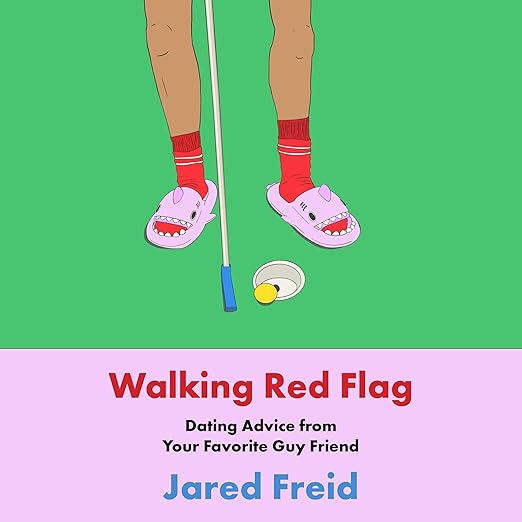
The title is a good one. Walking Red Flag is self-aware in a way that signals the book's actual project: Freid is not positioning himself as the authority on correct male behavior, but as someone who has been the problem, studied the problem, and can now translate both sides of the confusion that defines contemporary dating. That self-implication is the foundation everything else rests on.
Decoding Modern Dating Instead of Prescribing Rules
The structure Freid has set up covers the full arc of modern dating - from meeting people in person or via apps, through the early navigation of mixed signals, into the relationship milestones that test whether something is real, and finally through breakup and singlehood. That comprehensive scope is ambitious for a dating advice book, and the risk is that it becomes superficial across the range. Based on what the synopsis reveals about his approach, the mitigating factor is that Freid's method is explanatory rather than prescriptive: he is decoding what is happening and why, not issuing a rulebook. Decoding is more durable than rules.
The premise that dating right now is genuinely wild - not as a preamble to nostalgia but as a real diagnosis of current conditions - is one that most people under forty will recognize immediately. The asymmetry of communication (Instagram stories watched instantly, texts delayed by twelve hours), the ambiguity of intentions, the collision of real emotion with people who do not know what they want but are trying anyway: Freid names these specifically rather than gesturing at them vaguely, which is the difference between a dating book and a dating book that actually helps.
Freid's Podcast Timing Survives the Jump to Audio
Freid narrates his own book, and for this genre and this author that is the correct choice. His material comes from his podcast work, which is an intimate spoken format, and the transition to audiobook narration by the author preserves the quality of listening to someone who actually talks this way. The comedic timing that works on U UP? will work here too. This is not prose that was written to be read silently on a page; it is material that was built for voice, and voice is where it lands best.
The framing around singlehood being a power move rather than a red flag is worth noting as a structural commitment. Many dating books treat single status as a problem to be solved, which positions the reader as deficient from page one. Freid explicitly refuses that frame, which gives the book a different energy - one that is more useful to people who are genuinely content being single and looking for clarity about whether they want to change that, rather than people who have been told they should be anxious about their relationship status.
Built Around a Heterosexual Dating Dynamic
Without reader reviews yet available, the caution I would offer is the one applicable to any comedic dating advice book: humor can obscure whether the actual advice is sound. Freid's long-form podcast reputation suggests he has the depth to back up the jokes, but first-time book listeners who do not already know his work will be making that assessment fresh. The 9.5-hour runtime is longer than the format typically demands, which could mean the material is more substantive than the premise suggests, or that some sections run long.
The book is framed around a heterosexual dating dynamic with women as the primary audience and men as the subject being explained. LGBTQ+ readers will find some sections directly applicable and others less so, depending on the dynamics being described.
Women Want Answers, Men Want Self-Awareness
The core audience is women in their mid-twenties to late thirties who are actively dating and have experienced the specific confusion of modern relationship dynamics - mixed signals, disappearing acts, ambiguous communication - and want an honest explanation rather than validation. Existing J-Train and U UP? listeners will find this familiar territory delivered in a format that allows for more sustained development than a podcast episode.
Men who want to understand how their own behavior reads to other people will also find Freid's self-implicating perspective useful. He is not writing from a position of having figured it all out; he is writing from having been the confusing party and eventually understanding why.
Before You Listen
Is Walking Red Flag based on Jared Freid's podcast material, or is it new content?
The book draws on Freid's years of experience from the J-Train and U UP? podcasts, so the frameworks and perspective will be familiar to existing listeners. However, the book format allows for more sustained development of ideas than individual podcast episodes, and the comprehensive arc from dating apps through breakup and singlehood provides structure that the podcast format does not. Existing fans will find a deepening of familiar themes; new readers encounter a complete overview.
Does the author-narrated audio feel like a podcast episode or like a conventionally performed audiobook?
Based on Freid's established podcast voice, the narration will feel closer to an extended, well-produced podcast conversation than a formal audiobook performance. For his audience, that is a feature. The material was built for voice, and having the author deliver it preserves the comedic timing and conversational warmth that make his podcast work effective.
Is this book primarily for women, or does it address the male perspective in a way that's useful for men too?
The book explains male behavior to women but does so by implicating the author himself - Freid writes explicitly from having been that confusing guy. Men who want to understand how their own behavior reads to their partners or dates, or who are trying to develop more self-awareness about their patterns, will find the perspective useful precisely because it is not defensive or apologetic but honest.
How does Walking Red Flag handle the topic of singlehood - is it treated as a problem to solve?
Explicitly not. One of the book's structural commitments is treating singlehood as a power move rather than a red flag or a condition to be resolved. The final section on loving singledom makes this argument directly, which gives the book a different energy than advice books that position relationship-seeking as the only rational goal. It is more useful for people who want clarity about what they want than for people who have been told they should want a relationship.