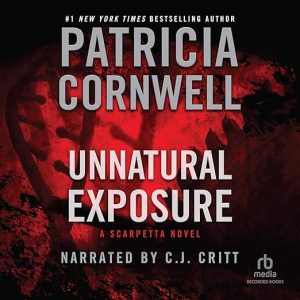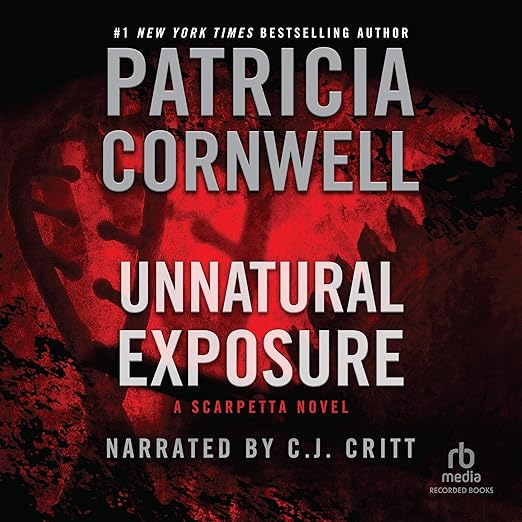
Patricia Cornwell was tracking something real when she wrote Unnatural Exposure. The eighth Kay Scarpetta novel, published in 1997 and now available as an audiobook narrated by C.J. Critt, builds its central threat around bioterrorism and the potential for a weaponized virus to move through a population before anyone identifies the mechanism. Reading it now, or listening to it across eleven hours, the detail feels less like genre thriller invention and more like Cornwell doing the same procedural research that defines the series, this time applied to the intersection of forensic pathology and public health emergency response.
The setup opens with the discovery of a dismembered elderly woman in a Virginia landfill, a case that Virginia Chief Medical Examiner Scarpetta initially connects to a serial killer she has tracked before. The pivot comes when she identifies pox-like eruptions on the body that redirect the investigation toward something more alarming than pattern violence. That shift, from murder investigation to potential epidemic response, is handled with the kind of structural confidence Cornwell had developed across seven preceding novels in the series.
The book's formal innovation for its time is the killer's use of email to contact Scarpetta, which allows the antagonist a presence and a voice in the narrative without requiring the set-piece confrontations that can feel forced in procedural thrillers. Scarpetta enlisting her niece Lucy to trace the killer through cyberspace was, in 1997, a specific and contemporary plot mechanism rather than a convention. That specificity dates the technology but not the psychology. The killer's desire to reach Scarpetta directly, to make her see what he has created, is a character motivation that holds regardless of the medium.
Reviewer Janice described this as a series entry that had her guessing until the end, and that is a reliable indicator of how Cornwell structures the investigation. The trail moves across significant institutional geography, from the government's biological defense facility in Utah to the CDC in Atlanta, before converging on the quarantine that forms the book's most formally unusual sequence. Scarpetta being quarantined after potential exposure is a plot decision that removes her from her usual professional authority and places her in the position of patient and subject rather than examiner, which is both psychologically interesting and a legitimate structural risk that Cornwell takes deliberately.
What Stands Out
C.J. Critt's narration carries the weight of sustained engagement with this character. Scarpetta's voice in the series has a specific register, controlled, precise, not cold but professionally armored against the emotional extremity of forensic work, and Critt delivers that register without flattening it into monotony. The technical sections, the medical detail and forensic procedure that reviewer Paula J. Sisson noted can slow the pace, are read with the kind of authority that makes them comprehensible rather than overwhelming. If those sections slow the story for some listeners, they also establish the credibility on which the thriller stakes depend.
The audiobook format works particularly well for the novel's psychological texture. Scarpetta's interiority, her navigation of professional threat from the slick FBI agent whose ambitions cross hers, her complicated feelings for Agent Wesley Benton, and the ongoing thread of Lucy's problems, is rendered more immediate in audio than on the page. The first-person intimacy of the series, Scarpetta's narration filtered through her own perception, means a narration that does not perform emotion but carries it as subtext, which Critt manages with commendable restraint.
Before You Commit to Unnatural Exposure
Reviewer Amazon Customer observed that Cornwell never seems to completely wrap up a story, leaving some details and character fates unresolved. That observation applies to this entry. The Scarpetta series operates with a sustained character continuity across its length, meaning that threads involving Benton, Lucy, and the professional friction around Scarpetta's position develop across multiple books rather than resolving within each individual volume. Readers who require clean closure at the end of each entry should know the series does not deliver that.
The investigation's path across multiple institutions and the technical specificity of the bioterrorism threat means the middle section carries a density of procedural information that is rewarding for readers who engage with that material and potentially heavy for those who prefer their thriller plotting at a faster clip. The book's investment in the institutional politics of forensic medicine, public health bureaucracy, and federal law enforcement is genuine and takes up real narrative space.
Best Suited For
Series readers who have followed Scarpetta from book one will find this entry delivers the kind of escalation and formal risk that keeps a long series interesting. The bioterrorism plot is distinctive enough within the series to feel like a genuine development rather than a variation on existing patterns. Listeners who enjoy crime fiction that invests heavily in forensic and institutional procedure alongside the narrative will find Cornwell's research evident throughout.
New listeners to the Scarpetta series can technically enter at book eight, but they will miss the context that makes the character relationships, particularly the Benton thread and Lucy's recurring complications, carry their full weight. Starting at book one, Patricia Cornwell's debut Postmortem, gives those threads their proper foundation. Listeners looking for fast-paced thriller plotting with minimal procedural depth will find Cornwell's commitment to the forensic detail a friction point regardless of where they enter the series. What Unnatural Exposure does well, and what keeps it from feeling dated despite its 1997 origins, is its recognition that the most unsettling threats are the ones that spread before they are named.
- Performance: C.J. Critt handles the Scarpetta series with practiced authority, delivering the medical and forensic procedural density in a voice that matches the protagonist's controlled competence.
- What it covers: Bioterrorism and viral threat, professional isolation under pressure, the moral cost of forensic work
- Feel: Tense and clinically detailed, with the procedural thoroughness that defines Cornwell's best Scarpetta entries
- Our call: One of the series' more formally inventive entries, introducing email as a plot mechanism before it became genre convention, though it rewards most those already invested in Scarpetta's world.