Quick Take
- Narration: Nate Colitto delivers with calm authority, which suits the analytical tone of Khorikov’s writing without making a technically dense subject feel drier than it needs to be.
- Themes: Test quality over test quantity, anti-pattern recognition, sustainable test architecture
- Mood: Methodical and intellectually demanding, like a code review session with someone who has thought harder about this than you have
- Verdict: One of the most substantive audiobooks on unit testing available, particularly strong for developers who have been writing tests for years but sense something is off.
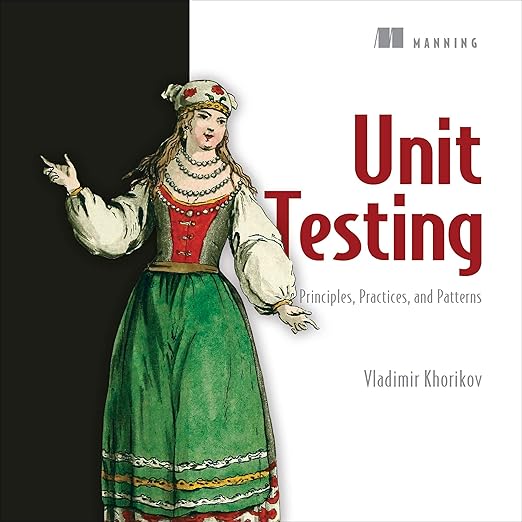
I was halfway through my evening run when a reviewer’s phrase from the listener notes stopped me: “you either create solid tests that bring value to your software or you write none.” It’s the kind of formulation that sounds extreme until you sit with it for a moment and realize it’s describing something you’ve actually experienced. Tests that give you false confidence, tests that break every time you refactor, tests that pass while hiding the real bug underneath. Vladimir Khorikov wrote Unit Testing Principles, Practices, and Patterns specifically for developers who have internalized the testing habit but suspect the habit has become a performance rather than a discipline.
At seven hours and eighteen minutes, this is a substantive listen. Nate Colitto’s narration is measured and clear, which is exactly right for material that requires careful attention rather than entertainment. The pace is unhurried without being slow, and the technical terminology is delivered with enough precision that you can follow the argument even when Khorikov is building toward a fairly nuanced distinction.
The Test Value Calculation, Done Properly
The book’s core intellectual contribution is a framework for evaluating whether a given test is worth writing, maintaining, and keeping in your test suite. Khorikov proposes that test value is a function of several factors: how well the test protects against regressions, how resistant it is to false positives during refactoring, how fast it runs, and how maintainable it is over time. This sounds obvious in the abstract, but the book is genuinely useful because it works through the tradeoffs between these factors in concrete terms rather than asserting them as principles and moving on.
The treatment of anti-patterns is where many listeners will get the most immediate practical value. Khorikov identifies and names patterns that experienced developers recognize but may not have articulated: tests that verify implementation details rather than behavior, overuse of mocks that creates coupling between tests and internals, test suites that are so fragile that any refactoring requires extensive test rewriting. The framework he provides for identifying these patterns is applicable across languages, and the C# examples in the book’s corresponding text translate clearly enough to other object-oriented contexts that the language choice doesn’t limit the audience significantly.
Integration Tests, Briefly but Well
One section that may surprise listeners expecting a pure unit testing text is the coverage of integration tests as a necessary complement to unit testing rather than a competing approach. Khorikov argues that integration tests verify the whole system in ways that unit tests structurally cannot, and that a test suite composed exclusively of unit tests will always have blind spots. This position is defensible and well-argued, though listeners who came to the book specifically for unit testing guidance may find themselves somewhat restless during the integration sections. The argument is worth following, but it does shift the scope of the book somewhat from its title’s promise.
The listener reviews available are enthusiastic and specific, which is a good sign. One reviewer with fifteen years of testing experience across multiple languages calls this the best book on the subject they’ve encountered. That’s a credible endorsement, and it aligns with what the book actually delivers: not a beginner’s introduction but a genuinely advanced argument about testing philosophy that has concrete practical implications.
The PDF Companion and the Audiobook Question
Audible includes a PDF companion with this title, and for a book that involves code analysis and pattern recognition, that PDF will carry real weight for many listeners. The audio format handles the conceptual argument well. Khorikov’s reasoning is sequential and can be followed without looking at code. But listeners who want to examine specific examples closely, or who prefer to annotate as they go, will get more from the written text as a parallel reference. This is not a limitation unique to this title: programming books in audio format always have this tension, and Khorikov’s text is better positioned than most because the argument doesn’t depend heavily on code comprehension. Still, keep the PDF accessible.
At 4.7 stars across 233 reviews, this is a title with substantial listener validation. The rating reflects a genuine quality floor. The few lower reviews seem to come from listeners expecting a beginner-level introduction, which the book explicitly is not. If you know what unit testing is and have been doing it for long enough to wonder whether you’re doing it well, this is exactly the book you’re looking for.
Frequently Asked Questions
Do I need to know C# to get value from this audiobook, given that the code examples use that language?
Not in any deep sense. Khorikov’s core arguments are about testing philosophy and design principles that apply across object-oriented languages. The C# examples are illustrative, and the underlying concepts translate to Java, Python, or any other language you work in. The accompanying PDF companion is where language-specific code appears, and the audio discussion doesn’t require you to follow every syntax detail.
Does the book cover test-driven development, or is it focused specifically on evaluating and improving existing tests?
The focus is on what makes a test valuable and how to recognize anti-patterns, which applies both to TDD practitioners and to developers retrofitting tests onto existing code. TDD is mentioned contextually but this isn’t a TDD primer. It’s most directly useful for developers who already write tests and want to write better ones.
What distinguishes Khorikov’s approach from the standard ‘write more tests’ advice that most testing guides give?
Khorikov explicitly argues against test quantity as a meaningful metric. His framework evaluates tests on protection value, refactoring resistance, speed, and maintainability, and he spends substantial time on how high test counts with poor quality create maintenance burdens that slow development. The central claim is that a small suite of well-designed tests outperforms a large suite of poorly designed ones.
Is the section on integration tests developed enough to serve as a standalone resource, or is it primarily a bridge back to the unit testing content?
It’s developed enough to be substantive but is clearly positioned as complementary to the unit testing argument rather than a freestanding guide to integration testing. Listeners specifically looking for integration testing depth will want a dedicated resource; those looking to understand how the two approaches relate will find the coverage very useful.