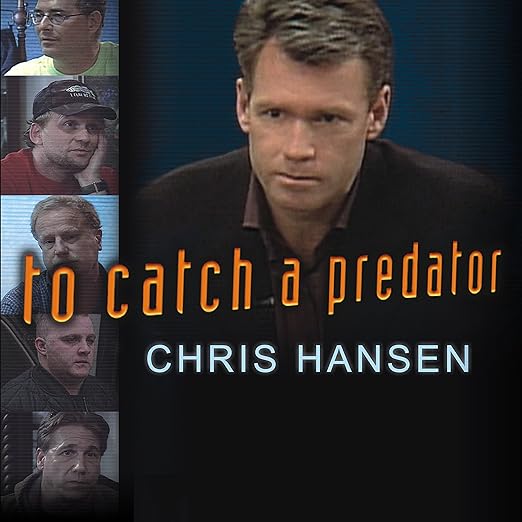
At a Glance
- Read by: Todd McLaren's measured, authoritative delivery suits the gravity of Chris Hansen's subject matter, lending the audiobook the tone of serious investigative journalism.
- At its heart: Online child safety, predator psychology and tactics, parental protection strategies
- Vibe: Sobering, urgent, and practically focused
- Short version: Chris Hansen's audiobook extends the Dateline investigations into a genuinely useful child safety resource that goes considerably deeper than any television segment could allow.
Chris Hansen built a television career on confrontation. The Dateline NBC To Catch a Predator segments, which ran through the mid-2000s and caught over two hundred potential child predators, created a format that was simultaneously investigative journalism and reality television spectacle. More than 40 million Americans watched those segments. The audiobook that accompanied the investigation is something different in kind from the television show, and understanding that difference is essential to knowing whether this is the right listen for you. Todd McLaren narrates what is, at its core, a child safety manual written by someone who has spent significant time understanding exactly how online predators operate and exactly why they keep finding new victims despite years of public awareness campaigns.
McLaren's Register Stays Serious for Eight Hours
Hansen's audiobook does something the television format structurally cannot: it spends time with the families who were targeted rather than with the predators who were caught. The show's drama derives from confrontation. The audiobook's utility derives from prevention: how does this happen, what does the approach look like from inside a family that thought it was doing everything right, and what can parents do differently before the moment of crisis arrives. Daniel Medina's review makes this distinction precisely. Hansen, he writes, "digs deeper into the realities of dangerous/potential internet sex predators than any interview ever given on the television" and "writes on a whole other level of depth." That depth requires the audiobook format to deliver what television cannot: sustained engagement with complexity rather than highlights. The audiobook draws on perspectives from police officers, therapists, and in an unusual and important editorial decision, from the predators themselves, on what approaches are most effective for preventing these crimes. Soliciting that last perspective risks appearing exploitative, but Hansen uses it with clear purpose: parents cannot effectively protect against tactics they do not understand, and understanding those tactics requires hearing them described by people who used them. Charles D. Maynard's review captures the experience of arriving with voyeuristic expectations and leaving with something more uncomfortable. The audiobook "forces reflection" rather than satisfying a dark curiosity about predator behavior. Todd McLaren's narration across eight and a half hours is calibrated correctly for this material. He does not treat the families' stories with the heightened drama of documentary narration, and he does not treat the predators' perspectives as interesting primarily for their shock value. The register is serious, consistent, and appropriate to the weight of what Hansen is writing about. The 4.5 rating across 70 reviews reflects a consistently satisfied listener base for a book that asks its audience to confront material they would often prefer to avoid.
Conversations You've Heard Come Back More Naturally
The audiobook format gives this content a significant practical advantage over print: it is accessible during activities that exclude book reading. Parents driving, exercising, or managing household tasks who would not carve out reading time for a child safety book will absorb this material through audio in the course of their ordinary day. At eight hours and 28 minutes, this is substantive listening, but the chapters are structured for sustained engagement rather than requiring marathon sessions. The audiobook can be completed across a week of commutes or exercise sessions without losing the thread of Hansen's argument. The most immediately practical section of the audiobook, Hansen's guidance on how to initiate conversations with children about online safety in ways that do not produce shutdown or avoidance, is particularly well-suited to audio absorption. Language that you have heard rather than read tends to come back more naturally in actual conversation, which makes the audiobook format directly functional for parents who want to use Hansen's suggested approaches with their own children.
Predator Psychology Outlasts the Mid-2000s Platforms
The audiobook's connection to the Dateline series means that some listeners will arrive expecting material more closely resembling the televised confrontations: the specific predators, the dramatic reveals, the criminal proceedings. Hansen is more interested in structural prevention than in those narrative satisfactions, and listeners should adjust their expectations accordingly. The book was published to accompany the peak of the Dateline segments, and some specific platform and technological references reflect the mid-2000s online landscape that has changed considerably. The psychology of predatory behavior and the family communication strategies, however, are not platform-specific; they describe patterns of relationship building and manipulation that operate across technological contexts. The stories of targeted families are handled with sensitivity but are emotionally difficult, and parents of young children should be prepared for the specific weight of those accounts before beginning the audiobook.
Educators Find a Real Research Base Here
Parents of children who use the internet, which is now effectively all parents of school-age children, will find this audiobook directly and practically relevant. The book does not require prior familiarity with the Dateline series, and Hansen provides sufficient context about the investigations early in the audio to ground new listeners. Parents who have already started online safety conversations with their children will find the specific guidance on escalating those conversations and addressing predator tactics most valuable. Educators, school counselors, and community organizations working on digital safety will find this audiobook a substantive research base for programs and parent communications. Listeners seeking true-crime entertainment will find the audiobook considerably more educational in orientation than the television series suggested it might be, and that reorientation is precisely the point. Hansen is not trying to entertain you with the predators he caught; he is trying to equip you to protect the children you love from the ones he did not.
Do I need to have watched the Dateline To Catch a Predator series to get value from this audiobook?
No. Hansen provides sufficient context about the television investigation early in the audiobook. The book is designed to stand alone as a child safety resource, and the most valuable content goes well beyond what the television format could cover.
Is the predator psychology and safety advice in this audiobook still relevant given changes in online platforms since it was published?
The psychological tactics predators use and the family communication strategies Hansen recommends are durable across platform changes. Some specific technological references may be dated, but the core guidance on how predatory relationships develop and how to interrupt them remains applicable.
How does Todd McLaren's narration handle the emotionally difficult content in this audiobook?
McLaren maintains a measured, serious tone throughout. He does not sensationalize the accounts of targeted families or the predators' perspectives, giving the material the gravity it requires without making it feel like dramatic performance.