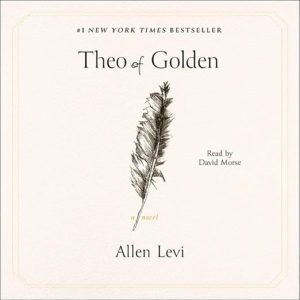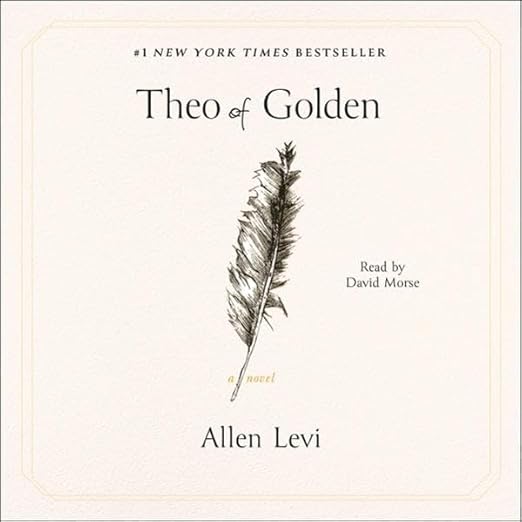
Quick Take
- Voice: David Morse holds the only credit on the file, though the description also promises an author-read afterword that the credit block never mentions.
- Big ideas: generosity as an exchange rather than a gift, small-town portraiture, secrets traded for kindness
- Atmosphere: Unhurried and warm, with a steady undertow of regret
- Worth it?: An episodic, conversational novel that suits listening better than most literary fiction, provided you can accept a saintly stranger at its center.
Kindness is a hard subject to write about without going soft, and harder still to sustain across thirteen hours of audio. Allen Levi puts a stranger named Theo into a small Southern city called Golden, sends him to a coffeehouse where pencil portraits of local people hang on the walls, and has him buy those portraits one at a time so he can hand each one back to the person it shows. In exchange he asks only for that person's story. That is the whole engine, and this audiobook runs thirteen hours and twelve minutes on it.
The One Reader Who Finds Theo Unreal
Only one response on the page carries fewer than five stars, and it is easily the most useful of them. That four-star credits the cozy small-town texture, the coffee shop conversations, the secondary characters whose struggles and hopes register as human, and then puts its reservation in its own headline: the main character felt a bit unreal. It also describes Levi's style as calm and reflective, the sort that asks you to slow down. Slowing down is easy in audio. Believing in a man who arrives with money, no explanation and unlimited patience is what this recording has thirteen hours to sell you, and one listener in five did not buy it.
Typos and an Uncredited Second Narrator
Proofreading did not happen on this listing. Its first line announces a number one New York Times bestselling PHENONEMON, letters transposed, and the line beneath runs two book club endorsements together with no punctuation between them: A Katie Couric Book Club Pick A Jen Hatmaker Book Club Pick. None of that reaches the recording. What it does tell you is that the page was assembled fast, which matters here, because this page is the only place the production details appear at all.
Worth checking before you buy: the description promises a brand new afterword about the writing of the novel, narrated by the author, while the narration field carries a single name. David Morse takes that credit alone, so a second voice on the file appears nowhere in the credits. Small for a listener, less small for anyone deciding whether Levi's afterword runs four minutes or forty. Nothing on the page answers that question, and no chapter breakdown is offered either.
A Vivid Performance Built for Starting and Stopping
Exactly one entry here grades the reading apart from the writing, which almost nothing in this column bothers to do. That entry argues an exceptional narration is rarer than an exceptional book, credits the performance rather than the prose with carrying the story off the page into what it calls a vivid emotional landscape, and says this audiobook managed both at once. One listener's account, certainly, and still the only direct evidence anyone has left about how the file actually sounds.
Structurally the novel is built for the format. Portrait, person, story, repeat: each exchange arrives as a self-contained scene with its own beginning and end, so you can stop mid-chapter and come back two days later without having lost the thread. Very little literary fiction survives that treatment. This one is designed for it, since the design is a sequence of conversations rather than a plot with a clock attached to it.
Theo's Exchange and a Voice Kept Plain
Levi's central exchange is worth the listening time on its own. Theo pays money for a picture and asks for a story back, which quietly reverses the usual direction of charity: the person being helped supplies the thing of value. The book never says this out loud and is better for the restraint. Across thirteen hours you watch the same transaction land differently on one person after another, and that variation is where the novel does its thinking.
What the material asks of a voice is restraint rather than range. A book about generosity tips into sentiment the second a reader starts underlining it, and thirteen hours of underlining would be unbearable. These scenes want a confession about private regret delivered flat, with the sentence left to do the work. Morse's credit sits under a novel that punishes anything warmer than plain.
Career Gaps and a Misplaced Classics Tag
Nothing on this listing says who Allen Levi is. A five-star filed in early February supplies it instead, calling the novel a debut, describing a prior career in songwriting and law, dating the writing to 2019 and 2020, and remarking on how much Portugal turns up in the text. All of that is one reader's account rather than publisher fact, and all of it is more biography than the product page carries anywhere.
Category placement is the next flag. A novel released in December 2025 sits here under a Classics tag, a label that ordinarily promises decades of distance. Anyone filtering that shelf wants something else, and the readers who would take to this book are not filtering by it. The genre field underneath reads literature and fiction, which is accurate; the tag above it is doing real damage to who ever finds the file.
Tonal risk is the last item, and the column will not help you weigh it. Five written responses sit on the page, four of them unqualified, one offering six stars if six were on the menu. Warmth of this kind produces exactly that response, and it produces the opposite too, and the opposite is not represented here at all. If moral cheerfulness makes you itch, thirteen hours is a long stretch in which to find out.
Patient Listeners, Not Readers Who Need Forward Motion
Readers who want a novel where nothing detonates and everything accumulates are the audience for this one. So are listeners who came to audio for company rather than plot, and anyone who has run out of quiet books. One five-star arrived from outside that readership altogether, saying this was not content that reader would normally seek and that the cover and the title did the persuading. For a book with no genre machinery behind it, that is the most encouraging line on the page.
Hold off if you need forward motion, or if a stranger with unlimited money and unlimited time registers as a device rather than a person. Patience is what carries a listener past that objection, and a less patient one reaches it sooner and stops. And if the afterword is what you are buying, listen to a sample before committing, because the credit block never mentions it and the page will not say how long it runs.
Good to Know
How long is the Theo of Golden audiobook, and how many voices are on it?
Thirteen hours and twelve minutes, and at least two voices. David Morse holds the narration credit, while the description hands the closing essay on how the book came to be written to Allen Levi. Only one of those names reaches the reader field, so the second performance goes entirely undocumented.
Why is a novel from December 2025 tagged as a classic?
Nothing on the record explains it. Simon Maverick released the recording on December 2, 2025, and the page files it under literature and fiction with a Classics tag attached. Read that tag as a shelving error rather than a claim about the book's age, and search by the author's name instead.
Is the author's afterword part of the audiobook, and how long does it last?
The description says the afterword is included and names Levi as its reader. No runtime is given for that section and it is not broken out in any chapter list on the page, so if the afterword is your reason for buying, check a sample before committing to a thirteen hour file.
How much of the plot does the listing copy reveal in advance?
Less than most. The copy sets up the premise, the portraits and the trade of pictures for stories, then stops before a single one of those individual stories arrives. You can read the whole page without losing anything, which makes it a fair test of whether the premise appeals to you.