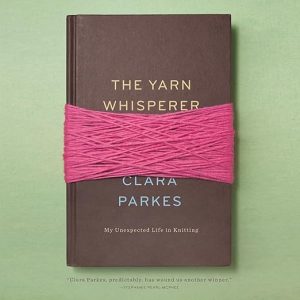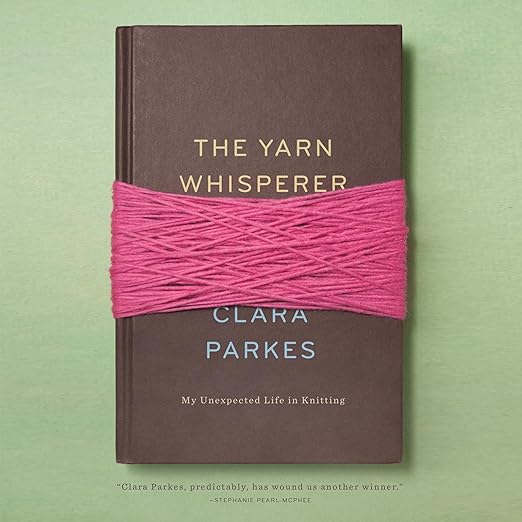
I came to The Yarn Whisperer on a recommendation from someone who prefaced it by saying, you don't have to knit to love this. That preface matters because the title and the cover do suggest a niche audience, and it would be easy to scroll past it if your relationship to yarn is purely decorative. I am not a knitter. I finished it in three evenings, with a cup of tea that got cold twice because I forgot to drink it. Clara Parkes is that kind of writer: the kind who makes you forget you were doing something else.
The Yarn Whisperer is a collection of twenty-two essays, each connected to knitting but none reducible to it. The preface tells you exactly what the book is doing: stockinette, ribbing, cables, the humble yarn over, these stitches are triggers for places and times and people and conversations, the things we've tucked away in memory. Over time, those stitches form a map of our lives. Parkes is interested in knitting as autobiography, and the essays use specific technical knowledge as a doorway into something much larger. The writing about the Kitchener stitch, which reviewers consistently single out, is ostensibly about a method of joining live stitches. It's actually about something else entirely. That pattern, using craft knowledge as a way into emotional territory, runs through all twenty-two pieces.
Parkes Times Her Own Rueful Pauses
Author-narrated audiobooks are a risk. Writers are not always readers, and a technically accomplished prose stylist can be a disappointing audio presence. Parkes is the exception. She narrates with the same dry, warm, slightly rueful quality that the writing itself carries. There are moments in this collection where the humor arrives with the timing of someone who has told a version of a story before and knows exactly when the pause should fall. She gives herself that pause. The result is a listening experience that feels conversational rather than performed, which is precisely what essay writing at its best is supposed to feel like.
The New Jersey Courier News comparison to Mark Twain's dry humor is not an exaggeration, and it's even more apparent when Parkes reads aloud than when you encounter the same sentences on the page. The self-deprecating observations land differently when delivered in the voice of someone who clearly knows how funny they are without quite admitting it. That combination of warmth and wit is rare in any form of nonfiction writing, and it's rarer still in a niche craft memoir.
When the Knitting Metaphor Becomes a Cliche
At least one reviewer found that the extended knitting metaphors, used throughout the collection as connective tissue between observations about life and observations about yarn, became repetitive and eventually numbing. By the sixth chapter, one reader noted, the metaphor had become a cliche no matter how the author spun it. This is a genuine issue with the collection's design. When every essay returns to knitting as its central organizing principle, there is a risk of the principle becoming wallpaper rather than a window. The essays that work best for the broadest range of readers are those where the knitting content is present but not dominant, where Parkes is clearly writing about something else and the craft knowledge is texture rather than argument.
Another reviewer noted less enthusiasm for the chapters drawing parallels between knitting and unrelated things like roads and baking, and more enthusiasm for the chapters grounded in the author's own life events. That preference tracks with what the book does most distinctively: personal history filtered through the specific sensory experience of making something with your hands. When Parkes stays close to that combination, the writing is very good. When it becomes more explicitly allegorical, the results are more uneven.
Before-Bed Listening for Four and a Half Hours
At four and a half hours, The Yarn Whisperer is one of the shorter audiobooks in any catalog, and its essay format makes it genuinely suited to non-linear listening. Each chapter stands alone. There's no narrative thread that requires you to have heard what came before, which means this works beautifully as pre-sleep audio, as commute listening, or as something to return to in pieces rather than consume straight through. Several reviewers explicitly describe it as ideal before-bed audio for exactly this reason.
The chapters about childhood, family, and the specific pleasure of privacy, the sections where knitting is clearly a container for something more universal, tend to land with the most consistent force across readers who do and don't share the craft. Vogue Knitting described it as the quintessential sampler afghan of knit lit, which is accurate but a little too insider to serve as a general recommendation. The Twain comparison from a general-audience publication is a better guide to what the book actually offers someone coming in without a background in knitting culture.
Quilters and Woodworkers Will Recognize This Feeling
Knitters will love this unreservedly. Anyone who has ever found themselves in a craft community, quilters, woodworkers, ceramicists, and felt the strange and genuine emotional depth of what people mean when they say they make things, will find significant common ground here. Non-knitters who appreciate personal essay writing in the tradition of something carefully observed and dryly funny should give this four and a half hours serious consideration. If the knitting is completely alien to you and extended metaphor is not your preferred mode, the collection may leave you cold. But for most readers who approach it with curiosity rather than skepticism, it offers considerably more than its niche packaging suggests.
In Brief
- Read by: Clara Parkes reads her own work, and her dry, warm delivery is inseparable from why these essays land.
- At its heart: craft as autobiography, knitting as a map of memory, the community of makers
- Vibe: Gently funny and occasionally wistful, best enjoyed in short sessions like the essays themselves
- Short version: A collection that earns its cult following among knitters and offers more than expected to readers who have never held a needle.