I came to The Way of the Wildflower on a Sunday morning when I was specifically looking for something that would not compete with my attention but would give it somewhere quiet to land. I am not Ruth Chou Simons's natural audience, I approach devotional writing from an outside position, though I have spent enough time with the genre to recognize when it is doing something genuine versus when it is packaging sentimentality as spiritual formation. This audiobook is doing something genuine, and the gap between those two modes is worth naming clearly.
Simons is a bestselling author, artist, and speaker whose previous work, including GraceLaced and Beholding and Becoming, has found a wide readership among Christian women looking for devotional content that is both artistically serious and theologically substantive. The Way of the Wildflower is her thirty-meditation devotional organized around five characteristics of wildflowers: Dependency, Freedom, Resilience, Unhurriedness, and Belovedness. Each meditation pairs botanical observation with biblical text with personal application with prayer. The structure is consistent across all thirty entries, which gives the audiobook a reliable rhythm that works well for sequential listening or for returning to individual meditations over weeks or months.
Simons Reads Her Own Anxiety Aloud
Simons reads her own devotional, and this is the most significant fact about the audiobook experience. The material is explicitly personal, Simons is writing from her own wrestling with anxiety, the temptation toward self-sufficiency, the specific exhaustion of carrying burdens she was not designed to carry, and having her own voice carry those admissions gives them a quality that a third-party narrator could not approximate. There is a moment in the meditations on Dependency where she speaks about learning to receive care rather than constantly provide it, and the slight vulnerability in her voice is not performed. It registers as lived, as something she has actually worked through rather than something she is presenting as resolved from a comfortable distance.
One reviewer described this as Ruth Chou Simons's best work to date, and several others noted the specific way the book unpacks complicated issues through the simple truth of God's Word. From a literary standpoint, that simplicity is the technical achievement: Simons is distilling without oversimplifying, making complex emotional and theological territory accessible without flattening it into inspirational cliche. The thirty meditations hold together as a sustained argument rather than as a collection of loosely related devotional pieces, and that coherence is audible across the four-hour runtime.
Wildflowers Carry the Book's Real Argument
The organizing conceit of wildflowers is not merely decorative. Simons draws on Luke 12:25-28 as her primary text, the passage about how God clothes the wildflowers of the field, and the implication that if God's care extends to something so transient, it extends more fully to those who bear God's image. This is a familiar argument from Christian spirituality, but Simons works it with enough specificity that it does not feel like a recycled premise. Each meditation includes botanical information, real facts about how specific wildflowers grow, persist, and propagate, and uses those facts as a lens for the accompanying spiritual reflection.
The botanical facts are not padding. They are the organizing principle. Simons uses the wildflower's dependency on conditions beyond its control, its lack of labor or spinning, its resilience across seasons, as active arguments about what human life is designed to look like when it is not distorted by the need to control outcomes. For listeners open to this mode of reasoning, the framework is genuinely illuminating. The meditations on Unhurriedness are particularly sharp, Simons is addressing a specific cultural formation in which productivity and self-reliance have become not just habits but identities, and she is offering a theological argument for why that formation is worth examining at its root.
Embossed Pages the Audio Cannot Carry
The Way of the Wildflower is specifically pitched at listeners who have been described to themselves as capable or strong, and who have come to understand that this capability has been purchased at the cost of genuine rest, genuine dependence, and genuine receptivity to care. Reviewers consistently describe the book as touching on loneliness, unworthiness, anxiety, and similar experiences, the full spectrum of what it means to carry more than you were designed to carry while presenting a composed exterior to everyone around you.
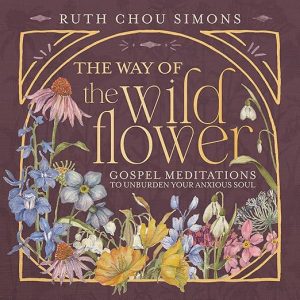
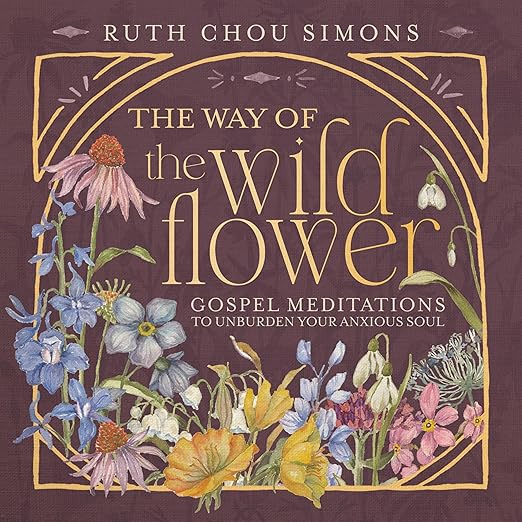
Reviewers praise the print version's physical qualities extensively, noting the hand-painted botanicals and embossed pages, none of which the audio listener has access to. This is worth acknowledging: the print version of this devotional is clearly a different experience from the audio version, and for listeners who engage visually as a primary mode of devotional attention, the audiobook is a meaningful but partial substitute. Simons's narration is genuine enough that the audio stands on its own terms, but the full artistic experience she designed lives in part on the printed page alongside the spoken word.
Thirty Meditations, Best Taken One Daily
Four hours for thirty meditations is a duration that invites both approaches: one extended listening session, or thirty individual sessions spread across a month. The internal evidence of the book suggests the latter was the intended use, each meditation is complete enough to stand alone, and the prayers that close each section function as natural daily endpoints rather than as transitions to be moved past quickly. Listeners who use The Way of the Wildflower as daily companion material, returning to the same meditation more than once before moving to the next, will find the format serves that intention well.
Listen if you are a Christian listener looking for gospel-centered devotional content that is theologically honest without being academically demanding, and that demonstrates through its own form that gentleness is a viable approach to spiritual formation. Skip if you are looking for a general wellness or mindfulness title, this is explicitly Christ-centered and will not translate well to a secular framework. Skip if the botanical metaphor framework is not your mode; the organizing conceit is sustained and pervasive, not occasional, and it shapes every meditation in the collection.
Common Questions
Can The Way of the Wildflower be listened to sequentially or is it better as a daily devotional format?
Both work. The audiobook runs four hours for thirty meditations, which makes sequential listening sustainable in a few sittings. It is also structured for daily devotional use, each meditation is self-contained and returns to the same organizing rhythm, which makes it easy to pause and return over weeks or months. Simons's own framing suggests a slow, meditative engagement rather than cover-to-cover consumption.
Does the audiobook lose something significant compared to the print version, given reviewers' praise of the physical book?
Yes, partially. The print version features Simons's hand-painted botanical artwork throughout, and reviewers consistently describe the physical object as visually stunning in ways that contribute to the devotional experience. The audiobook delivers Simons's narration and the full text of the meditations, but listeners will miss the visual dimension that is integral to the designed experience.
How does The Way of the Wildflower compare to Simons's earlier devotional work like GraceLaced?
Reviewers who know Simons's earlier work describe this as her best to date, suggesting a deepening of both the artistic and theological execution. The botanical framework is more consistently developed than the grace-and-beauty organizing metaphor of GraceLaced, and the meditations on anxiety and self-sufficiency address emotional territory that feels more personally specific than her earlier, broader scope.