Quick Take
- Narration: Evan Traasdahl delivers the instructional content clearly and accessibly, keeping the seven-step framework easy to track across five and a half hours.
- Themes: Ecological design, sustainable gardening, working with natural systems rather than against them
- Mood: Practical and encouraging, the kind of book that makes you want to go outside and start observing
- Verdict: A solid permaculture introduction that succeeds at making a genuinely complex subject feel approachable without being reductive.
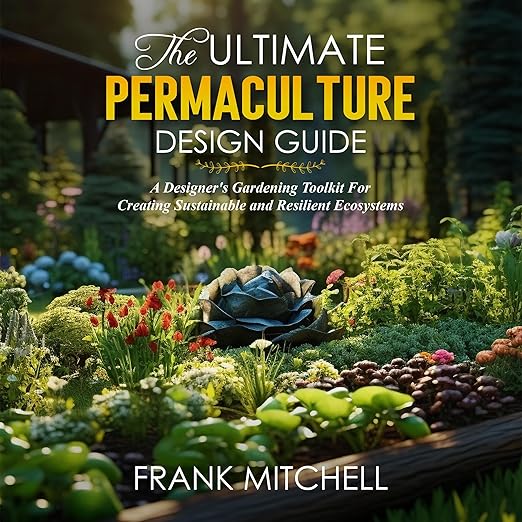
I came to The Ultimate Permaculture Design Guide having gardened for years without ever thinking systematically about what I was doing to the soil or the broader ecosystem around me. Most gardening books tell you what to plant and when. Frank Mitchell’s book asks a prior question: what kind of system are you trying to build, and how does nature already do this better than you are? It is a different way of thinking about what a garden is, and the audiobook gives you five and a half hours to sit with that shift in perspective.
Mitchell spent years working in permaculture before distilling his approach into what he calls a seven-step design process. The framework is built around observation and pattern-matching: before you do anything to your land, you watch it, understand what it is already doing, and design with those patterns rather than against them. That sounds simple. The book demonstrates how much attention and knowledge that simplicity actually requires.
Our Take on The Ultimate Permaculture Design Guide
The strongest element of the book is its treatment of soil. Mitchell devotes substantial attention to how conventional gardening degrades soil fertility over time, and the seven ways he describes for improving soil quality give practical shape to what could otherwise remain an abstract ecological principle. One reviewer who had gardened for years without approaching it from a permaculture perspective described the book’s explanation of progressive tiers or rings of cultivation, from personal garden to managed land to wild nature, as particularly clarifying. That spatial framework is one of permaculture’s distinctive contributions to ecological thinking, and Mitchell explains it well.
The coverage of pest management is also worth noting. The zero-input approach to pest control, using diverse animal, bird, and insect populations to maintain balance, requires a gardener to think about their plot as a habitat rather than a production facility. Mitchell explains how to build that habitat deliberately, which involves a different kind of garden planning than most readers will have encountered. Evan Traasdahl’s narration moves through these sections at a pace that allows the concepts to land without feeling rushed.
Why Listen to The Ultimate Permaculture Design Guide
Listeners who pick up this book from the Audible library will also receive a PDF companion, which is a meaningful practical supplement. Permaculture design involves site planning, zone mapping, and landscaping decisions that benefit from visual representation. The PDF includes DIY maps and diagrams that the audio alone cannot replace, and Mitchell apparently anticipated this by building the PDF into the package.
Reviewers consistently describe the book as well-organized and accessible despite the breadth of material covered. One reviewer who felt initially overwhelmed said it was easy to search for specific information in the moment, which is a property of the print version that transfers usefully to the audio when the listener knows what section they want to revisit. At 4.5 stars across 99 ratings, the audience response reflects genuine satisfaction with the balance between scope and accessibility.
What to Watch For in The Ultimate Permaculture Design Guide
The book is explicitly a guide to principles and design thinking rather than a manual for specific crops or climates. Mitchell does not tell you which herbs to grow in your particular region or how to handle the specific soil conditions of your climate zone. The book operates at the level of framework, and listeners who need region-specific implementation advice will need to supplement this with more targeted resources.
The marketing language around the book, specifically the promise of designing your garden in just 7 steps, slightly undersells what permaculture actually involves. The seven-step process is a way in, not a complete answer. Readers who approach expecting a shortcut to sustainable gardening will find that the book is more demanding than that framing suggests, though in a rewarding rather than discouraging way.
Who Should Listen to The Ultimate Permaculture Design Guide
Experienced gardeners who sense something is missing from their practice but have not had language for it will find Mitchell’s framework provides that language. Beginners who want to start gardening with ecological principles from the outset rather than retrofitting them later will find this a better starting point than conventional gardening books. Urban homesteaders, smallholders, and anyone converting lawn to food production will find specific material on rainwater harvesting, irrigation channels, and food forest design directly applicable. Listeners who need step-by-step crop-specific guidance rather than design principles should look for more regionally targeted resources alongside this one.
Frequently Asked Questions
Is this book suitable for complete beginners to permaculture or does it assume prior knowledge?
Mitchell writes for beginners and experienced gardeners simultaneously. The seven-step framework provides a structure that beginners can follow, and the philosophical grounding in permaculture principles is explained from first principles. Experienced gardeners will find depth in the design thinking even if they already know some of the techniques.
Does the PDF companion make a significant difference to the value of the audiobook?
Yes, notably. Permaculture design involves site planning and zone mapping that benefits from visual diagrams. The PDF companion, available in the Audible library, includes maps and illustrations that the audio alone cannot convey. Listeners planning to implement what they learn should download it alongside the audio.
How does Evan Traasdahl’s narration handle the technical sections on soil and water management?
Reviewers describe the overall listening experience as accessible and well-paced. Traasdahl moves through technical content clearly without oversimplifying or rushing, which allows the framework to accumulate without becoming overwhelming.
Does the book address permaculture in small urban spaces or is it focused on larger rural properties?
Mitchell’s framework scales, and the zone system he describes begins with the most intensively managed space closest to the home and expands outward. The principles apply to backyard plots and larger properties alike, though some specific techniques, such as full food forest design, are better suited to properties with more land.