Before You Press Play
- Themes: Italian wine regions, trip planning, vineyard tourism, practical travel logistics
- Mood: Chatty, practical, cheerfully commercial
- Verdict: Worth an evening before you book anything, provided you understand that half of what the sales copy advertises is unavailable in audio.
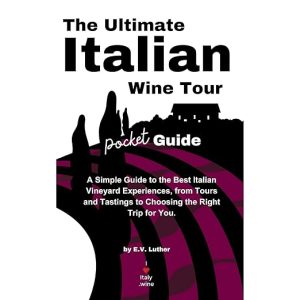
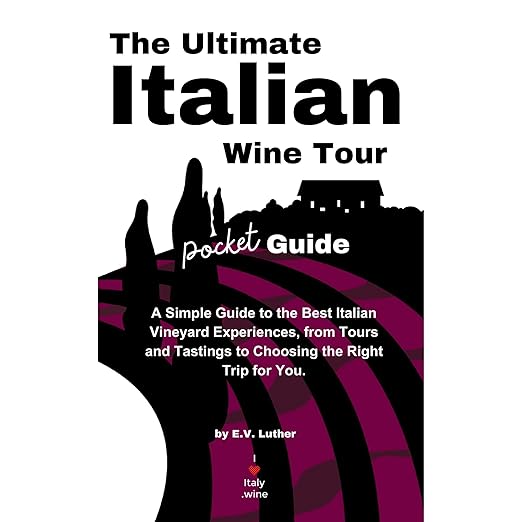
Wine tourism runs on logistics far more than on tasting notes. Opening hours, which train gets you from Milan toward Piedmont, whether a cellar takes walk-ins, who to email three weeks ahead. This audiobook sets out to be the thing you consult before and during a trip through the Italian wine regions, and the first item worth flagging is the reader credit, which reads Virtual Voice. That is a machine-generated performance rather than a person, on a book that undertakes to teach you Italian pronunciation.
Planning, not tasting, is the job this sets itself. A short history of Italian wine opens it, deliberately compressed, and then the book gets down to business. Grape varieties and winemaking technique get an overview rather than a treatise, which is the correct call for a listener who wants to know what to expect in a tasting room rather than how fermentation works. After that it is regions: Tuscany, Piedmont, Veneto and more, each with a chapter naming local vineyards, wineries and wines, when to visit, what the experience is actually like, and which sort of traveler it suits.
Then it keeps going well past where most wine books stop. Packing, jetlag, arrivals at Roma, Milan and Palermo, how to use the train system, basic Italian phrases and pronunciation, useful contacts, emergency numbers, and a section on what to do when things go wrong. That is a travel handbook using wine as its organizing principle rather than a wine book with a map bound into the back, and the distinction shows up in what the written responses actually praise.
One of them describes the intended use pattern exactly: "you can read cover to cover as it has an abundance of knowledge or you can use the clear chapters to skip to chapters relevant to your travel." Both halves of that sentence describe a printed object. The first half works fine as a recording. The second does not work at all, and nothing on this listing acknowledges the gap between them.
Preparation Is Where This Audiobook Actually Wins
Preparation is where a recording genuinely wins. Five and a half hours of regional context absorbed in the weeks before departure does what a guide consulted at the cellar door cannot: it puts the difference between Tuscany and Piedmont into your head before you have to choose between them. One response describes precisely that sequence, having loved the earlier volume and found this one going deeper on what each region offers a visitor.
Tone survives the format better than expected. It is chatty, self-deprecating and openly commercial, cheerfully labeling its own plug for the previous book a shameless plug. The description also warns, with the resignation of somebody who has watched people improvise a holiday and regret it, that failing to prepare is preparing to fail. Heard aloud, that register lands closer to a friend talking you through a trip than to a reference work, and it holds attention better than travel writing usually does.
Practical detail is unusually concrete for the genre. A response from the United States describes using it to plan a wine tour through Sicily, specifically for contact details and booking advice, and reports that it worked. Another singles out the advice as pitched at ordinary drinkers rather than only at experts, calling it "not just for snobby wine connoisseurs but also the average joe." Both are useful signals about who the writing is actually aimed at.
Maps Vanish, and So Does the Earlier Volume
Nothing you would want to look at survives the transfer. Hand-drawn maps and illustrations are advertised as a headline feature, and one response opens its praise with affection for "the hand-drawn illustrations and the handy-hints." All of it is gone. So are the opening hours, the contacts and the emergency numbers, which are lookup data rather than listening material, and which the sales copy offers as reasons to buy.
Dates on this page tell a story worth knowing beforehand. Every written response arrived between January and May of 2024, while the listing itself is dated March 2026. That puts all five of them roughly two years earlier than the recording, describing the edition it was made from rather than the thing being sold. All five awarded full marks, incidentally, while the counter shows 4.5 across sixteen scores, so the average and the visible pool are plainly not measuring the same population.
Freshness is a live question for any travel guide and this listing raises it twice over. The written responses were composed around trips being planned in 2024, the recording arrived in 2026, and opening hours, contact details and booking arrangements are precisely the category of information that expires quietly. Audio is also the format you can least easily correct. Whatever was accurate when the text was set is what you will hear, with no visible revision date anywhere and no way to establish whether the winery a chapter recommends is still receiving visitors at all.
Sequence is unresolved too. The description calls this the second in its sequence and names the earlier volume, The Italian Wine Connoisseur, explaining that the fuller history of Italian winemaking lives there to avoid doubling up. The series line on this listing is blank. Somebody who wants that background is being told, inside the book itself, to buy a title the page never identifies as related.
Buy This to Plan, Buy Paper to Pack
Anyone in the planning stage of an Italian wine trip is the obvious buyer, particularly somebody still choosing between regions rather than somebody who has already booked. The regional chapters are comparative by design, describing what each area gives a visitor, and comparison works better heard than skimmed, because a recording marches you through the whole set instead of letting you jump straight to the region you already fancied.
Enthusiasts who are not going anywhere are served too. A substantial opening stretch is pure context: grape varieties, winemaking technique, the history of the regions. That listens perfectly well as an evening's education for somebody who simply likes Italian wine, and the frankly commercial tone never gets in the way of the information underneath it.
Navigating by the maps means buying the printed edition, and so does using the opening hours, the phrase list or the emergency numbers at the moment you actually need them. Treat this recording as the briefing you take in beforehand and buy paper for the suitcase, or accept that a good half of what the description promises will be unavailable when you are standing outside a locked cellar gate.
A Few Questions About The Ultimate Italian Wine Tour Pocket Guide
Who narrates The Ultimate Italian Wine Tour Pocket Guide audiobook?
No human reader is attached to it. The credit reads Virtual Voice, which denotes a machine-generated performance, and that matters most in the section promising basic Italian phrases and pronunciation, where a synthetic voice is the least dependable possible source of the very thing being taught.
Do the hand-drawn maps come with the audiobook?
No. Neither do the practical tables. Anything on the page that exists to be consulted at a glance, rather than absorbed in sequence, is simply absent from a recording, and that covers a meaningful share of what the sales copy uses to sell the book. Budget for a printed or digital copy alongside this one.
Is this a sequel, and do I need the first book?
It is a second volume, and the earlier one is named inside the text rather than anywhere on the listing. You can follow this alone without difficulty, since the regional chapters assume nothing. You simply receive a compressed version of the historical background instead of the full treatment, which is a deliberate choice the author explains.