Quick Take
- Narration: Antonia Hall reads her own work with the unhurried, meditative warmth that the Tantric-adjacent material demands, this is one of those cases where author-narration is not just a choice but a requirement for the material to work.
- Themes: Multi-orgasmic capacity, Tantric practice, sexual energy as life force
- Mood: Sensual, meditative, and quietly aspirational
- Verdict: A thoughtful guide to expanding sexual experience through Tantric frameworks, best for listeners who approach sexuality as a dimension of personal and spiritual development rather than strictly physical practice.
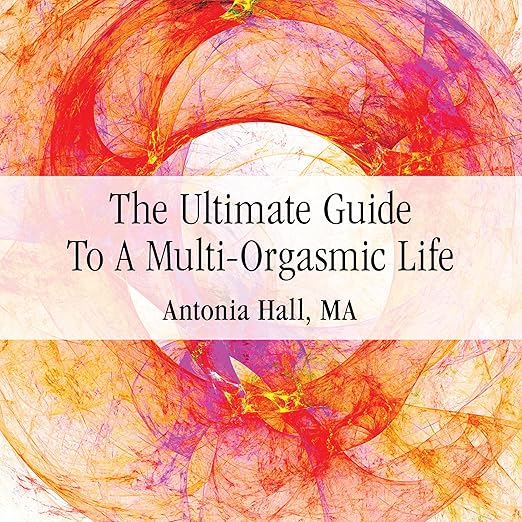
I put on The Ultimate Guide to a Multi-Orgasmic Life on a quiet Saturday morning, which turned out to be exactly the right context for it. Antonia Hall’s narration sets a pace that the subtitle’s ambition would suggest, unhurried, warm, and entirely at ease with the subject. This is not a guide that rushes you toward an outcome. It is a guide that wants you to change your relationship with the whole concept of what an outcome looks like.
Hall, a psychotherapist and relationship expert, draws on Tantric texts that are thousands of years old to frame modern sexual experience. The central argument is that multi-orgasmic capacity and full-body orgasms are available to both men and women, and that most people are not accessing them because they’ve been shaped by cultural messages that treat sexuality as something to manage rather than something to inhabit. The promise in the title is framed less as a technique to acquire than as a quality of living to grow toward, sexual energy as creative and vital force that, when cultivated, radiates into other areas of life.
The Exercises and the Tantric Foundation
The exercises are practical and graduated, but they exist within a philosophical context that distinguishes this guide from purely technique-focused competitors. Hall’s framework asks the listener to first understand why they are not already accessing this capacity, the societal messages, the embodied disconnection, the shame or ambivalence that sits between most people and full pleasure. That preparatory work is significant, and it takes real audio time. Listeners who want to skip to the technique will find the earlier chapters feel theoretical; listeners who engage with the philosophy find that the exercises land differently for having done that work.
The Tantric content is drawn from classical texts and filtered through Hall’s contemporary therapeutic lens. She is not teaching Tantra as a spiritual practice in the traditional sense, but using its insights about energy, breath, presence, and the non-goal-directed quality of pleasure as tools for modern listeners. The combination is accessible enough not to feel esoteric while retaining enough of the original framework to add depth the purely secular guides don’t have. One reviewer with background in erotic mentorship described the narration as “loving guidance and beautiful step-by-step instructions” that create a sensuous relationship with self and partner simultaneously. That framing captures what Hall is reaching for.
What the Runtime Means for This Kind of Material
At four hours and twenty-two minutes, this is a compact listen for the scope of what it’s attempting. The brevity is both a feature and a constraint: the guide moves efficiently through its terrain, which means listeners wanting deeper dives into specific practices may find sections too short. But the runtime also makes it approachable for listeners who might be deterred by a longer commitment to what is, let’s be honest, fairly intimate territory. Multiple revisits of specific sections are probably more valuable than a single straight-through listen.
Hall’s self-narration is the correct choice here in a way that goes beyond preference. The meditative passages, those asking the listener to attend to their body, to their breath, to their sensations, require a voice the listener trusts and can relax into. A hired narrator reading exercises designed to reduce self-consciousness would carry an inevitable distance. Hall’s familiarity with the material, her calm authority, and her sense that she genuinely believes this is worth doing all come through in a way that changes how the exercises land.
Who Should Listen / Who Should Skip
Listen if: you are drawn to Tantric frameworks, you want to understand and expand your orgasmic capacity, or you approach sexuality as a dimension of holistic personal development. The spiritual register is light enough that non-spiritual listeners can engage with the practical content. Skip if: you want a strictly anatomical, technique-focused guide without philosophical framing, or if the concept of sexual energy as life force feels too far from your orientation to take seriously.
Frequently Asked Questions
Is this book relevant to men as well as women, or is it primarily oriented toward women?
Hall is explicit that multi-orgasmic capacity exists in both men and women, and she addresses both throughout the book. The framing is inclusive rather than female-centered, and male listeners report finding the material applicable.
How explicitly does the book describe sexual acts, and is it appropriate to listen to in a shared space?
The content is sensual and frank about sexuality, but the register is closer to meditative wellness than to explicit erotica. The exercises are described with specificity, but the overall tone is intimate and personal rather than graphic. Listening with headphones in a shared space is probably the right call.
Do the exercises require a partner, or can they be done solo?
Many of the foundational practices are explicitly solo, Hall’s approach begins with a deepened relationship to one’s own body and energy before extending to partner practice. Solo listeners will find substantive material relevant to their experience throughout.
How deeply does this guide draw on traditional Tantra, and is any spiritual background required?
Hall uses Tantric frameworks as practical tools rather than requiring spiritual commitment. The approach is accessible to secular listeners who approach the material with openness. No prior knowledge of Tantra is needed, and the guide functions as an introduction to its useful elements rather than as instruction in Tantra as a full practice.