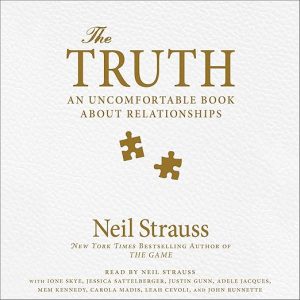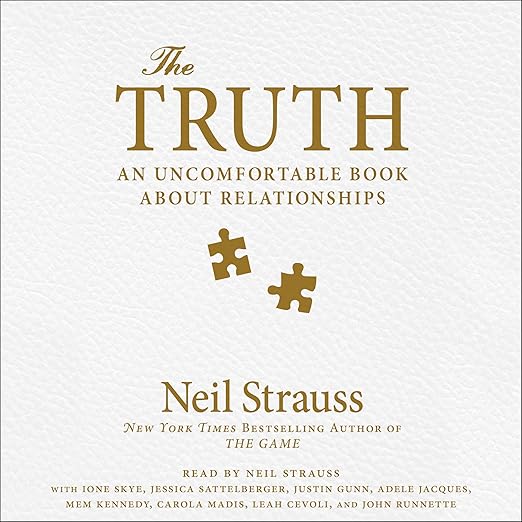
- Read by: Neil Strauss narrates his own memoir, and the rawness of self-narration is deeply appropriate here - you hear the discomfort of a man reading back his own worst rationalizations.
- At its heart: Compulsive non-monogamy and its origins in childhood wounds, the cost of seduction culture on genuine intimacy, the gap between performance and self-knowledge
- Vibe: Uncomfortable, revelatory, and ultimately more therapeutic than erotic
- Short version: The Truth is the book The Game's readers needed to encounter eventually, and Strauss narrating it himself makes the reckoning feel genuinely unsparing.
Neil Strauss sitting in a sex addiction treatment facility is where this audiobook begins, and the distance between that opening and the world he described in The Game is the emotional engine of everything that follows across 16 hours and 50 minutes of self-narrated memoir. The Truth is positioned as the companion volume to that earlier bestseller, the account of how the pickup artist known as Style encountered the one thing his seduction toolkit could not handle: a woman who required genuine commitment. But it is more structurally interesting and psychologically serious than that marketing framing suggests.
The self-narration is essential, not incidental. The Game had a certain performative confidence even in its most self-deprecating passages. The Truth has none of that. When Strauss reads back the rationalizations he gave himself during the years of compulsive behavior, the flatness in his delivery is not a narrative technique. It reads as genuine discomfort with material he is still partially inside. The choice to deliver this in his own voice is the most honest decision the audiobook makes, and it pays dividends across a runtime that asks real patience from the listener.
How The Truth Holds Up
The genre label of erotica sells this audiobook wrong in ways that will mislead some listeners and deter others who should hear it. There is explicit content, and Strauss is honest about behaviors that many readers will find genuinely troubling, but the book's actual subject is psychological rather than erotic. One reviewer articulated this directly: it is not that uncomfortable at all. It is highly comforting and wildly reassuring, and its message is simple: if you want successful relationships, work on yourself first. That is a therapy memoir dressed in a transgressive surface, and understanding that is what makes the full 16-hour commitment worthwhile rather than merely indulgent.
What Strauss does that very few writers in the seduction community have attempted is trace the compulsive behavior back to a specific childhood wound. He does not locate that wound vaguely in the past. He follows the thread into something specific and painful that required real clinical work to confront. The treatment facility section is not redemption theater. It functions as genuine structural investigation. The parallel narrative between the present-tense relationship he is trying to save and the family history he is excavating is where the audiobook's literary ambitions are most apparent and most earned.
Why The Truth Works as an Audiobook
For listeners who read The Game and came away with complicated feelings about what Strauss had built and then profited from, this is the reckoning those feelings were waiting for. The seduction community created a framework for men that was effective in certain narrow terms and corrosive in others, and Strauss is uniquely positioned to examine that framework from the inside because he was its most visible practitioner. His willingness to document the aftermath, the relationship crises, the clinical diagnosis, and the treatment, is not common among writers whose earlier books made them famous.
Multiple reviewers describe this as one of the most important books they have encountered on relationships, and not in the transactional sense that phrase usually implies in this genre. The reviewer who had researched extensively across psychology and relationship literature before encountering this audiobook describes it as the most important book that helped them find answers about themselves. The reviewer who reads extensively on addiction and avoidant attachment notes there is a lesson in there for anyone who has ever struggled with relationships. Both are pointing at the same thing: the audiobook operates as genuine psychological investigation rather than confessional entertainment.
Weak Spots in The Truth
The first third covers the sex addiction treatment and exploration period in detail that includes explicit descriptions of behavior in non-monogamous communities. Listeners who picked this up expecting a relationship advice book and are not looking for that material should be aware that Strauss documents his experiences with significant honesty before the psychological investigation becomes the primary narrative thread. The explicit content is part of the investigation, not decoration, but its presence is substantial and sustained.
The book's conclusions about monogamy are not simple, and some readers find the final position less resolved than 16 hours of buildup might seem to promise. That lack of a clean ending is probably more honest than the alternative, but listeners who need clear prescriptive conclusions from a long narrative reckoning may find the ending tests their investment in the earlier material in ways that feel unsatisfying rather than authentic.
What Strauss does not do, and what separates this audiobook from simpler confessional memoir, is offer easy absolution for the behavior he documents. The book does not end with a simple declaration that he has changed and the past has been forgiven. It ends with an honest account of what changed, what the work cost, and what remains unresolved. That refusal to manufacture a redemption arc is exactly why the audiobook has the value multiple reviewers attribute to it, and why it operates as genuine self-examination rather than performance of self-examination.
The Right Listener for The Truth
This audiobook rewards listeners who have read or are familiar with The Game and want to understand what that world cost its most celebrated participant. It also works for anyone genuinely interested in the psychology of attachment, compulsive behavior, and the relationship between childhood experience and adult relationship patterns. Those seeking primarily erotic content will find the psychological and therapeutic material more dominant than the explicit passages. Those who require tidy resolutions from memoir will find this audiobook's honest ambivalence challenging in ways that do not resolve by the final chapter.
Questions Listeners Ask
How explicit is this audiobook, and is it primarily erotic or psychological in focus?
The book contains explicit content, particularly in the first third, which covers Strauss's participation in non-monogamous communities during his treatment and exploration period. However, the primary register is psychological and confessional rather than erotic. Multiple reviewers note that the audiobook's actual subject is self-knowledge and attachment patterns rather than explicit content for its own sake.
Does Neil Strauss narrating his own audiobook affect the listening experience significantly?
Considerably, and in its favor. Strauss reads back his own rationalizations and worst impulses with audible discomfort rather than performed distance, and that quality is inseparable from the book's honesty. Listeners accustomed to polished professional narration may find the rawness initially jarring, but it becomes the audiobook's most important asset over the full 16 hours.