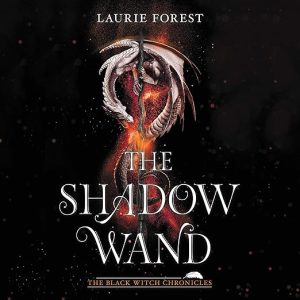
I came to The Shadow Wand after completing The Black Witch and The Iron Flower in fairly rapid succession, which is the right way to approach this series if you have the time. Laurie Forest builds cumulatively, each book adds layers to the world's political landscape and Elloren's understanding of it, and the payoffs in Book 3 depend on investment in the groundwork laid across the preceding two volumes. At nearly twenty hours, this is a serious commitment even for someone already in the series, and Forest uses almost every minute of it.
Elloren Gardner is the Black Witch of Prophecy, the most powerful magic user in all of Erthia, and for most of this book she has no functional control over that power. She is separated from the people she loves, hunted by forces that want to weaponize her, and forced into alliance with her fastmate Commander Lukas Grey, a man whose politics she despises and whose protection she cannot refuse. The central tension is not simply survival but the specific moral weight of needing help from someone whose ideology she finds repugnant, in order to resist someone worse.
Where This One Lands
Forest is writing about prejudice through a fantasy lens with consistent seriousness. The multiple cultures and religions of Erthia, Gardnerians with their supremacist ideology, Lupines, Kelts, Fae, Smaragdalfar, are not decorative world-building; they are the book's subject. How communities maintain their own prejudices while fighting against the prejudice of others, how individuals contain contradictions their cultures would prefer they did not acknowledge, and what it actually costs someone to revise a deeply held belief, these are the questions Forest is genuinely interested in, and they give the lengthy narrative a thematic backbone that makes the pace feel purposeful rather than self-indulgent.
The Vogel threat, Marcus Vogel as the holder of the all-consuming Shadow Wand, escalates meaningfully in this volume. His forces are no longer a distant menace; they are actively reorganizing the political map of Erthia in ways that give the final act a genuine sense of catastrophe rather than staged peril. The unexpected allies Elloren finds among those ordered to kill her are among the book's best additions: several of these figures carry their own complicated histories with Gardnerian ideology, and their presence forces Elloren to complicate her emerging politics in ways that a cleaner liberation narrative would not require.
The Best Parts of The Shadow Wand
Julia Whelan across nearly twenty hours is the production's most important quality indicator. She handles Elloren's sustained interiority, the character spends much of this book observing, processing, and deferring rather than acting, with a quality of focused attention that makes even the slower passages feel inhabited rather than static. The emotional climax that sent one reviewer screaming arrives through Whelan with exactly the right accumulated weight behind it. Listeners who have been with the series from Book 1 will find her performance here the most nuanced of the three volumes.
The audiobook format is particularly useful for tracking the world's multiple political factions and their overlapping agendas. Whelan's voice differentiation between characters is clean enough that the complex ensemble does not blur, which matters in a book where knowing which community a given character belongs to affects how their words should be read.
What Gives Us Pause
The most consistent critique across reviews is Elloren's passivity through the majority of the narrative. She gains power, she loses control of it, she is sheltered and protected and moved from location to location while others act around her. For some readers this is a realistic portrait of what it means to be the most hunted person in a world that wants to use you as a weapon; for others it is a frustrating narrative choice in a third installment where they expected more agency. Elloren's transformation in the final pages is real and significant, but it arrives late, and whether the journey there feels earned or overlong will vary considerably by listener. Come with patience.
Should You Listen to The Shadow Wand?
For listeners already committed to The Black Witch Chronicles who are ready for the series to shift into higher political and emotional stakes. This is emphatically not a starting point, Books 1 and 2 are prerequisites. Listeners who found Elloren's character development frustratingly slow in earlier volumes should note that the critique is valid here too, more so, before the finale redeems it. Those who read fantasy primarily for the richness of world-building and ideological complexity will find twenty hours well spent.
Frequently Asked Questions
How does the Lukas Grey dynamic develop in The Shadow Wand relative to the earlier books?
Lukas and Elloren are forced into close alliance here for the first time, which requires Elloren to engage with him as a full person rather than an ideological symbol. Their dynamic is one of the book's most complicated threads and develops significantly across the twenty hours.
Does Elloren develop meaningful agency in this installment, or does the passivity that some reviewers flagged in earlier books continue?
The passivity continues through most of the book before a significant shift in the final act. This is the most common critique from reviewers and worth factoring into expectations, Elloren's decisive moments arrive late but they arrive with accumulated weight behind them.
How does Julia Whelan's narration sustain nearly twenty hours without listener fatigue?
Whelan varies her pacing consistently and differentiates characters clearly enough that the dense ensemble does not blur. Her handling of the book's emotional climax in particular has been flagged by multiple reviewers as exceptional. The production does not feel padded despite its length.