Quick Take
- Narration: Virtual Voice narration is a significant liability here. A practical guide on intimate physical technique requires warmth and human register; the synthetic delivery strips the instructional content of the relational quality it needs to land properly.
- Themes: Oral sex technique and anatomy, female orgasm and its physiology, intimacy as deliberate practice
- Mood: Clinical with aspirations toward warmth, the writing tries to be engaging but the Virtual Voice production keeps it at arm’s length
- Verdict: The content draws on claimed medical expertise and covers anatomical and technical ground with some thoroughness, but Virtual Voice narration makes this a harder listen than the subject requires; worth reading in print if the material interests you.
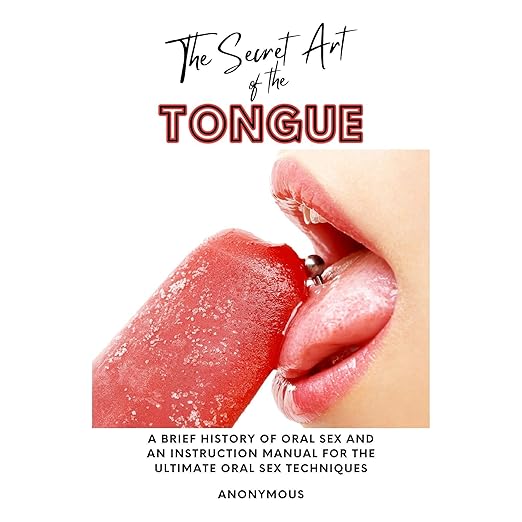
The author of The Secret Art of the Tongue is anonymous, or more precisely, presents as a medical professional sharing clinical advice gathered from twenty years of patients and friends. The synopsis invokes comparisons to Ian Kerner’s She Comes First and describes medical diagrams and detailed instruction. The format is practical nonfiction, the stated credential is clinical experience, and the goal is to teach oral technique toward female orgasm. That’s a legitimate subject for a book, and the structure the author describes, historical context, anatomy and physiology, then detailed technique, is a reasonable way to organize it.
The problem is Virtual Voice narration, and I want to be direct about what this means in practice for a book like this. Virtual Voice is Audible’s synthetic narration technology, used primarily when publishers either cannot or choose not to hire a human narrator. In some genres, technical documentation, reference material, the loss is limited. In a practical guide about intimate physical technique that explicitly aims to build connection and confidence, the synthetic delivery compounds the clinical quality of the content rather than offsetting it. The writing is trying to be encouraging and human, and the narration undercuts that at every turn.
The Clinical Foundation and Its Limits
The anatomy and physiology sections are the strongest parts of what the synopsis describes. Understanding how the vagina and tongue actually work, their respective sensitivities, physiology, and biochemistry, is a reasonable foundation for a technique guide, and the author claims to have spent chapters on exactly that. The historical framing in the first chapter, contextualizing oral sex across cultures and charting how contemporary attitudes have developed, is a legitimate organizing move that lifts the material above pure how-to content.
Where the book’s credibility becomes harder to assess is in the anonymous authorship combined with claims about twenty years of medical practice. The advice may well be sound, reviewers describe finding it useful and the 4.1 rating across 5 reviews suggests satisfaction among those who did listen. But the absence of any verifiable author name means readers are taking the medical credential on faith. That’s not necessarily disqualifying, but it’s worth noting.
The Step-by-Step Structure and What It Delivers
The synopsis describes the book’s progression from anatomy through technique with ‘lick-by-lick’ detail, and reviewers confirm that the instruction is specific and thorough. One reviewer, Rashon, described it as a how-to book that explains the when and the why, which is a useful characterization, this isn’t a list of tips but an attempt at a full framework. Another reviewer described not knowing what they didn’t know until reading it, which is the appropriate experience for instructional content that actually teaches rather than confirms existing practice.
At 1 hour and 27 minutes, the book is short enough to listen through in a single session, which is probably its best use. The Virtual Voice narration is easier to tolerate at this length than it would be across ten or fifteen hours, and the session-based listening pattern reduces the accumulation of synthetic delivery fatigue.
The Print Version Consideration
The comparison to She Comes First in the synopsis is interesting because Kerner’s book is a text that works exceptionally well in print, it’s specific, diagrammatic, and benefits from the reader’s ability to page back and cross-reference. This book, based on the synopsis, shares those qualities. The medical diagrams mentioned in the synopsis are presumably unavailable in audio. This is a case where the print version is almost certainly the better format for the content, and the audio should probably be considered a supplement rather than the primary delivery.
Who Should Listen and Who Should Skip
Listen if: you’re comfortable with Virtual Voice narration, you prefer audio and the print isn’t available or convenient, or you want a short orientation to the subject that covers the clinical basics.
Skip if: you’re sensitive to synthetic narration in intimate educational contexts, you’re expecting the warmth of a human guide, or you want the anatomical diagrams the synopsis references. The print version of this material will serve you better.
Frequently Asked Questions
Who is the anonymous author of The Secret Art of the Tongue, and should the claimed medical credentials be trusted?
The author describes themselves as a medical professional who has provided sexual advice to patients and friends over twenty years. There’s no verifiable identity behind the anonymous presentation, so readers take the credential on faith. The clinical framing and anatomical content suggest someone with medical familiarity, but the anonymous authorship is worth factoring into your assessment of the material.
How does Virtual Voice narration affect the listening experience for this kind of content?
Significantly and negatively. Virtual Voice is a synthetic narration technology that works reasonably well for technical reference material but loses the warmth and human register that intimate instructional content requires. The writing is trying to be encouraging and reassuring; the synthetic delivery works against that at every point.
The synopsis compares this to She Comes First by Ian Kerner. Is that comparison accurate?
The synopsis invokes Kerner’s book, but She Comes First is a substantially longer, more comprehensively researched work from a credentialed sex therapist writing under his own name. The comparison sets a high bar. The structure is similar, anatomy, then technique, but Kerner’s depth and the authority of his named authorship are not replicated here.
Are the medical diagrams mentioned in the synopsis available in the audiobook?
No. Diagrams are a print and visual medium, and the audiobook does not include them. If the anatomical visualization is important to you, the print version of this book will serve you better than the audio.