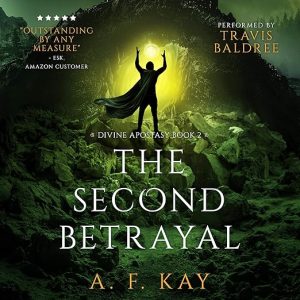
I went into The Second Betrayal with the specific intention of testing whether the first book's comedy, which relies heavily on the dynamic between Ruwen and his best friend, two sixteen-year-olds who are simultaneously overpowered by narrative necessity and deeply goofy by temperament, could sustain a second volume or whether it was a first-book novelty. By the third chapter I had my answer. A. F. Kay has not run out of rope with these two, and Travis Baldree has not run out of ways to make the banter land.
Ruwen has reached level five, a milestone that keeps him invisible to the gods who want him dead while he figures out where his parents went. The new Ascendant orientation that opens the book is both a world-building delivery mechanism and a character showcase, how Ruwen navigates institutional structures that were not designed for someone with his specific and unusual gifts is one of the pleasures of this series, and Kay uses the orientation setting efficiently. The Black Pyramid, when Ruwen finds his way into it, is exactly the kind of discovery this kind of story does well: a place with its own rules that requires Ruwen to think rather than simply power through.
How The Second Betrayal Holds Up
The title signals what the book is building toward, and Kay earns it. The first book established Ruwen's world and his relationships; this book stress-tests them. The betrayal is not telegraphed in a way that makes it obvious, but it is also not a narrative trick, it follows from character logic rather than arriving from outside the story's internal reasoning. When it hits, the tonal shift is real. The comedy, which has been running consistently through the preceding hours, suddenly has a context that makes its absence feel significant rather than simply absent.
What this series does particularly well is the relationship architecture. The friendship between Ruwen and his best friend reads as genuinely sixteen, the humor is specific to that age, the loyalty is unexamined in the way that teenage loyalty often is, and the cracks that the betrayal opens up are felt precisely because Kay has made you care about the baseline before testing it. Multiple reviewers referenced rereading the series, which for a LitRPG-adjacent title suggests something beyond genre satisfaction.
Why The Second Betrayal Works as an Audiobook
Travis Baldree is one of the best narrators working in this genre space and his work here is a significant reason the comedy lands. The goofy best-friend dynamic requires a specific kind of comic timing, not stand-up delivery, which would feel forced, but the natural rhythm of two people who have developed a private shorthand. Baldree delivers it as though he invented the shorthand himself. The more serious passages in the Black Pyramid and in the aftermath of the betrayal are handled without the tonal overcorrection that some narrators use to signal importance; the weight comes from what he does not do rather than from performance escalation.
Thirteen hours and thirty-eight minutes is the right length for what this book is attempting. It does not overstay its welcome during the lighter sections, and it does not rush the darker ones. For a genre where padding is a common criticism, that structural discipline is worth noting.
Weak Spots in The Second Betrayal
This is Book 2 and functions entirely as a continuation, the world-building of Book 1 is assumed rather than re-established, and the emotional stakes of the betrayal only function if you are invested in the relationships from the first volume. New listeners who start here will be confused and will miss the joke architecture that makes the comedy work. The cultivation system that underlies Ruwen's power development is genuinely inventive but requires some patience in the orientation sections before it fully opens up. The ending, while not a cliffhanger in the abrupt sense, positions the story for Book 3 with significant loose threads rather than providing standalone resolution.
The Right Listener for The Second Betrayal
Essential for anyone who finished Shade's First Rule and wants to know what happens next, which is the strongest endorsement available. For listeners new to the Divine Apostasy series, Book 1 is the correct starting point, and if the first volume's balance of comedy and cultivation systems works for you, this one delivers more of both at higher confidence. Fans of Travis Baldree's narration specifically will find this among his more enjoyable performances in the LitRPG-adjacent space.
Questions Listeners Ask
Can I start The Second Betrayal without having read or listened to Shade's First Rule (Book 1)?
No. The relationships, world-building, and emotional stakes of the betrayal are all built on Book 1. Starting here will mean missing both the comedy foundation and the character context the final act depends on.
How does the comedy tone coexist with the betrayal and darker elements in this installment?
Kay maintains the comic rhythm through most of the book before allowing the betrayal's aftermath to shift the tone significantly. The contrast between the established lightness and the sudden weight is intentional and effective rather than jarring.
What is the cultivation system in Divine Apostasy, and is prior knowledge of LitRPG conventions necessary to follow it?
The system involves leveling and skill acquisition in a fantasy world with gods and hidden power. Prior LitRPG experience helps with orientation but is not required, Kay explains the mechanics through Ruwen's discovery of them rather than through frontloaded exposition.
How prominent is Travis Baldree's narration as a reason to choose audio over print for this series?
Multiple reviewers specifically credit Baldree's timing with the comedy landing. The banter between Ruwen and his friend is technically on the page but delivered with a naturalness in audio that makes it significantly funnier. The audio format is the recommended experience for this series.