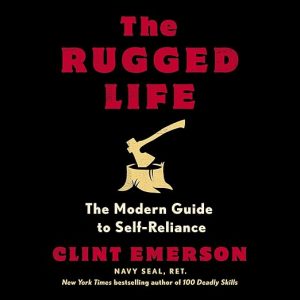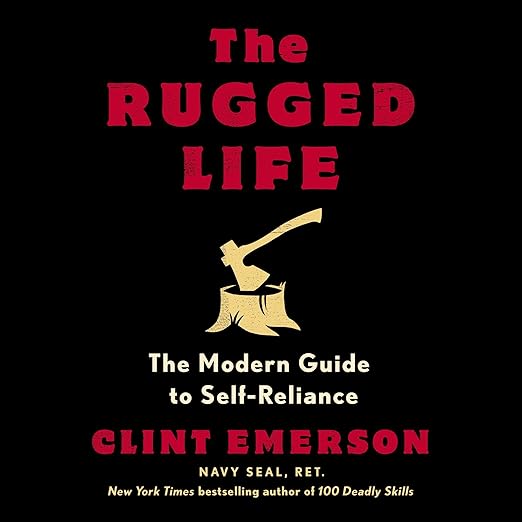
Retired Navy SEALs writing survival guides is a crowded shelf by now, but Clint Emerson's angle in The Rugged Life is less about surviving a single crisis and more about restructuring an entire life around self-sufficiency. This nine-hour audiobook, following his earlier 100 Deadly Skills books, shifts from short-term emergency tactics into long-term homesteading: composting toilets, backyard beekeeping, tanning a hide, retrofitting a van, building a root cellar.
Five Identities, and a Mindset of Redundancy
The book's structure, organized around five identities, your own homesteader, protector, provider, builder, and farmer, gives Emerson a clean way to move between wildly different skill categories without the whole thing collapsing into a random list. One chapter's pickling and fermenting sits next to another on solar and micro-hydro power, and the throughline holding it together is less any single skill than the mindset Emerson keeps returning to: build in redundancy, don't depend on one system, one supplier, or one government service working correctly.
Jack Carr's cover blurb, urging readers to add the book to their library on the way to independence and self-sufficiency, sets expectations that the content mostly earns. A reviewer specifically praised how Emerson frames hunting, including an explicit emphasis on minimizing an animal's suffering, as evidence the book isn't performing toughness for its own sake; the practical detail, time commitments, real costs, that reviewers keep citing suggests Emerson is more interested in what actually works than in survivalist mythology.
Emerson's earlier 100 Deadly Skills books built his reputation on crisis response, the first minutes and hours after something goes wrong. The Rugged Life is explicitly a departure from that format, and the synopsis is direct about it: this works with a roster of collaborating homesteading experts rather than resting entirely on Emerson's own SEAL-specific background, an acknowledgment that surviving a firefight and running a productive vegetable garden for a decade draw on genuinely different skill sets.
Listener reviews also single out the book's tone consistently: practical and encouraging rather than doomsday-prepper alarmist, a distinction that matters in a genre where fear-based marketing is common. The reviewer who called the book accessible, practical, and entertaining despite technical content, and specifically praised the ethical framing around hunting, is describing a register the book maintains fairly consistently rather than an isolated strength.
Cost is a real, underdiscussed variable in homesteading content generally, and The Rugged Life is more honest about it than most: reviewers specifically credit Emerson with breaking down time commitment and cost for different levels of engagement, which matters enormously for a genre that can otherwise read as aspirational content aimed at people with far more disposable income and land than the average listener actually has.
Emerson's Own Voice Signals Real Field Experience
Self-narration is a clear asset for a book this personal in register. Emerson isn't reading a ghostwritten manual at a remove; the SEAL background and the specific expertise are his own, and that authority comes through in small vocal choices, the parts where he clearly knows a shortcut from field experience rather than research. A hired narrator could read the words accurately but couldn't fake that particular confidence.
The book also scales its ambition honestly, which listener reviews confirm: you can adopt the rugged life completely off-grid, or just add solar panels and backyard chickens to an otherwise conventional suburban house, or keep a windowsill herb garden in a city apartment. That range means the nine hours stay useful whether you're planning a full homestead or just want one or two specific skills, a wider net than most single-focus survival audiobooks cast.
That collaborative structure shows up in the book's range. A chapter on tanning a hide or building a rabbit hutch draws on traditional homesteading knowledge that predates any tactical training by generations, while sections on last-resort emergency planning clearly draw on Emerson's own background. The book is strongest when it's honest about which expertise is doing the talking in a given chapter, rather than flattening everything into a single tactical voice.
Snares and Catchments Need the Companion PDF
This is dense, list-heavy instructional content covering an enormous range: hunting, beekeeping, water filtration, greenhouse construction, shipping-container homes. No single topic gets more than a chapter's worth of depth, so listeners hoping for a deep dive into any one skill, comprehensive beekeeping instruction, say, will want a dedicated single-subject resource alongside this broader survey.
The audiobook edition includes a downloadable companion PDF of illustrations from the print book, and that companion matters more here than it does for most nonfiction. Building a water catchment system or setting a proper snare benefits from a diagram in a way that audio narration alone can't fully replace; treat the PDF as a required companion rather than an optional extra for anyone planning to actually attempt these projects.
The shipping-container home and van-retrofit sections in particular sit closer to a construction project than a weekend skill, and listeners should calibrate expectations accordingly: this is the kind of content better suited to repeated reference during an actual build than a single pass of attentive listening. The audio format works well for absorbing the concept and sequence of a project like this, less well for executing the specific measurements and material choices involved.
Nine hours is also a lot of ground to cover across five entirely different skill domains, and pacing inevitably varies; some chapters read as thorough introductions, others as brief overviews clearly meant to point toward further research. Treat the book as a well-organized map of what to learn next as much as a complete instruction manual in itself.
Beekeeping shows up at multiple points across the book's different scales, backyard hobby and full working homestead alike, a useful signal about which skills genuinely scale up and down with commitment level and which ones, hunting large game, building a shipping container home, really only make sense at the more ambitious end of the spectrum Emerson describes.
Broad by Design, Thin for a Single Goal
Listen if you want a broad survey of self-sufficiency skills read by someone with genuine hands-on credibility, whether your actual ambition is a full off-grid homestead or just a more resilient suburban household.
It's a particularly good fit for listeners already partway into a homesteading lifestyle who want to round out gaps, someone comfortable with a vegetable garden but who has never approached beekeeping or water catchment, for instance, since the book's breadth means almost anyone in that position will find at least a few genuinely new chapters.
Urban and suburban listeners specifically shouldn't assume the title signals a rural-only book; a meaningful share of the content, windowsill gardens, backyard chickens, rooftop solar, is written directly for listeners who have no intention of ever leaving a city or subdivision.
Skip it if you already have a specific, narrow homesteading goal and need depth rather than breadth; a dedicated beekeeping, hunting, or off-grid power resource will serve that goal better than a nine-hour survey covering dozens of skills at introductory depth.
Before You Listen
Does The Rugged Life audiobook include the illustrations and diagrams from the print book?
Not in the audio itself, but the purchase includes a downloadable companion PDF of the book's illustrations, which matters for skills like water catchment or snare-setting that benefit from a visual diagram.
Is The Rugged Life audiobook narrated by Clint Emerson himself?
Yes, Emerson narrates his own material, and his hands-on Navy SEAL background comes through in the confidence of small, specific details that a hired narrator couldn't authentically replicate.
Does The Rugged Life cover full off-grid homesteading or just emergency prepping?
Both, at different scales. The book explicitly covers everything from a fully off-grid homestead to adding solar panels and chickens to a suburban home to keeping a windowsill garden in a city apartment.