At a Glance
- Voice: Six viewpoints, three couples and one long homecoming, which makes keeping the siblings apart by ear the whole job.
- Big ideas: Sibling rivalry, second-chance and small-town romance, a fiftieth anniversary, growing up late
- Atmosphere: Warm, crowded and permanently busy
- Worth it?: Three romances for the price of one, at the cost of depth in any single one of them.
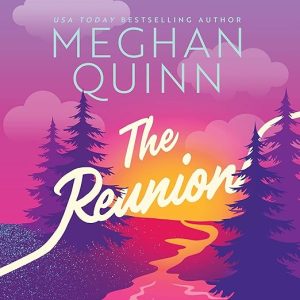
Martin and Peggy Chance are about to reach fifty years of marriage, and their three grown children cannot manage a functioning relationship between them. That gap is the whole comedy of this audiobook: two people who got it right the first time, and three who watched them do it and learned nothing usable from the demonstration. Ford works instead. Cooper is still carrying a divorce. Palmer travels, which is its own way of not staying anywhere. The anniversary party brings all three home at once, which is the last thing any of them wants and precisely what the plot requires.
Lisa, the column's four-star, does the job the publisher's copy only half does. That February 2026 response lays the family out properly: Ford runs the family business with his assistant, Cooper is the middle child who helps look after their parents and is quietly in love with Nora, the town baker, and Palmer left, became an influencer, and comes home to Dr. Beau. Names, jobs, and who wants whom, in four sentences. The description offers archetypes and withholds the specifics, which for a book whose entire pleasure is watching a set of people collide is a strange decision.
Five written responses sit under thirty-one ratings, and the dates deserve reading before the grades do. Four of the five were filed in 2025 and 2026, three and four years after the February 2022 release, which means most of what a browser can read here comes from people who found the book long after its publicity cycle ended. That is usually a good sign for a comedy, since word of mouth outlasting a launch is harder to buy than a launch. A 4.3 across thirty-one votes also means twenty-one to twenty-three of the 155 available stars have been withheld, so the warmth is real without being uniform.
The Best Parts of The Reunion
Welsh Corgi fan, a self-declared veteran of this author's backlist, files the boldest claim on the page: the best Meghan Quinn read so far, and the book Quinn should be writing every time. The reasons given are specific rather than atmospheric. The dialogue is excellent. The characters are good. The plot manages fun and thoughtful at the same time. That response also identifies the difference from the rest of the backlist precisely, locating the weight on what the characters think, say and do rather than on the situations they are placed in. For a romantic comedy built around a family and its overlapping couples, that is the correct place to put it.
Fifty years of marriage is the frame, and it does more than supply an occasion. Martin and Peggy believe love should last a lifetime and have modeled exactly that in front of their children, none of whom has managed to reproduce it. The anniversary forces all three home simultaneously and turns a celebration into an audit. The copy calls it the definitive end of their childhood, a heavier phrase than the genre usually carries and the reason this one has more to work with than the setup suggests. Sibling rivalry and party planning sit on the surface; what the three of them are actually negotiating is who gets to grow up.
Before You Commit to The Reunion
Jeeves Reads Romance filed the earliest response on this page, one day after release, and it carries the single most valuable piece of information anywhere on the record. That three-star found the six perspectives and three love stories so frustrating in text form that it switched to the audio partway through, reports that the audio uses six different narrators, and adds that the production is neither duet style nor full cast. The listing credits Lidia Dornet and nobody else. However that recording is actually structured, one credited name and six voices do not agree, and nothing on this page lets a buyer reconcile them.
Six viewpoints across twelve hours is the other thing to weigh, and it is the same problem approached from a different side. The description promises three siblings, three romances and one party, which amounts to three books' worth of arc compressed into a single volume. On the page a reader can flip back a few lines to remember whose chapter this is. In a recording nobody can, and the handoff from one love story to the next arrives without a signal. Anyone who listens in twenty-minute stretches will feel that more sharply than someone who takes it in long evening sittings.
The Right Listener for The Reunion
Romance listeners who want a big family, overlapping couples and banter that keeps score are the natural audience here. Nichole Lynn describes catching up with Nora and Cooper, and with the family and the love interests around them, calls the banter perfect as usual, and admits to being early in a run through this author's backlist. That last detail is genuinely useful, because it means the book works as a point of entry rather than as a reward for completists. Anyone who wants three romances for the price of one, and enjoys parents walking in at the worst available moment, will get their money's worth.
Perspective juggling is the reason to hesitate. Three love stories share twelve hours and eighteen minutes, which means none of them gets the runway a single-couple romance would hand it, and a listener who wants to sink into one relationship will spend the book being pulled back out of it. Anyone who needs certainty about the production should ask the retailer before buying rather than trusting the credit field, because on this particular record that field is doing considerably less work than it appears to. A credit line is a small thing right up until it becomes the thing that decides a refund.
Is The Reunion part of a series?
The record leaves both series fields empty and names one earlier title by the same author, The Wedding Game, in its opening line. Nothing on the page connects the two beyond that author credit, so this reads as a standalone about the Chance family rather than an entry in a numbered sequence.
Does this audiobook work as an introduction to Meghan Quinn?
It does. The Chance family is introduced from scratch, the setup needs no prior reading, and the comedy runs on situation and dialogue rather than on callbacks. Anyone sampling this author for the first time gets an accurate sense of the register without having to buy into a back catalogue first.
How spicy is this audiobook?
The record carries a Romantic Comedy tag, a romance category and no content advisory whatsoever. The copy promises antics, romantic entanglements and a fun, flirty, wild ride, which establishes a tone without establishing a heat level. Anyone who needs a firmer answer should sample rather than rely on the tags.
Which sibling's story carries the book?
The description gives Ford, Cooper and Palmer a sentence each and ranks none of them, running eldest to youngest. What it does signal is that all three arcs advance concurrently rather than in sequence, so no sibling holds the floor for long and none of the three romances gets a stretch of the book to itself.