- Read by: Brandon Gustafson self-narrates, and his direct, no-fluff delivery matches the practical orientation of the content; this sounds like a business coaching session, not a produced audiobook.
- At its heart: assisted living as a business model, real estate plus healthcare intersection, five-phase launch framework
- Vibe: Methodical and confident, with the matter-of-fact energy of someone who has already done what they are describing
- Short version: One of the more practically detailed guides available in the residential assisted living space, best used as a working reference alongside active research rather than a passive listen.
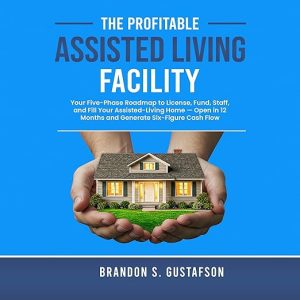
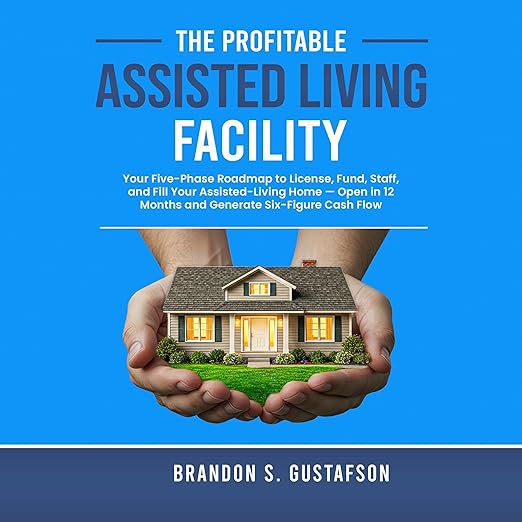
Brandon Gustafson purchased and launched two assisted living homes in five months. That is the credential at the center of this audiobook, and it is a meaningful one in a space where most business guides are written by consultants rather than operators. The Profitable Assisted Living Facility is explicitly positioned as a twelve-month roadmap for getting a licensed, cash-flowing assisted living home open, and the specificity of that framing reflects the book's actual character. This is not a survey of the assisted living industry; it is a step-by-step framework built from Gustafson's own operational experience, and it reads like one from the first chapter through the last.
The business case for residential assisted living that Gustafson builds at the outset is worth engaging with directly. He describes the model as sitting at the intersection of real estate and healthcare, which captures its structure accurately: you are acquiring and managing residential property while also operating a licensed care business. Those two components create complexity that single-domain expertise cannot fully navigate, and Gustafson's contribution is providing frameworks that address both simultaneously rather than treating them as separate projects.
No Fluff, Just Real Everyday Advice
Gustafson's five-phase framework covers the full launch arc: business foundation with market research and underwriting; property identification and acquisition with attention to zoning and fire codes; funding strategy across conventional loans, SBA programs, and creative financing; licensing and regulatory navigation including Medicaid reimbursement; and operational management including team hiring, bed-filling strategy, and KPI tracking. That is genuinely comprehensive coverage for a business in which any one of those phases can derail an otherwise sound project if approached without preparation.
The sections on licensing and Medicaid reimbursement are the parts most likely to be underserved by general business books, and Gustafson gives them serious attention. This is not territory where simplification serves the reader well; assisted living licensing requirements vary by state and carry significant compliance implications. Gustafson presents frameworks and principles rather than claiming to replace state-specific legal counsel, which is the appropriate scope for an audiobook operating at this level of generality.
One reviewer who is actively opening a facility described the guide as "direct, clear, and practical, no fluff, just real, everyday advice that walks you through every step of starting an ALF." That description accurately reflects the audiobook's register. Gustafson self-narrates, and his delivery reinforces the no-nonsense approach: he sounds like someone briefing a capable adult rather than selling an aspiration. The absence of motivational padding is itself a form of respect for the listener's time and intelligence.
A Voice Actor Would Struggle to Replicate This
Self-narrating a business guide of this complexity is a specific choice. Gustafson the narrator carries authority that a professional voice actor reading someone else's operational framework would struggle to replicate. When he describes what it felt like to navigate licensing or to make the property acquisition decision under time pressure, the experiential weight comes through in the delivery. The audiobook feels less like produced content and more like a substantive conversation with a practitioner who has actually made the mistakes he is warning you about.
At twelve hours and ten minutes, this is a thorough listen. The runtime reflects the material's scope rather than padding; each phase of the framework receives the development it needs. For listeners who want a quick overview before deciding whether to pursue assisted living as a business, the audiobook may be more immersive than necessary at this stage. For those who have made the decision and are working through the implementation, the detail is an asset rather than an obstacle. This is a book that rewards active note-taking rather than passive listening.
Reviewers With Skin in the Game
The rating count is small for a book of this scope, which limits how comprehensively listener experience can be mapped. The reviews that exist come from people with skin in the game, specifically individuals actively pursuing or operating in the assisted living space rather than general business readers evaluating the genre. That is a more reliable signal than a broader ratings pool; these reviewers are checking the framework against their own real-world attempts to build what Gustafson describes.
The audiobook is part of the Assisted Living Investing series, which positions this entry as a foundation text. Listeners who find Gustafson's framework useful should be aware that additional material in the series may extend what is covered here. The current audiobook functions as a complete standalone treatment of the launch phase and does not require prior reading to follow the five-phase structure from beginning to end.
For Healthcare Professionals Eyeing the Business Side
This audiobook is for healthcare professionals considering the business side of senior care, real estate investors looking for a higher-margin niche with social impact, and first-time entrepreneurs who want a sector-specific operational guide rather than generic small business advice. The intersection of licensing complexity and real estate strategy makes assisted living a niche that rewards specific preparation, and Gustafson's audiobook provides more of that preparation than most alternatives currently available in this category.
Skip it if you are looking for a broad introduction to senior care as a sector or a conceptual treatment of the assisted living market. This is an operational guide built for people who have already decided to pursue the business and need a structured framework for execution. For that audience, the combination of Gustafson's direct delivery and the depth of the five-phase framework makes this the most practically useful starting point available in audio format.
Does The Profitable Assisted Living Facility audiobook cover state-specific licensing requirements, or is the guidance more general?
Gustafson presents licensing frameworks and principles rather than state-by-state specifics, which is appropriate given that assisted living regulations vary significantly across states. The audiobook equips listeners to navigate the licensing process intelligently, but Gustafson correctly positions it as a complement to state-specific legal and regulatory counsel rather than a substitute.
Is this audiobook suitable for someone with no background in either real estate or healthcare?
Gustafson says the book is accessible to first-time entrepreneurs, and the framework is explained from first principles. However, listeners with no exposure to either real estate financing structures or care industry basics will likely need to supplement the audiobook with additional research on both tracks. The book assumes motivated learners willing to do that parallel work.
How does Brandon Gustafson's self-narration affect the listening experience for a technical business audiobook?
Positively, for the most part. His practitioner credibility comes through in the delivery in a way a professional narrator reading someone else's material could not replicate. The audiobook sounds like a substantive briefing from an experienced operator, which suits the content. Those who prefer polished production values over raw authority may notice the DIY quality, but it does not undermine the material.
Does this audiobook address funding options for people who do not have significant capital to start with?
Yes. One of the five phases Gustafson covers is funding strategy, and he addresses conventional loans, SBA programs, and what he describes as creative financing options. The book acknowledges that capital access is one of the primary perceived barriers to entering the assisted living space and presents multiple pathways for navigating it.