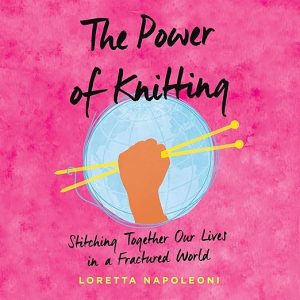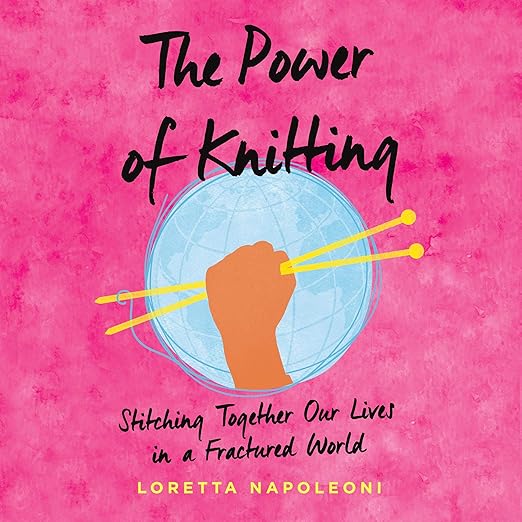
I almost skipped this one. The title felt like it was promising something inspirational and mildly obvious, that craft is good for you, that making things matters, that we should all slow down. I had read enough books in that register to be wary of another. What Loretta Napoleoni actually delivers is something considerably more interesting: a political and economic history of knitting that treats the craft as a lens through which to read women's agency across six thousand years of human civilization.
Napoleoni is primarily known as an economist and terrorism expert, and that background shapes the book in ways that surprise you. She is not interested in knitting as therapy, except insofar as therapy is one of the things it is. She is interested in knitting as a technology of social organization, a means of economic production, a channel for political resistance, and a vehicle for passing knowledge between generations of women who had limited access to other channels. That is a big argument, and the audiobook gives it room to breathe across just under five hours.
World War II Spies Who Knitted Their Intelligence
The historical sections are the book's strongest passages. Napoleoni moves from ancient Egypt and Peru through the knitting spies of World War II, the spinning bees of the American Revolution, the yarnbombing protests of contemporary climate activism. Each chapter reframes knitting away from the domestic and decorative and toward the strategic and subversive. The WWII spies section is remarkable: women who communicated intelligence through the patterns in their stitches, exploiting the assumption that women knitting were simply knitting.
The personal memoir thread, Napoleoni's own experience of a marriage that collapsed and a period of financial uncertainty from which knitting helped her recover, sits less comfortably alongside the historical sweep. Some reviewers found these sections maudlin, and there is something to that critique. Napoleoni had access to help and resources during her crisis that most women facing similar upheaval do not. The contrast between the universal claims she makes about knitting's healing power and her particular circumstances creates an occasional awkwardness. But the memoir sections are also the most immediately human part of the book, and they ground the broader argument in something specific and felt.
Wiley Shifts Tone From History to Neuroscience
Elizabeth Wiley's narration handles the book's tonal shifts well. The historical passages benefit from her confident, clear delivery; the personal memoir sections benefit from the warmth she brings to Napoleoni's voice. The neuroscience sections, drawing on research into the repetitive, bilateral motion of knitting and its effects on the nervous system, are narrated with enough care that the findings feel integrated rather than appended. Wiley does not let these sections feel like footnotes.
The audiobook includes a downloadable PDF of the ten knitting patterns promised in the book, which is a thoughtful inclusion. The patterns themselves are not described in the audio, for obvious practical reasons, but knowing they are available gives the audiobook a completeness it might otherwise lack.
Mongolia Gets Less Room Than Europe or America
Non-knitters should know that this book does not require craft knowledge to appreciate. Napoleoni assumes a readership curious about ideas rather than one already embedded in knitting culture. The historical and economic arguments work independently of any personal practice. Knitters will have extra pleasure in the craft-specific details, but the book is not gatekept behind technical knowledge.
The book's scope is ambitious enough that some threads get less development than they deserve. The Mongolia chapter, for instance, feels compressed compared to the European and American historical sections. And the connection Napoleoni draws between knitting and contemporary technology, specifically its implications for how we think about open-source and distributed knowledge production, is suggestive rather than fully argued. These feel like places where a longer book might have done more.
Feminist History Wrapped Around Ten Bonus Patterns
Knitters looking for cultural context and historical depth to what they do will find this genuinely satisfying. Feminist readers interested in the history of women's labor and agency will find fresh material here. Anyone interested in the history of craft, economics, or political resistance through unexpected channels will find Napoleoni's framework stimulating. Skip it if you want primarily a how-to guide; the ten patterns are a bonus, not the point of the book.
Before You Press Play
- Read by: Elizabeth Wiley reads with warmth and texture, matching the book's shift between personal memoir, cultural history, and feminist argument without losing continuity.
- At its heart: Knitting as political and healing act, women's craft traditions and historical agency, the neuroscience of repetitive handwork
- Vibe: Reflective and wide-ranging, intimate in parts
- Short version: A serious cultural and personal history of knitting that earns its broader claims - rewarding for knitters and non-knitters alike who want to understand craft as something larger than hobby.
A Few Questions About The Power of Knitting
Are the knitting patterns in the book accessible in the audiobook format?
The patterns themselves are not readable in the audio, since they require visual reference. However, the audiobook comes with a downloadable PDF containing all ten patterns from the book, so listeners who also knit can access the complete pattern content.
How does Napoleoni balance her personal memoir with the larger historical argument?
The balance is not always seamless. The historical sections are the book's strongest material, and some reviewers found the personal memoir thread around her marriage breakdown less compelling than the broader cultural history. The memoir sections are present throughout but do not dominate the book.