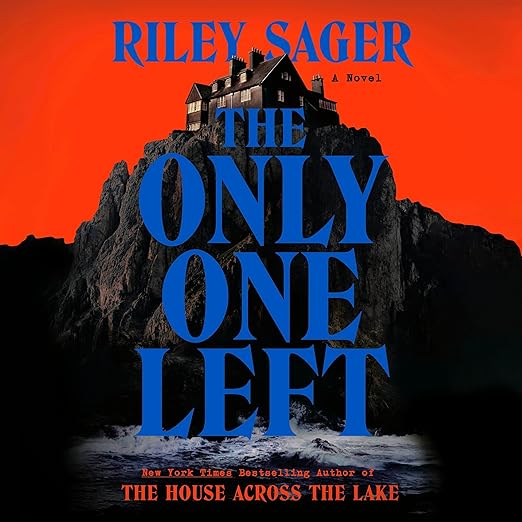
Lenora Hope has not spoken in decades. A series of strokes left her mute and in a wheelchair, and the only way she can tell anyone what happened at Hope's End in 1929 is to tap it out on an old typewriter, one sentence at a time, to the home-health aide who arrived after the last nurse fled in the night. Riley Sager built a Gothic chiller on that device, and the audiobook of it runs twelve hours and thirty-two minutes under a Penguin Audio credit that turns out to be incomplete.
Typing Out a Confession One Sentence at a Time
Typewriter keys are the whole engine. A confession delivered by a woman who cannot speak arrives at the pace of her fingers, which means every revelation is slow, physical and interruptible, and any of it can be a lie she has had fifty years to rehearse. The premise solves the problem every locked-room confession has, namely why the guilty party would talk at all, by making the talking itself so laborious that it reads as a decision rather than a slip.
Kit McDeere is the other half of the arrangement, and Sager is careful to make her a professional rather than an investigator. She takes the post after a previous nurse walked out mid-shift, she has just lost a patient of her own, and her job is care rather than curiosity. That framing keeps the plot honest: Kit has reasons to stay in a decaying cliffside house that have nothing to do with solving anything, and the suspicion that Lenora is editing the story creeps in slowly enough to feel earned.
Fifty-four ratings support a 4.4 badge, and the five written entries divide into three five-stars, one four and one three, which is a normal shape for a popular thriller and a useful one for a buyer. The enthusiasm is real, and so is the dissent, and both are specific enough to be worth reading. Nothing about the distribution suggests a manipulated page, which is more than can be said for many bestsellers on this shelf. The 2023 release date helps too, since three years of accumulated grades tend to settle a book at its real level rather than at its launch level.
Christine Lakin Isn't the Only Voice Here
Christine Lakin holds the narrator credit on this record, and one reader reports that the recording is not a solo performance at all. A four-star from July 2025, filed by someone who bought the text and audio editions together to use them in tandem, states plainly that the reading is shared between Christine Lakin and Dawn Harvey. The second name appears nowhere in the metadata. For a book with a 1929 account nested inside a 1983 story, a two-voice production would be an obvious structural choice, and a buyer searching by narrator will never find this record under half of its cast.
Dread rather than shock is the register, and more than one response says so in its own words. A five-star from early January 2026, from someone reading Sager for the first time, describes twists and turns arriving until the very end and an inability to put it down. That combination matters for the audio format specifically: a book that generates its pull from atmosphere and accumulation suits listening far better than one built on visual set pieces, and a crumbling house on the Maine coast is an atmosphere that transmits well through headphones.
Chanted verse threads through the description, the schoolyard rhyme that turned a real family's deaths into a playground game. Its couplets do a lot of work in the copy, and they set up the book's central irony, which is that everyone knows the story and nobody knows anything. How that material sounds read aloud is a genuine curiosity, since a rhyme heard is much harder to skim past than a rhyme printed in italics on a page. Sager uses the couplets as chapter furniture in the description, and a listener gets them as spoken text with no visual cue that the register has changed, which either intensifies them or flattens them depending on choices made in the booth.
Too Many Twists, and the Wrong Horror Tag
Twists are the recurring complaint, and the sharpest entry in the column makes it carefully. A three-star from mid-January 2026 praises the premise and the plotting while objecting to repetition, awkward phrasing and passages that feel disjointed, and concludes that the twists and changes pile up past the point where any of them can land. That is a craft criticism rather than a taste one, and it lines up with a common failure mode of the reveal-driven thriller: each new turn has to invalidate the last, and past a certain count the reader stops investing in any of them.
Press quotations in the description come from eight outlets naming it a summer book to watch, plus a line from a book review calling it a dizzying Gothic whodunit. Every one of those was written about the printed novel. The record also carries a Horror tag while sitting in general fiction, and neither label prepares a listener for what this actually is, which is a mystery with Gothic furniture rather than a horror story.
Confirm the Full Cast Before You Buy This
Gothic mystery listeners are the natural audience: cliffside mansion, family massacre, an unreliable witness and a caregiver who should not be asking questions. A February 2026 five-star recommends it to readers of another popular suspense novelist, whose name the entry misspells, and reports finishing it fast and never predicting where it went. That is the experience most people are buying here, and the page delivers it often enough to justify the badge.
Confirm the full narrator credit before ordering if voice matters to you, since the metadata names one reader and at least one listener reports two. Beyond that, the decision is simple enough: twelve and a half hours in a decaying house with a woman who can only answer at typing speed is a very particular pleasure, and readers who want their thrillers lean and modern should look at the objections in the column first.
Questions Listeners Ask
Does the Horror tag fit this audiobook?
Not really. The record carries a Horror tag while sitting in general fiction, and the copy describes a Gothic chiller and a whodunit. Expect dread, a decaying house and a decades-old massacre rather than supernatural content or gore. Listeners who avoid horror on principle should not rule this out on the tag alone.
What time periods does the story move between?
Two. The Hope family murders take place on the Maine coast in 1929, and the present-day frame is 1983, when Kit McDeere arrives at the house. Since Lenora's account of the older events is being typed out inside the newer story, expect the narrative to alternate between the two throughout.
Can you start with this audiobook if you have never read Riley Sager?
Yes. Nothing is entered under series name or number, no companion volumes get a mention, and the story stays self-contained within one house and one family history. Nothing carries over from the author's other novels, so this works as a first encounter as easily as a tenth.
Does the description give too much away?
It gives away more than some listeners will want. The copy prints the schoolyard rhyme naming how each family member died, states that Lenora offers to tell everything, and reveals that Kit comes to doubt her. Listeners who prefer going in cold should stop after the first two sentences of the description.