Quick Take
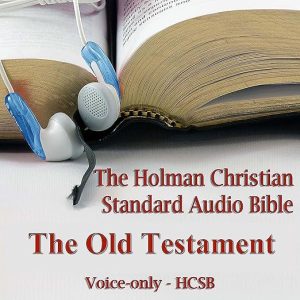
- Narration: Dale McConachie, who has narrated over 100 audiobooks, delivers a clean, reverent reading that prioritizes clarity over theatricality across a 55-hour runtime.
- Themes: The covenant relationship between God and Israel, obedience and consequence, the arc of Israel’s history from creation through prophetic literature
- Mood: Solemn and measured, suited to devotional listening or long-form commute and daily life integration
- Verdict: A reliable, well-narrated audio edition of the HCSB Old Testament for listeners who want accurate translation in an accessible spoken format.
Reviewing an audio Bible presents a particular challenge: what you are assessing is not an authored work in the conventional sense, but a translation and a performance of texts that carry enormous meaning for millions of people. The question is not whether the material is worthwhile, but whether this specific recording serves the texts well and whether the HCSB translation is the right choice for the kind of listening the format enables.
I spent time with this recording over several weeks, listening in the way Dale McConachie suggests in the liner notes: during a commute, while preparing food, during a morning walk. The 55-hour runtime is not something you take in one sitting. It is a companion for daily life, and that is precisely the format for which McConachie has designed his approach. The Pentateuch, the historical books, the Psalms, the prophets: each section of the Old Testament demands a different kind of attention from the listener, and McConachie adjusts accordingly.
Our Take on The Old Testament of the Holman Christian Standard Audio Bible
The HCSB occupies a specific position among English Bible translations. It aims for what scholars call optimal equivalence, prioritizing accuracy to the original languages while producing English that reads naturally aloud. That second quality matters enormously for an audio format, and it is one of the reasons McConachie chose this translation for this project. The Pentateuch, historical books, poetic books, and prophetic literature each have distinct literary characters, and a translation that handles all four with equal clarity is rarer than you might expect. The legal cadences of Leviticus, the lyric quality of the Psalms, and the rhetorical urgency of Isaiah all require English that can carry those different registers without collapsing into modern flatness or archaic stiffness. Finding a translation that threads that needle successfully across the full range of Old Testament literature is a real editorial achievement. The HCSB does well across the range.
Why Listen to The Old Testament of the Holman Christian Standard Audio Bible
McConachie has over 100 audiobook narrations to his name, and that breadth of experience shows in how he handles the tonal range of the material. He does not read the Psalms the way he reads Leviticus, and he does not read the prophetic books the way he reads the historical narratives. The adjustments are subtle but consistent. His stated goal was a simple but reverent audio copy, and that restraint serves the material. A narrator who performs the texts too heavily risks inserting themselves between the listener and the material. McConachie stays in service of the text throughout the full runtime.
What to Watch For in The Old Testament of the Holman Christian Standard Audio Bible
The published reviews on this listing present an unusual situation worth acknowledging: several of them appear to be reviews of a physical print Bible rather than the audiobook, describing the book’s cover quality, paper weight, and physical dimensions. This is a known issue with Amazon product listings where multiple editions share reviews. The audio-specific reviews are positive and describe the narration as accessible and clear. Listeners should be aware that the 3.9 average rating reflects this cross-format review mixing rather than the audiobook quality alone.
Who Should Listen to The Old Testament of the Holman Christian Standard Audio Bible
This is for Christians and Jewish listeners who want the Old Testament as an audio companion for daily life rather than a study resource. McConachie’s approach works particularly well for the repetitive sections of the Pentateuch that can feel slow in silent reading but gain a meditative quality when heard aloud. The genealogies, the ceremonial law passages, the recurring prophetic refrains: all of these translate differently to the ear than to the eye, and usually more favorably. Those seeking detailed study notes or commentary will need a print resource to accompany it, but as a standalone listening text, this recording delivers exactly what it promises. The 55-hour runtime is substantial but never feels padded, which is a real accomplishment for material with this kind of scope and density.
Frequently Asked Questions
How does the HCSB translation compare to the ESV, NIV, or KJV for audio listening?
The HCSB was designed with natural spoken English in mind alongside accuracy to the original languages, which gives it an advantage in audio format over more formally equivalent translations like the ESV. It is more contemporary than the KJV while maintaining more literal accuracy than the NIV, making it a strong choice for listeners who want clarity without sacrificing fidelity.
Why do some of the Audible reviews for this product discuss a physical Bible rather than the audiobook?
Amazon combines reviews across editions in some cases, and several reviewers appear to have purchased the print HCSB Bible rather than this audio edition. The narration-specific reviews are positive. This is a product listing issue, not a reflection of the audio performance.
Is this recording structured so a listener can access individual books or chapters easily, or is it presented as a continuous stream?
McConachie and the publishers designed the format for easy chapter-level access, which is one of the stated goals of the recording. Listeners who want to jump to a specific book or chapter can do so rather than having to navigate a single 55-hour file.
Does Dale McConachie bring any interpretive performance to the text, or is this a straight reading?
McConachie aims for what he describes as simple but reverent. He does not perform the texts theatrically or insert strong character voices. The delivery adjusts to the genre of each section, with more warmth in the poetic books and more narrative authority in the historical sections, but the approach throughout is service to the text rather than performance of it.