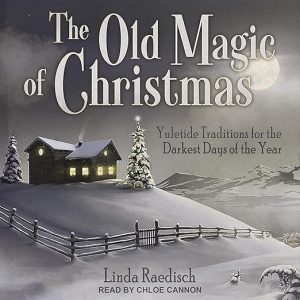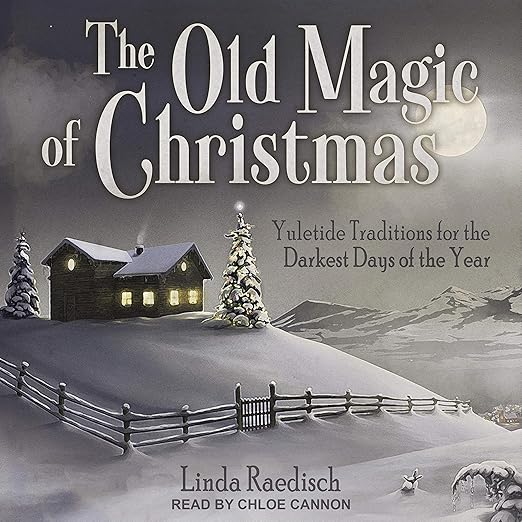
Yuletide witches and vagrant spirits are not the first things most people associate with Christmas, but Linda Raedisch's The Old Magic of Christmas - narrated by Chloe Cannon in this 6-hour-and-48-minute audiobook - makes a compelling case that the modern holiday has buried most of its genuinely interesting folklore. Raedisch writes from the tradition of Northern European Yule scholarship, and what she excavates is less the Christmas of carols and gift-giving than the Christmas of household spirits, veiled presences, and creatures that punished the idle and rewarded the prepared. It is a stranger and more satisfying version of the season than the one most listeners grew up with.
Raedisch structures the book as a tour through the supernatural landscape of Yuletide folklore, moving from the Germanic and Scandinavian traditions that underlie much of what we call Christmas to the Snow Queen's mirrored halls and the genuine peril that elves - nothing like their modern diminutive versions - once represented in household imagination. The book's argument is not political or revisionist in any urgent sense; it does not claim that Christmas has been corrupted or that we must recover something lost. It simply presents the older materials as richer and stranger than the versions that survived into commercial culture, and lets that strangeness do its own work.
The craft and recipe sections, which appear at intervals throughout the book, are one of its more distinctive features. Raedisch moves from the history of a particular spirit or creature directly into instructions for cookies, wreath arrangements, or household rituals that bring those older traditions into a contemporary home. One reviewer compared the experience to having a very knowledgeable friend explain both the history and the practice at once, and that dual register - scholarly context followed by practical application - is genuinely unusual in seasonal folklore writing. For listeners who want to do something with what they are hearing, not merely know it, the audiobook delivers a specific kind of value that straightforward histories do not. Another reviewer described wanting to immediately put different greenery around the house after listening, which is exactly the effect Raedisch seems to be aiming for: not passive reception of folk history, but active reintroduction of old seasonal habits into a modern domestic space.
Chloe Cannon Passes Along a Slightly Secret History
Chloe Cannon's narration is particularly suited to this material. She does not perform the folklore dramatically, which would undercut the book's careful scholarship, but she gives it the quality of attentive transmission - as though she is passing along information she considers genuinely important and slightly secret. The rhythm of her delivery slows appropriately for the more ominous passages and quickens for the craft instructions, making the book feel inhabited rather than merely read. The 4.6 rating and 894 reviews suggest that Raedisch's audience has found something real here. The Wiccan and pagan communities have claimed this book with particular enthusiasm - one reviewer notes marking it up with a yellow highlighter as a resource for Yule practice - but the material is not sectarian in any exclusive sense. Anyone with an interest in the history of winter ritual, European folklore, or the pre-Christian roots of familiar traditions will find it substantive throughout. The Snow Queen material alone, which traces the figure from Hans Christian Andersen back to much older and less benevolent prototypes, is worth the runtime.
Lateral Folklore Best Absorbed Over Several Days
Listeners expecting a straightforward history of Christmas will find this book more oblique than they might want. Raedisch is not particularly interested in the standard December 25th narrative except where those stories intersect with her specific focus on the uncanny and the household. The book is also not structured as a progressive argument with a clear conclusion. It moves laterally through different folk traditions, which means it rewards listening over a period of several days rather than in a single sitting. The craft instructions, while clearly described, are better absorbed if you have a printed or digital version alongside for reference when you actually want to execute them. The range of traditions covered - Germanic, Scandinavian, and some Eastern European strands - also means that listeners with specific regional ancestry may find certain sections more personally resonant than others, though Raedisch connects the threads well enough that no single tradition feels isolated from the larger picture. The book is also self-aware about its role: Raedisch is not documenting these traditions from a museum remove but actively advocating for their reintroduction into contemporary households, which gives the book a practical urgency that purely historical folklore surveys lack.
Not a Book for Children or Background Noise
This audiobook is genuinely well suited to listeners who find the standard Christmas narrative thin and are curious about what existed before the modern holiday calcified into its current form. It also rewards multiple listens: the book's lateral structure means that different sections will stand out on a second pass, particularly if a listener has spent time in the intervening period experimenting with the crafts and recipes described. Raedisch writes as if she expects her audience to return. It works for Wiccan and pagan practitioners who want seasonal context for their practice, for secular listeners interested in folklore and European cultural history, and for anyone who finds the creepier aspects of winter mythology - the ghosts, the spirits, the creatures that tested the household's worthiness - more interesting than the reassuring ones. It is not a book for children, and it is not a comfortable background listen; it rewards attention and returns more to the curious than to the passive.
A Few Questions About The Old Magic of Christmas
Is The Old Magic of Christmas audiobook appropriate for non-Wiccan listeners, or is it specifically aimed at pagan practitioners?
The material is rooted in European folklore scholarship rather than any single spiritual practice. Wiccan and pagan listeners have adopted it enthusiastically, but the historical and anthropological content is accessible to anyone interested in the pre-Christian roots of winter traditions.
Does the audiobook version of The Old Magic of Christmas include the craft instructions and recipes in a usable format?
Chloe Cannon narrates the craft and recipe sections clearly, but complex instructions can be hard to follow by ear. Having a supplementary written version available is useful if you intend to actually execute the projects described.
Is The Old Magic of Christmas audiobook only relevant at Christmas time, or does the folklore hold interest year-round?
The book's argument about Yuletide's uncanny history is absorbing enough to work outside December, particularly for listeners interested in European folklore more broadly. The craft sections are inherently seasonal, but the historical material is not.
How scholarly is The Old Magic of Christmas compared to popular folklore books?
Raedisch writes as an informed enthusiast rather than an academic. The book cites genuine folkloric traditions and traces them to specific cultural sources, but it is written for a general audience and prioritizes accessibility and atmosphere over academic rigor.