Quick Take
- Narration: Jake Andrews delivers a calm, measured performance that suits the reflective register of the material, though at just over four hours the narration does not have extensive demands placed on it.
- Themes: Emotional maturity and relationship readiness, communication patterns and unresolved wounds, values alignment before commitment
- Mood: Thoughtful and gently challenging, with a counselor's tone rather than a prescriptive one
- Verdict: A grounded pre-marriage guide that prioritizes emotional self-examination over surface-level compatibility checklists, worth the short runtime for anyone approaching commitment with genuine seriousness.
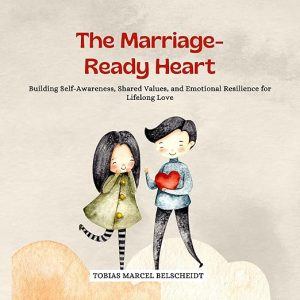
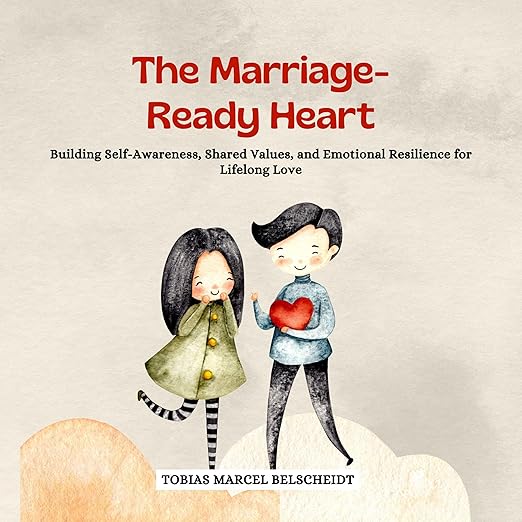
The Marriage-Ready Heart arrives with no listener reviews in the public record, which is both unusual and, in this case, a situation that warrants honest engagement rather than avoidance. Without reader testimony to triangulate against, I am working from the synopsis, the narrator information, and the genre context, and from my experience with relationship-readiness literature, which is a space I have read widely in. What I can say is that Tobias Marcel Belscheidt's framing of the subject is more sophisticated than most books in this category, and that the 4-hour runtime is a considered choice that reflects genuine editorial discipline.
Most pre-marriage books fall into one of two failure modes: they either provide compatibility checklists that treat relationship fitness as a measurable score, or they offer inspirational language that sounds meaningful but provides no actual tools for self-examination. The Marriage-Ready Heart's synopsis signals a third approach, and a better one: it treats marriage readiness as a consequence of ongoing internal work, emotional maturity, self-awareness, understanding of one's own patterns, rather than as a status you achieve by meeting a set of criteria.
The book's central argument is that what you bring into a marriage from your personal history, emotional patterns, unresolved wounds, communication defaults, the expectations inherited from your family of origin, shapes the relationship more powerfully than the compatibility of two people's surface preferences. This is not a new insight in relationship psychology, but the degree to which it is centered in the book's framing rather than treated as a preliminary chapter before the practical content is notable. Belscheidt is interested in the architecture beneath the relationship, not just the relationship's visible structure.
The content covers emotional intelligence development, conflict resolution, intimacy and trust building, and the specific work of aligning values with a partner before vows rather than hoping they will align naturally afterward. That last emphasis is the most practically important, and it is the place where couples most often discover they have made assumptions rather than explicit agreements. A book that takes shared values seriously as a pre-commitment subject rather than a post-commitment problem is doing useful work.
Jake Andrews's Calm Read in Four Hours
Jake Andrews's narration is a calm and professionally measured read. The material calls for a tone that is neither therapeutic whisper nor motivational speaker, and Andrews navigates between those poles appropriately. At just over four hours, the runtime is short enough to complete in a few focused sessions, which suits the reflective content well, this is a book that benefits from listening in digestible increments rather than all at once, with time between sessions to sit with the questions raised.
The book's dual audience, individuals preparing for marriage and couples working through this preparation together, is a design choice worth noting. Much of the content works as personal reflection rather than shared exercise, which means it can function as a solo listening experience in a way that some relationship books cannot. If only one partner in a couple listens, the reflection prompts still hold their value. If both listen, the material provides a shared vocabulary for subsequent conversation.
No Reviews Yet for This February Release
Without listener reviews to draw on, I cannot assess whether the book's practical guidance lands with the specificity its synopsis promises. The framing is sophisticated, but relationship-readiness books can sometimes sustain a thoughtful register while offering advice that is too abstract to actually change behavior. The synopsis emphasizes reflective insights and practical guidance, and the 4-hour runtime implies editorial discipline, books in this category that pad themselves to feel comprehensive tend to run much longer. Both signals are moderately encouraging.
The February 2026 release date means this book is genuinely new, and the lack of listener reviews reflects that timing rather than audience indifference. It is worth approaching as an early listener who is helping to form the book's reception rather than waiting for consensus to develop.
For Couples Doing the Internal Work First
This is for individuals or couples who are considering marriage and want to approach that consideration with genuine emotional intelligence rather than hoping for the best. It is particularly well-suited to anyone who has been in relationships that failed not because of incompatibility of preference but because of unexamined emotional patterns, the book is clearly designed to surface that kind of self-knowledge before rather than after commitment.
Skip it if you are looking for a compatibility quiz or a practical logistics guide to wedding planning. The Marriage-Ready Heart is about internal preparation, not logistical readiness. Listeners who want explicit prescriptions rather than reflective prompts may find the register too open-ended for their needs.
Good to Know
Is The Marriage-Ready Heart suitable for couples to listen to together, or is it primarily a solo reflection guide?
The synopsis frames it as appropriate for both individuals and couples. Much of the content is internally reflective, examining personal emotional patterns and histories, which can function as solo work. Listening together provides shared vocabulary for subsequent conversation, but the book is designed to hold value even if only one partner engages with it.
Is this book faith-based or secular in its approach?
The synopsis does not identify a faith-based framework, and the framing, emotional intelligence, self-awareness, communication skills, values alignment, is consistent with secular relationship psychology. Listeners seeking explicitly faith-based marriage preparation should verify the book's orientation before purchasing, as the available information does not confirm a religious grounding.