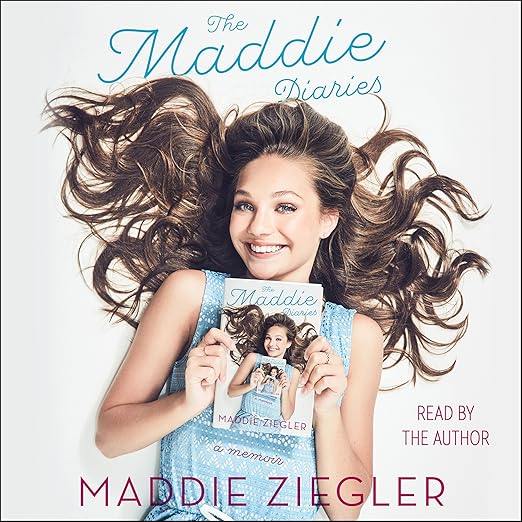
Can a teenager authentically articulate what it cost to become famous before finishing high school? The Maddie Diaries argues yes, and the primary evidence for that argument is in Maddie Ziegler's narration of her own memoir. She was reading these words in her own voice at an age when most people are still figuring out what their voice is, and the audiobook is more interesting for that specific improbability than it might have been with a more polished, at-distance presentation. This is an audiobook that works because of its subject's age at the time, not in spite of it.
Ziegler came to public attention through Dance Moms, Lifetime's reality competition series, where she was cast at eight years old and quickly became the breakout figure whose performances drew attention far beyond the show's existing audience. That attention brought Sia, who cast Ziegler as her dance double in the music video for 'Chandelier,' a video that has accumulated one of the largest view counts in YouTube history. By the time Ziegler was finishing high school she had appeared in movies alongside Naomi Watts and Jacob Tremblay and begun a judging role on So You Think You Can Dance. The memoir covers how that trajectory felt from the inside.
What Makes The Maddie Diaries Worth Hearing
The self-narration is the essential element. A professional narrator reading this text would produce something that sounds like a memoir; Ziegler reading it produces something that sounds like Maddie Ziegler. For an audience of young dancers and performers who followed her career through Dance Moms and Sia's videos, hearing her actual voice, with its specific pacing and the occasional moment of genuine feeling that surfaces beneath the practiced delivery, is the reason to choose the audiobook over the print edition. One reviewer who describes herself as a dancer reads the book as deeply helpful and something she could read repeatedly, and Ziegler's narration contributes to that sense of direct, personal guidance.
The memoir is organized around lessons rather than pure chronology, which suits the audiobook format. Ziegler moves between anecdotes from Dance Moms, her experience with Sia and the 'Chandelier' video, and the hard work of physical and artistic training, drawing explicit connections between those experiences and the principles she wants to pass on to readers. The FAQ-style section where she answers fan questions is particularly well-suited to audio, because the question-and-answer format creates a natural call-and-response dynamic that Ziegler handles with the confident ease of someone who has spent years in front of cameras and audiences.
A reviewer who gave the book to their daughter as a birthday gift reports the daughter read it in two days and loved it, which speaks to the way the content calibrates its pace and density for a young adult audience. The memoir is genuinely accessible without being condescending, and the insights Ziegler offers about navigating the entertainment industry, managing criticism, maintaining balance during rapid public success, arrive with enough specificity that they feel earned rather than generic.
Things to Know Before Starting The Maddie Diaries
The audience for this audiobook is specific, and the book does not attempt to broaden it unnecessarily. The primary readership is girls and young women in the eight-to-sixteen range who have watched Ziegler on Dance Moms or followed her career through social media and want a closer view of the person behind the performances. A reviewer notes that while it was highly recommended for girls aged eight and up, it is not limited to dancers specifically, and that is accurate: the broader themes of following passions, managing public scrutiny, and working hard enough that the result looks easy translate beyond the dance-specific context.
The four-and-a-half-hour runtime suits the content well. At that length, the memoir covers the essential arc of Ziegler's rise without padding or over-explaining. Some sections move quickly through experiences that a more adult memoir might linger over, which is appropriate given both the author's age at the time and the audience she is addressing. The Dance Moms sections are honest about the intensity and pressure of that environment without becoming an expose.
Adults listening with their children will find less to engage with on their own terms than young adult listeners will find on theirs, but the accessible, warm delivery makes this a reasonable family listen for households with dance-interested young people. The content is entirely appropriate for the rated audience range.
The New York Times bestseller status the memoir achieved reflects something real about the audience's appetite for this kind of close-access documentation. Young performers watching Ziegler on Dance Moms were seeing a version of her shaped by editing and narrative; the memoir and this audiobook offer something closer to the unmediated account of what the experience actually cost and delivered.
Who Maddie Ziegler Is Writing For
Young adult listeners who admire Ziegler's work, whether through Dance Moms, the Sia collaborations, or her acting roles, will find this audiobook exactly what they want: close access to a figure they have followed at distance, in her actual voice, sharing the specifics of how she navigated a genuinely unusual early life. The narration is confident enough to hold attention across four hours without the practiced polish of a professional audiobook narrator.
Adult listeners without a connection to Ziegler's career will find this a well-made young adult memoir that does not reach beyond its intended audience, which is honest rather than a limitation. Parents looking for an accessible, age-appropriate audiobook for young performers will find the content and delivery exactly calibrated for that purpose.