Quick Take
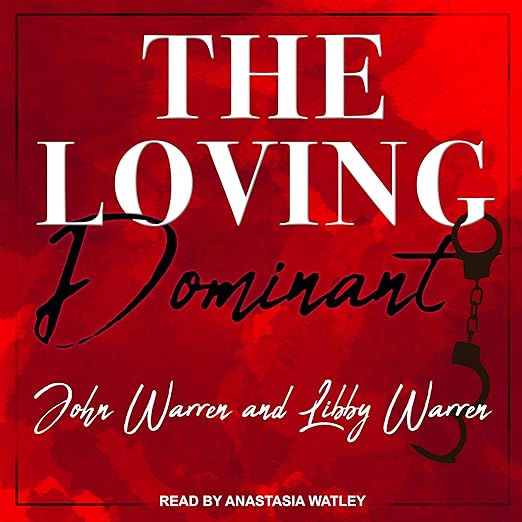
- Narration: Anastasia Watley brings a measured authority to this text that suits the subject matter well. She reads without prurience and without over-dramatizing, which is exactly the right register for a book that aims to be educational rather than titillating.
- Themes: Consensual power exchange, dominance and submission as a relational practice, the ethics of care within kink
- Mood: Serious, instructional, and unexpectedly warm, this reads more like a thoughtful mentorship than a manual
- Verdict: The most comprehensive and ethically serious introduction to D/s relationships currently available in audio; the updated edition adds genuinely new content for an audience that has likely outgrown older resources.
I first encountered mentions of The Loving Dominant years before I actually listened to it, in footnotes, in community reading lists, in the kind of respectful references that signal a text has become load-bearing in a conversation. When a book keeps appearing in that way, in discussions where people are actually trying to do something well rather than just consume, it usually means the book is doing something right. So I came to this audiobook with genuine curiosity about what had earned it that status, and about how a work from this specific corner of nonfiction translates to audio.
The short answer is that it translates better than I expected, largely because the writing is so personal. John Warren doesn’t write in the register of a technical manual. He writes as someone who has been in these relationships, thought hard about them, made mistakes, and arrived at something worth sharing. The prose is, as one reviewer noted, colorful and highly personal, he fills the text with examples drawn from his own experience and from the community around him. That quality of voice is well served by an audio format. What gets lost from a technical guide with diagrams and indexes is instead amplified here, because the conversational core of Warren’s writing is exactly what a narrator can deliver.
Why the Update Matters
This is the revised and updated edition co-authored with Libby Warren, and the new material is substantive rather than cosmetic. The additions, a full chapter on partner-finding, expanded sections on electricity play, ethical approaches to multiple partners, water sports, and kinky digital photography, represent topics that simply didn’t exist in the cultural vocabulary when the first edition reached its initial 40,000 readers. The book has grown alongside the community it serves, which is a meaningful distinction. Many guides in this space age quickly because the landscape changes; The Loving Dominant has apparently been revised with actual attention to what the current landscape requires.
One reviewer, SubjectiveObjective, described picking up the first edition in the 1990s after searching for a perspective on dominance that was compatible with a loving, relational orientation. That’s a precise description of what this book offers and what the alternative was: a field where the loving part and the dominant part were often treated as contradictions. Warren’s foundational argument, that dominance practiced with genuine care, consent, and mutual investment is not only possible but richer than alternatives, now seems less controversial, but it was a meaningful intervention at the time and the book still makes the case well.
The Ethics at the Center
What distinguishes this from purely practical guides is the sustained attention to ethics and emotional accountability. Warren returns repeatedly to questions about what dominants owe their partners, how to navigate scenes that go wrong, and how to sustain the kind of relationship where submission is genuinely given rather than extracted. A reviewer quoted the line ‘almost all men will loudly claim that they are dominant; most are wrong,’ and the rest of the book is essentially an unpacking of that claim. It’s not a flatter to dominants; it’s a challenge to examine whether the orientation they claim matches the practice they actually engage in.
Anastasia Watley handles this material well. The book covers topics that many narrators would either over-dramatize or read with clinical distance, and she does neither. The tone is even throughout, informed, slightly formal in the best sense, and consistently respectful of both the material and the listener.
Range and Scope Over Ten Hours
At 10 hours and 43 minutes, this is a genuinely thorough listen. It covers negotiation, scene structure, after-care, protocols, and the day-to-day texture of power-exchange relationships. A reviewer described it as thorough, detailed, and practical, and cited Warren’s willingness to pass the floor to others when he reaches the edge of his knowledge as a marker of intellectual honesty. That self-awareness is relatively rare in this genre and it shows up repeatedly in how the book handles the limits of any single person’s experience.
Who Should Listen and Who Should Skip
Listen if: you’re new to D/s and want a rigorous, ethically grounded introduction; you’ve been practicing for years and want to examine your assumptions; or you’re a submissive trying to understand the perspective and responsibilities of the person you’d be trusting. The book explicitly addresses both sides of the dynamic throughout.
Skip if: you’re looking for erotica or a fantasy-framing of power exchange, or if you want a quick orientation rather than a sustained argument. This is a serious book and it asks for serious attention.
Frequently Asked Questions
Does The Loving Dominant audiobook include all the new content from the updated edition?
Yes. The audiobook is of the revised and updated edition co-authored by John and Libby Warren, which includes the new chapter on partner-finding and expanded sections on electricity play, ethical multiple-partner dynamics, and other topics not in the original edition.
Is this book appropriate for people who are submissive, or is it written only for dominants?
It’s primarily written for dominants but is consistently useful for submissives trying to understand the full picture of the relationship dynamic. Multiple reviewers, including submissives, describe it as essential reading for both sides of the slash. Understanding what a thoughtful dominant looks like is valuable information for the person considering trusting one.
How does the narrator Anastasia Watley handle the more explicit or sensitive material?
Watley reads with consistent evenness throughout. She doesn’t sensationalize the material or retreat to clinical distance. The tone is measured and authoritative, which suits a book that’s trying to be taken seriously as an ethical and practical guide rather than titillation.
Is The Loving Dominant relevant if you’re in an established D/s relationship rather than just starting out?
Very much so. The book covers the sustained texture of long-term power-exchange relationships, including how to handle illness, work, and family pressures without losing the relational dynamic. Experienced practitioners consistently cite it as a useful reference and a source for re-examining assumptions they’ve developed over time.