In Brief
- Voice: Lucy Scott reads Kondo's translated text with a gentle clarity that suits the meditative, slightly ceremonial quality of the KonMari philosophy.
- Big ideas: intentional living, the psychology of clutter, the relationship between objects and identity
- Atmosphere: Calm and quietly persuasive, with occasional mystical detours
- Worth it?: A genuinely transformative set of ideas delivered in a voice that earns its sincerity, though some repetition is the price of the format.
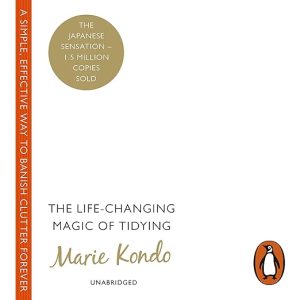
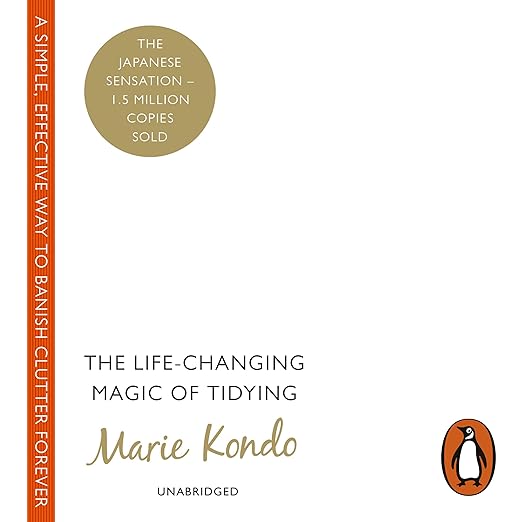
I have recommended this book to at least four people and watched all four of them declutter their homes in ways that surprised them. That does not happen with most self-help titles. Marie Kondo's method is simple enough to describe in a paragraph and genuinely hard to argue with once you have tried it, which is why The Life-Changing Magic of Tidying has sold in the millions and spawned a Netflix series and multiple follow-up books. The audiobook, narrated by Lucy Scott, captures something important about why the method works: it sounds sincere because it is.
Scott's narration runs just under five hours, which is short for a life-improvement book of this profile. The brevity is appropriate. Kondo's argument is not complicated; it is precise. The KonMari method asks you to work by category rather than by room, to hold each object and ask whether it sparks joy, and to complete the process quickly and once rather than gradually and repeatedly. The audiobook format strips away the original Japanese illustrations but preserves the sequential logic of the method, which is what actually matters.
The Verdict, Briefly
What separates this from standard decluttering advice is the psychological reframe. Kondo is not asking you to organize your things. She is asking you to examine your relationship with them. Why do you keep things you do not love? Usually because you feel guilty about discarding them, or afraid of future need, or loyal to a version of yourself that owned them. The book addresses all of these tendencies directly and gently.
One reviewer described it as more of a psychological masterpiece than a practical guide, and that feels right. The practical instructions are clear and actionable, but the book's power is in changing how you think about your possessions before you touch a single drawer.
Why Listen to The Life-Changing Magic of Tidying
Because the audio format works well with Kondo's step-by-step progression. You can listen to a chapter, pause, and apply what you have heard before moving on. Several listeners reported doing exactly this, treating the audiobook as both guide and companion during the actual tidying process. Lucy Scott's measured delivery encourages that kind of active engagement rather than passive consumption.
The book also rewards listening even if you have already read it in print. The spoken version of Kondo's instruction to physically hold each item while asking the joy question has a different quality than the printed page, partly because hearing it tends to prompt the action more immediately.
Points to Consider
Kondo anthropomorphizes objects throughout, thanking items for their service before discarding them and attributing emotional states to socks and shirts. This is philosophically consistent with a Shinto worldview and practically useful as a way of reducing the guilt of discarding. But at least one English-language reviewer noted that this tendency can read as strange or affected. Scott navigates these moments with a straight face, which is the right call.
There is also some repetition in the middle sections, likely a byproduct of translation and of a text that was originally structured around visual examples. The audiobook cannot compensate for absent illustrations with anything beyond description, so the more visual instructions, such as Kondo's specific folding techniques, lose something in the format.
Who Should Pick Up The Life-Changing Magic of Tidying
Anyone who has ever felt the specific low-grade anxiety of owning too much and not knowing what to do about it. The method is genuinely applicable regardless of whether you live alone or with a family, in a small apartment or a large house. Less suited to listeners who want quick tactical tips without philosophical framing, or who are not prepared to commit to the all-at-once approach Kondo insists on. If you approach this as background listening rather than active instruction, you will get much less out of it.
Does the audiobook work without the physical book's diagrams and illustrations?
Mostly, yes. The core method, category-based decluttering, the joy test, the completion-in-one-go principle, translates well to audio. The specific folding techniques Kondo teaches are harder to follow without visual reference and are better learned from a companion video or the print edition.
Will this audiobook motivate me to actually start decluttering?
More than most. The structure is sequential and action-oriented, and the listening experience tends to generate momentum rather than passive absorption. Multiple reviewers describe starting to clear things out before they finished the book.