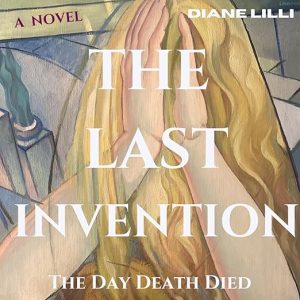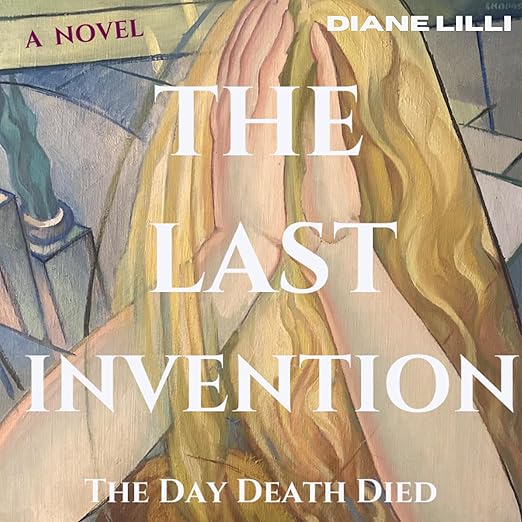
Final invention is the real term scientists use for the moment a machine surpasses the species that built it, and that phrase gives Diane Lilli’s audiobook both its title and its entire premise. In this six-hour dystopia, a machine that promises the end of death arrives just as two sisters’ bond is tested past what either of them thought it could survive.
The setup is deliberately intimate rather than technical. Lilli isn’t interested in explaining how the technology works so much as what it does to family, grief, and the ordinary texture of loved ones’ lives while the planet itself keeps deteriorating around them, and that choice shapes everything else about how the book reads and sounds. That restraint is unusual for the genre, and it’s precisely why the book reads as literary fiction first and speculative fiction second.
Grief and Tragedy Divide Two Sisters
This is quiet, literary speculative fiction centered on a sister relationship rather than an action-forward techno-thriller, and it’s worth saying that plainly upfront, because the premise, AI, the end of death, a collapsing Earth, could easily suggest something faster and more plot-mechanical than what’s actually here. The synopsis is candid about its own restraint: this is a story about how grief and tragedy divide two sisters, “possibly forever,” while civilization is drawn into an existence none of them chose.
The one attached review calls it “a magnificent dystopian tale” from a reviewer discovering Lilli’s work for the first time, who followed up by seeking out more of her books immediately after finishing this one. That’s a strong, specific reaction, even if it currently stands alone: this listing carries a single rating and a single written review, so anyone going in is relying on one reader’s account plus the strength of the synopsis itself, not a broad consensus.
The environmental backdrop matters as much as the AI premise itself: the synopsis is explicit that Earth keeps deteriorating throughout the story, running in parallel with the family fracture and the AI development, rather than as a separate subplot. That layering, ecological collapse, family grief, and technological transformation all happening at once, is what pushes this toward literary dystopia rather than a single-issue AI cautionary tale. Lilli isn’t asking what if AI does this one specific thing, she’s asking what happens to intimate relationships when every large-scale system a family relies on is failing simultaneously. That’s a more ambitious, harder-to-execute premise than a straightforward AI-takeover plot, and it’s part of what the sole attached reviewer responds to when calling Lilli’s imagination “grand.” It’s a premise built for a patient listener rather than one chasing plot twists.
Naomi Rose-Mock Balances Lyrical Family Drama
Narrator Naomi Rose-Mock has real range for exactly this kind of hybrid material. The book asks a single narrator to move between lyrical, intimate family drama and speculative world-building without losing the connective tissue between them, and sustaining genuine intimacy in the sisters’ scenes against a catastrophic backdrop is a harder balancing act than it sounds: lean too far into the speculative machinery and the sister relationship goes cold, lean too far into the emotional register and the dystopian stakes stop registering.
The reviewer who did leave feedback specifically credits Lilli’s imagination, calling the discovery “a hidden gem” and noting they’d never read anything by this author before. Coming from someone who now actively follows Lilli’s work, that’s a meaningful signal for listeners drawn to sister-centered literary fiction with a speculative edge, in the tradition of writers who use science fiction premises to examine family bonds rather than build hard-science world logic.
“The promise of the end of death” is a phrase carrying real philosophical weight, and it places this book in conversation with a specific, ongoing strand of speculative fiction asking what happens to grief, meaning, and family bonds once mortality itself becomes optional rather than universal. Sisters who have already lost something to tragedy, per the synopsis, now have to reckon with a world where loss itself might be reversible for others, if not for them, which is a genuinely unsettling emotional position for a story to sit inside rather than resolve quickly. That’s rich thematic territory for a narrator to sustain across six hours, and it’s exactly the kind of tonal complexity Rose-Mock’s range is suited for. The single existing review doesn’t dwell on the mechanics of how death is defeated, which suggests Lilli keeps the science secondary to the human cost, consistent with the literary-over-technical approach the rest of the synopsis signals.
Six Hours Backed by a Single Review
The synopsis stays fairly abstract about plot specifics, sketching the premise, families breaking apart, a deteriorating Earth, the promise of ending death, without giving away much of the actual sequence of events, so listeners who prefer a detailed plot preview before committing will find less to go on here than with a more heavily marketed title.
The thin review base is the other honest caveat. A single five-star rating and one detailed review is genuinely not much to weigh a six-hour commitment against, even though what is there reads as sincere and specific rather than generic praise. Listeners who like to wait for a larger consensus before committing should know this is still an early-stage listing by that measure.
At six hours and five minutes, this sits on the shorter end for a multi-generational family dystopia, which likely means a tighter, more focused narrative rather than the sprawling, multi-POV structure common in longer speculative epics. Listeners used to fifteen-plus-hour dystopian sagas with extensive world-building should recalibrate toward something more intimate and compressed, closer in scale to a literary novella than a series-opener doorstopper. That compression can be a real strength for a story this emotionally focused, but it’s worth naming as a formal choice rather than assuming it automatically.
Family Dynamics Matter More Than Hard Science
Readers of quiet, character-driven speculative fiction who care more about family dynamics under pressure than about hard-science plausibility are the clearest fit, especially anyone drawn to sister relationships as a central subject rather than a subplot.
Fans of literary speculative fiction that keeps its focus tight on a small cast, think Kazuo Ishiguro’s Klara and the Sun or Jenny Offill’s fragmented family narratives filtered through a strange premise, will recognize the approach here, even though Lilli’s plot mechanics and prose style are her own. Anyone who wants their dystopia delivered through relationship rather than spectacle is in the right place. Patient listeners who enjoy sitting with ambiguity, rather than demanding immediate resolution, will get the most out of the pacing here.
A techno-thriller heavy on hard-science mechanics is not what’s waiting here, and neither is a large body of prior reviews to lean on; go in expecting a small, intimate dystopia rather than a blockbuster-scale one.
- Narrator: Naomi Rose-Mock moves between lyrical family drama and speculative world-building without losing the sisters' intimacy.
- Subjects: AI and the end of death, sisters divided by grief, a deteriorating Earth
- Tone: Quiet, literary, dystopian rather than action-driven
- Bottom line: An intimate speculative family drama, worth a chance despite its thin review base so far.
Questions Listeners Ask
Is The Last Invention audiobook more of a techno-thriller or literary fiction?
Literary fiction with a speculative premise. It centers on two sisters' relationship under grief and tragedy rather than fast-paced techno-thriller mechanics.
Why does The Last Invention audiobook only have one listener review?
It's a newer, lightly-reviewed title. The single attached review is enthusiastic and specific, but listeners should know the consensus is still small.
What does 'the last invention' actually refer to in this audiobook?
It's the real term scientists use for the moment a machine surpasses its creators, which the synopsis explicitly ties to the book's central AI premise.