Quick Take
- Narration: Jeffrey Ito reads the technical content clearly and without affectation, which is the right call for instructional material of this density.
- Themes: indoor cultivation techniques, plant biology, sustainable growing practice
- Mood: Practical and thorough with a slight lean toward the enthusiast end of the spectrum
- Verdict: A comprehensive indoor cannabis cultivation guide that covers the full cycle from seed selection to harvest, best experienced alongside its accompanying PDF.
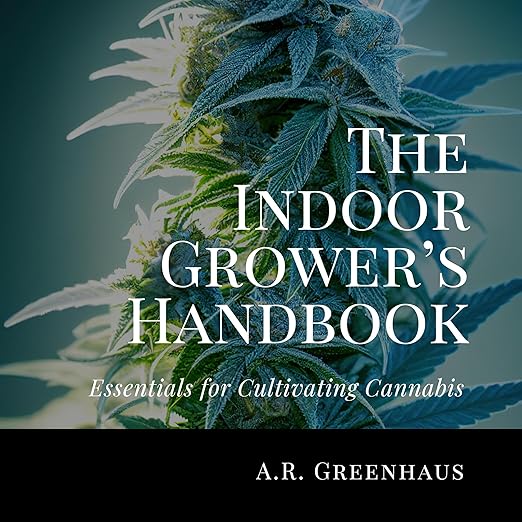
Horticultural audiobooks present a genuine format challenge: you are trying to teach a visual and tactile practice through sound alone. A.R. Greenhaus’s Indoor Grower’s Handbook approaches this honestly. At five hours, it is detailed without being interminable, and the accompanying PDF that comes with the Audible purchase is explicitly designed to carry the charts, checklists, and visual material that audio cannot convey. If you are approaching this as a pure audio experience without the PDF, you are making the experience harder for yourself than it needs to be.
The book covers the full cultivation cycle for indoor cannabis: biology from seed to harvest, lighting systems from LED to HPS, nutrient schedules, advanced techniques including hydroponics and organic soil growing, pest and disease management, and the harvest and curing process. That scope is genuinely comprehensive for a five-hour audiobook, which means each topic receives focused treatment rather than exhaustive depth. This is the right trade-off for a general handbook; listeners who want to go deep on any single topic will want to follow up with dedicated resources.
Our Take on The Indoor Grower’s Handbook
One reviewer describes this as everything you need, well written, well organized, and containing all the latest information. Another offers a useful counterpoint: the thoroughness of the approach risks making something that is fundamentally not complicated, marijuana is a weed, feel more intimidating than it needs to be. Both observations are accurate and point toward how you should approach this book based on your experience level.
For a first-time indoor grower, the systematic coverage of lighting cycles, nutrient schedules, and environmental controls is exactly the orientation you need before you commit to equipment purchases. For a more experienced grower looking for technique refinement, the advanced sections on hydroponics, organic methods, and maximizing resin production will offer specific value. The sections on troubleshooting pests and nutrient deficiencies are practically useful regardless of experience level.
Why Listen to The Indoor Grower’s Handbook
Jeffrey Ito’s narration is technically precise, which is what instructional content requires. He does not editorialize or add personality beyond what the material demands, and for a book where accuracy matters more than entertainment, that restraint is the right choice. The lighting and nutrient sections in particular benefit from his careful, unrushed delivery; these are areas where a confused listener could make expensive mistakes, and Ito’s pacing allows the information to land.
The book’s treatment of strain selection is worth particular attention. Rather than recommending specific strains by name, which would date quickly, Greenhaus frames strain choice around goals: high THC content, particular terpene profiles, therapeutic cannabinoid ratios, or cultivation-friendly traits like short flowering time or compact structure. That framework is more durable than any specific recommendation and empowers the listener to make informed decisions as the market evolves.
What to Watch For in the Cultivation Sections
The lighting chapter is the most technically dense section of the book and also the one where the accompanying PDF earns its keep most clearly. Understanding the difference between LED, HPS, and CMH lighting systems and how to configure light cycles for vegetative versus flowering stages involves photometric concepts that are easier to absorb with diagrams. Listen through the audio once, then cross-reference with the PDF materials for the technical specifications.
The harvesting and curing section is one of the better treatments of this often-neglected topic in cannabis growing guides. Many cultivation resources spend most of their attention on the growing phase and treat harvest as an afterthought. Greenhaus gives it proportional space, covering the timing indicators for harvest readiness, the wet versus dry trimming debate, and curing practices that preserve terpene profiles.
Who Should Listen to The Indoor Grower’s Handbook
First-time indoor growers who want a systematic orientation before making setup decisions will find this genuinely useful. Experienced growers looking to refine specific techniques or move from soil to hydroponic systems will find actionable guidance in the advanced sections. Casual listeners who want a general understanding of cannabis cultivation without commitment to practice will find the book more detailed than they need. Download the PDF. Use them together.
Frequently Asked Questions
Is the PDF companion worth downloading, or does the audio stand alone?
The publisher explicitly notes that the PDF is available in your Audible Library with purchase. For a cultivation handbook that covers lighting charts, nutrient schedules, and growth stage diagrams, the PDF is essential rather than supplementary. Audio without the PDF works but leaves you without the visual reference material.
Does the book cover both soil and hydroponic methods, or does it focus on one?
Both are covered. The advanced techniques section addresses hydroponics, traditional soil cultivation, and organic growing methods as distinct approaches with different tradeoffs. The book does not advocate for one method as universally superior but helps listeners understand which approach suits their goals and setup.
Is this guide legally compliant, and does it address the legal context of home cultivation?
Reviewers note the book includes attention to legal compliance. Cannabis cultivation laws vary significantly by jurisdiction, and the handbook acknowledges this context. Listeners should verify the legal status of home cultivation in their specific location before proceeding.
How does Jeffrey Ito handle the technical terminology around lighting and nutrients in audio format?
His delivery is clear and measured, which helps with the acronym-heavy world of grow lights and nutrient chemistry. He reads technical terms without rushing through them. For listeners who want to revisit specific sections, the chapters are structured to make relistening straightforward.