
Key Details
- Narrator: Emily Woo Zeller takes the narration credit on a book that runs two timelines at once, past and present, with the switch marked by nothing but voice.
- Subjects: Resurrection and revenge, a witch weaponized by grief, war between kingdoms, monsters commanded rather than slain.
- Tone: Ornate, vengeful, quietly heartbroken.
- Bottom line: The middle volume that improves on its opener, and the one place in the series where the audio format actually solves a problem.
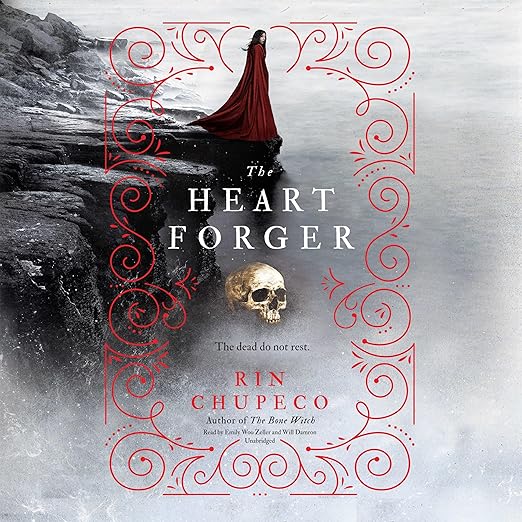
Tea tells her own story to a bard who writes it down, and that frame carries this audiobook from the first minute. She is a bone witch, which means she raises the dead, and she has come out of self-imposed exile with a list. The royals who wronged her and killed the person she loved are on it. She can now command the daeva, the beasts everyone else runs from, and other people have their own plans for a woman with that ability. War is building between kingdoms. The description's best line is also its coldest: you cannot kill someone who can never die.
Book two of The Bone Witch is where the series stops laying groundwork and starts spending it. The first volume taught Tea what she could do; this one is about what she is willing to do, and the difference in energy is the thing readers keep pointing to. Rin Chupeco pairs a formal, courtly surface with a protagonist who is seventeen and furious, and this volume leans on the fury, which is a harder balance to hold than either mode alone. Thirteen hours and thirty-nine minutes is a generous but not indulgent length for the amount of political machinery being moved.
Two ratings produce the 4.7 printed at the top of this record, and no pair of whole-star grades lands on 4.7. The reachable set at that sample size is short enough to write out: 1.0, 1.5, 2.0, 2.5, 3.0, 3.5, 4.0, 4.5, 5.0. Nothing else exists. Meanwhile the column below holds five written responses, four of them five stars, which makes it more than twice the size of the pool that produced the badge. When the counter and the column disagree this badly about how many people showed up, the column is the one to read.
Names are the quiet obstacle in this series, and audio removes it. A January 5, 2025 five-star stops mid-review to tell other readers that Tea is pronounced Tee-yah, which is the kind of thing print readers carry silently through an entire novel and then get wrong out loud. The same response reaches for Avatar and The Witcher to describe the register, landing on a witcher who happens to be a seventeen-year-old girl. That comparison is more useful than the publisher's copy.
Why It Works in Audio
Sequels in this genre usually widen the map and lose the person. An October 21, 2018 four-star, writing months after release, works through the structure carefully and concludes this volume might be better than the first, which is a rarer verdict than the genre's marketing suggests. What it praises specifically is the frame: the present-day bard following Tea while she handles her business, and the flashbacks in which she tells him how she got here.
Emily Woo Zeller takes the narration credit, and the two-timeline structure is the whole assignment. A printed page can mark the switch with a typeface, a section break, or a chapter heading you can see coming. A recording cannot. Every handover between Tea's account of the past and the bard's present has to be signaled by pace, pitch and attack, thirteen and a half hours of it, in a book where the two timelines are converging on purpose and the reader has to keep them apart right up to the point where they are supposed to collide.
Revenge plots also survive audio better than most, because they run on anticipation rather than on information. You are not tracking a magic system across appendices; you are waiting to see how far Tea will go and who will try to use her before she gets there. The copy is honest about the shape of it: she has the power, she has the beasts, and the only real question is whether the people plotting against her understand what they are handling.
Weak Spots in The Heart Forger
Coming in cold will not work. The description's first sentence points back at the previous novel and the record files this as book two, so the emotional debts are all inherited. A June 9, 2023 five-star describes the effect accurately: this is a book in which Tea is visibly retelling her own life, hunting traitors, trying to protect friends who half believe she is a monster, and slowly losing faith. None of that lands without the first volume behind it.
Teen is the shelf, and the record carries no other tag at all: nothing for fantasy, nothing for the necromancy that drives every plot beat. The classification is not exactly wrong, since the protagonist is seventeen and the emotional register is adolescent in the good sense. It does mean adult fantasy readers who would enjoy this will never be shown it, and it means no field on the page prepares anyone for a book about corpses, vengeance and war.
Five written responses, filed between 2018 and late 2025, and every one of them arrives already invested. That is a self-selected group: people who read book one, liked it enough to continue, and came back to say so. It makes the column warm and it makes it narrow, so treat the enthusiasm as a report from committed series readers rather than as evidence that a newcomer would feel the same way.
Who Will Get the Most From It
Fans of the first book should simply continue, and a January 25, 2020 five-star explains why in the most practical terms available: the action is stepped up from book one, the romantic threads that were being withheld finally pay off, and a secondary character it nominates as the book's most valuable player gets a proper turn. A December 14, 2025 response went straight into the next volume on finishing, which is the most useful recommendation any series reader can give.
Do not start here, and do not come to it wanting a self-contained fantasy. This is a middle volume doing middle volume work, which means it opens debts it has no intention of settling. Anyone allergic to cliffhangers should have the next book ready before starting this one.
Between two counted ratings and five written responses, the number at the top of this page tells you nothing about how the book performs at scale. Series reputation should decide this one, and it is a strong one.
Common Questions
Is The Bone Witch required reading before this audiobook?
Yes. The description opens by referring back to what Tea accomplished in the first volume, and the record itself files this as book two of that series. The revenge plot assumes you know who wronged her and what it cost her. Start with the first volume.
What are daeva, and how much of the book do they take up?
They are the monstrous beasts Tea can now command rather than merely fight, and the description makes them the instrument of her revenge against the royals. They function as leverage rather than as set pieces. The plotting over who might get to use a witch with that ability gets equal billing with the creatures themselves.
How is the audiobook structured between past and present?
Two timelines alternate. One is Tea recounting her own history; the other follows a bard setting it down in the present, with the two closing on each other as the book proceeds. In print those are separated typographically. In audio the shift is carried by pacing and voice alone.







