In Brief
- Narrator: Ben Cole-Edwards narrates his own work, and the self-read delivery carries an authenticity that a professional narrator could not replicate, raw in places, intimate throughout.
- Subjects: Childhood trauma, narcissistic parenting, intergenerational healing
- Tone: Raw and emotionally direct, with moments of genuine tenderness
- Bottom line: Three short but emotionally dense works that function as a single sustained conversation about breaking cycles, most powerful for listeners who grew up in chaotic or emotionally withholding households.
I came to The Healing Trilogy late on a Saturday, having spent the morning doing something mundane and the afternoon avoiding something I probably needed to think about. That context matters, because this is exactly the kind of listening experience that catches you when your defenses are down. Ben Cole-Edwards narrates his own work, and within the first ten minutes of the opening volume it becomes clear that this is not a clinical self-help audiobook. It is a man talking directly to people who grew up the way he did, in homes where chaos felt normal and trauma felt like love.
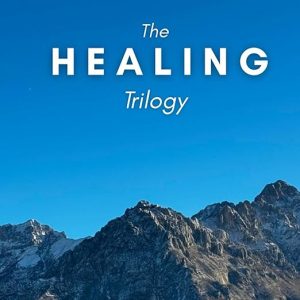
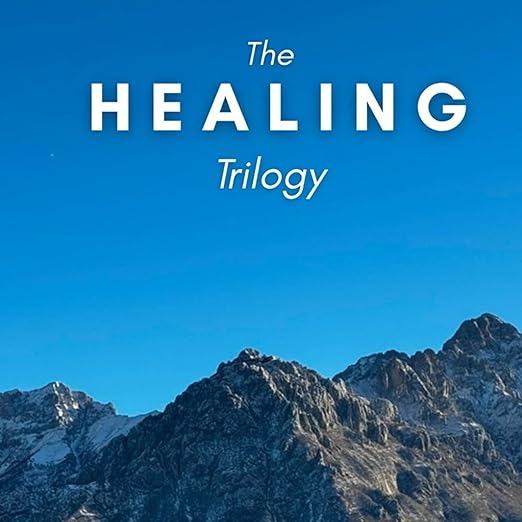
The trilogy collects three distinct but interlocking works: Healing, subtitled You Are Not Your Parents' Thoughts; ReParenting, addressed to those raising children while still healing themselves; and When Chaos Is Normality, described as a raw memoir and the structural spine of everything that precedes it. At three hours and twenty-eight minutes total, this is a concentrated listening experience. There is no padding, no academic detour, and very little of the hedging language that tends to soften self-help content into near-uselessness. Cole-Edwards writes and speaks with the directness of someone who no longer has any interest in softening what he went through or what he learned from it.
Emotional Reprogramming and Whose Voice Belongs to You
The first volume, Healing, is the most conceptually focused of the three. Cole-Edwards explores what he calls emotional reprogramming, the process of identifying which internal voices, reactive patterns, and core beliefs belong to you and which were installed by a parent who had no business doing the installing. Reviewer Atamm1318 described recognizing "word for word phrases" from childhood, and that specificity is exactly what separates this from generalist trauma content. Cole-Edwards does not speak in archetypes. He speaks in scenes, in remembered conversations, in the particular texture of growing up with a parent whose needs always came first.
What is unusual about this volume is that it offers validation before it offers tools. Most personal development content moves quickly to action steps. Cole-Edwards seems to understand that people who grew up in narcissistic or emotionally volatile households often need to be told that their experience was real before they can begin to do anything about it. The clarity and validation you never received growing up is not just a marketing line from the synopsis, it describes the actual function the first volume performs.
Becoming a Better Momma Without a Model
ReParenting, the second volume, shifts the frame to parenting. Cole-Edwards addresses the specific difficulty of trying to be a present, emotionally available parent when you were never modeled that kind of presence yourself. This is territory that parenting literature tends to handle abstractly, filling pages with advice that assumes the reader already has a stable emotional foundation to draw from. Cole-Edwards does not make that assumption. He writes for people who are learning in real time, who want to break cycles they can see clearly but still feel pulled into.
Reviewer Santana captured this dynamic precisely, noting that the book is "helping me heal, so that I can be a better momma to my boys." That sentence contains the entire thesis of ReParenting. You cannot separate the healing from the parenting. They happen together, incompletely, with a lot of backsliding, and Cole-Edwards is honest about that rather than pretending there is a clean sequence of steps that resolves the tension.
Ben Cole-Edwards's Own Voice Carries the Memoir
The memoir component, When Chaos Is Normality, is the rawest section and, for many listeners, likely the most affecting. Cole-Edwards writes about his own childhood without the buffer of professional distance, describing a home where trauma was so normalized that he could not identify it as trauma until well into adulthood. Several reviewers mentioned crying, and the self-read narration amplifies the emotional texture considerably. When Cole-Edwards delivers his own story in his own voice, the effect is quite different from hearing a professional actor interpret a memoir. The hesitations, the pacing, the moments where the delivery slows, all of it carries weight that a polished performance would smooth away.
Reviewer DocHolliday7946, who had already cut a parent out of their life before encountering this book, described finding Cole-Edwards's words "very true to my experiences." That kind of resonance is what this trilogy is built for. It will not land with equal force for every listener. Those who grew up in stable, nurturing households may find the material informative but emotionally distant. Those who recognize their own childhood in what Cole-Edwards describes will find the experience considerably harder to dismiss.
Readers From Chaotic or Narcissistic Households
Listen if you grew up in a household marked by narcissistic parenting, emotional volatility, or chronic chaos and are still working out what that means for your adult life. Listen if you are a parent who wants to give your children something you did not receive and are looking for honest, non-clinical language about how to do that. Skip if you want a structured, research-backed clinical framework, this is personal testimony rather than evidence-based psychology. Also skip if you are not in a place to sit with emotionally difficult material without adequate support around you. This is not light listening.
Questions Listeners Ask
Does Ben Cole-Edwards narrating his own memoir affect the listening experience significantly?
Yes, substantially. The self-read delivery adds emotional texture that a professional narrator would likely smooth over. Multiple reviewers identified the rawness of the performance as a key reason the material landed as deeply as it did.
Is The Healing Trilogy based on clinical research or personal experience?
It is grounded in Cole-Edwards's own experience rather than formal clinical research. The approach is testimonial and practical rather than academic. Listeners looking for evidence-based frameworks drawn from psychology literature should look elsewhere, but those who find clinical language distancing may find this more accessible.
Is this audiobook suitable for someone currently in therapy?
Many readers seem to be engaging with it alongside other healing processes, including therapy. It works well as a companion rather than a replacement for professional support. Given the emotional weight of the material, having some form of support in place before listening is worth considering.