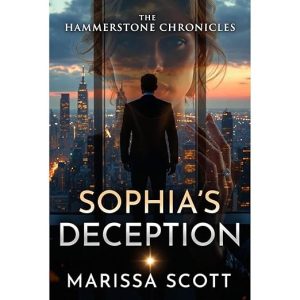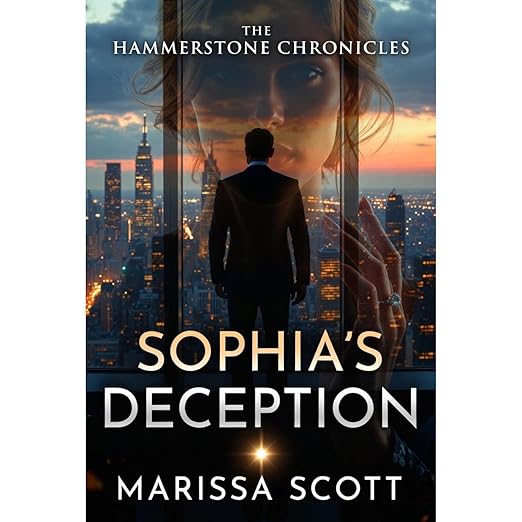
Max Hammerstone controls nine thousand rental units and a real estate empire worth billions, yet the one thing his money can't buy is an heir who loves him for reasons that have nothing to do with the money. The Hammerstone Chronicles audiobook picks up Max's story as he goes undercover, calling himself 'Max Stone' and posing as an ordinary property manager, in search of a woman who'll choose him without knowing what he's actually worth.
Sophia's Gambling Habit Surfaces at the Worst Time
Marissa Scott is working a well-established romance trope here, the wealthy hero testing a love interest's sincerity by hiding his fortune, but she complicates the formula by giving the heroine, Sophia Reed, her own hidden trouble: a gambling habit and secret loans that surface right as Max is ready to reveal the truth about his identity. That structural choice matters; instead of one partner's deception being the whole conflict, both Max and Sophia are concealing something, which sets up a more mutual reckoning than the undercover-billionaire trope usually delivers.
This is the second entry in The Hammerstone Chronicles, and while the book stands alone well enough as a complete arc, Max's specific hunger for 'the one thing that matters' beyond his business success, a legacy, an heir, an actual family, suggests earlier ground covered in book one that new listeners won't have full context for. At forty-eight, having already watched one serious relationship collapse under the weight of lies, Max's staged financial crisis is a defense mechanism as much as a romantic strategy, and Scott builds real tension out of whether that defense will survive Sophia's own secret.
The undercover-billionaire structure is essentially a Prince and the Pauper story reversed for the romance market, a wealthy figure disguising status to test sincerity rather than a poor figure elevated by circumstance, and it has proven durable precisely because it lets a story explore the specific anxiety of being loved for the wrong reasons. Scott's version adds a real wrinkle to that formula by making Max's disguise a direct response to a documented prior betrayal, his last relationship collapsing under lies, rather than a generic precaution, which gives his paranoia a specific emotional history instead of just serving the plot mechanically.
The property-manager disguise is also a smart practical choice within the story's own logic: it puts Max in believable, regular proximity to Sophia without requiring an implausible coincidence, and it lets Scott explore some of the actual mechanics of a real estate empire, tenants, maintenance, day-to-day operations, through Max's undercover eyes even while the bigger emotional plot runs underneath.
Synthetic Narration Flattens the Emotional Escalation
The narration here is Virtual Voice, worth flagging upfront since this romance depends almost entirely on emotional escalation and the specific tension of two people falling for each other under false pretenses. That kind of material leans hard on vocal warmth, hesitation, the moment a guarded character's voice catches, and synthetic narration tends to flatten exactly those beats rather than deliver them, since it can read the dialogue correctly without conveying the subtext underneath it.
Closer to a Novella Than a Novel
What the short runtime does offer is speed: at two hours and six minutes, this is a genuinely compact read, closer to a long novella than a full-length romance novel, so listeners curious about the premise, the billionaire-in-disguise reveal, the gambling-secret twist, the eventual confrontation, can get through the whole arc in a single sitting. For readers who prefer plot-forward romance over slow-burn atmosphere, that pace is a real advantage.
Romance readers who gravitate toward twist-heavy plots over slow-burn atmosphere tend to want exactly this kind of structure: a clear reveal moment built into the premise from the first page, rather than a story that has to manufacture tension out of ambiguity. Knowing from the synopsis itself that Max's wealth will eventually surface, and that Sophia's gambling secret will collide with that reveal, doesn't undercut the tension, it sharpens it, since the question shifts from what happens to exactly how and when it detonates.
At just over two hours, the pacing has no room for a sagging middle act, the section where longer romance novels often lose momentum between the initial spark and the final crisis; Scott has to keep escalating almost immediately, which works in the book's favor for anyone who finds slower romance pacing frustrating.
The compressed format also suits listeners who prefer to sample an author's voice before committing to a longer catalog; Scott's pacing and dialogue instincts come through clearly even at this length, useful information before picking up a longer entry.
Zero Reviews Despite a Perfect Rating
Zero written reviews are attached despite the perfect rating on record, which means the twist reveal and Virtual Voice's performance here haven't been confirmed by any listener yet, just inferred from the synopsis and the format.
It's also worth flagging how the book handles a gambling addiction, as a plot device driving romantic tension and betrayal rather than a clinically grounded exploration of addiction itself, standard for the genre but worth knowing for anyone affected by the real thing. The billionaire-in-disguise setup, however well executed here, is also a well-worn trope; readers who've read several variations already may find the beats familiar even if Sophia's own secret gives this specific version a slightly different shape.
Book one's specific events aren't detailed in this listing, so new listeners won't know precisely what shaped Max's guardedness beyond the broad strokes given here, a relationship that ended over dishonesty. That gap is workable since Scott re-establishes the emotional stakes clearly at the start of this entry, but readers who want the full picture of how Max got here should expect a somewhat compressed recap rather than a ground-up introduction to his backstory.
Listeners should also expect the resolution to move quickly once the two secrets collide, consistent with the compressed runtime throughout.
Both Leads Are Hiding Something Here
Readers who enjoy fast-moving billionaire romance with a genuine twist, both leads hiding something, rather than a one-sided deception plot, are the direct audience, especially anyone wanting a complete arc in a single short sitting rather than a multi-book commitment.
Readers of Max's earlier entry specifically will get the most complete experience, since the emotional stakes of his guardedness land harder with the full context of what came before, but the self-contained arc here means the central romance still resolves on its own terms even without that history.
Readers sensitive to gambling addiction as a romantic plot device, or anyone who finds synthetic narration a dealbreaker for emotionally driven romance specifically, should approach this one with those specific limits in mind before buying.
A Few Questions About The Hammerstone Chronicles
How long is The Hammerstone Chronicles audiobook?
Two hours and six minutes.
Does The Hammerstone Chronicles audiobook use a human narrator or AI narration?
It uses Virtual Voice, Amazon's AI narration technology, rather than a human narrator.