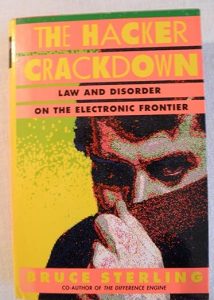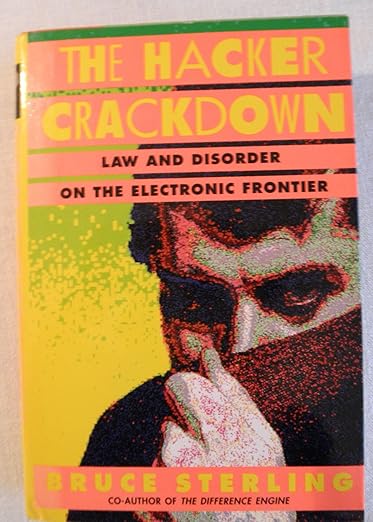
Bruce Sterling published The Hacker Crackdown in 1992, and the audiobook, narrated by Tom Parks across just under thirteen hours, reads like a live dispatch rather than a historical artifact. That quality is either a tribute to Sterling's journalistic instincts or an indictment of how little has changed in the relationship between technology, law enforcement, and civil liberties. Sterling covers the events of 1990 with the kind of immersive granularity that most technology journalism of the era entirely lacked. Already known in science fiction circles for his Cyberpunk work alongside William Gibson, Sterling takes a different approach here: exhaustive on-the-ground reporting that names names, reconstructs motivations, and resists the easy binary of criminal versus hero.
The subject matter is Operation Sundevil, a coordinated 1990 crackdown by the Secret Service, FBI, and local law enforcement on computer crime in the United States. Sterling investigates not just the raids and arrests but the subcultures that provoked them: the culture of bulletin board systems and phone phreaking that preceded the public internet, and the legal frameworks that proved shockingly ill-equipped to handle digital crime. That last element, the legal chaos surrounding electronic communication in 1990, is where the book still resonates most acutely three and a half decades later.
Parks Keeps Satire From Tipping Into Parody
Sterling's craft is immediately apparent in this audio format. He does not structure his investigation as a linear narrative. Instead he circles his subjects from multiple angles: the hackers themselves, the law enforcement agents pursuing them, the civil libertarians who formed the Electronic Frontier Foundation in direct response to the crackdown, and the telephone companies whose infrastructure was being exploited and whose cooperation with investigators raised its own serious questions. Tom Parks handles these tonal shifts well, keeping the journalistic sections clear and the more satirical passages from tipping into parody.
What elevates this above standard technology history is Sterling's refusal to moralize in a simple direction. The hackers are neither heroes of the digital frontier nor pure criminals. The law enforcement agents are not villains, but their legal overreach and genuine ignorance of how computer systems worked caused real harm to people who were sometimes innocent of any serious crime. Sterling holds the complexity of that situation open throughout the book, which gives the listening experience a tension that a less honest account would sacrifice for a cleaner story and easier conclusions.
Thirteen Hours Before the Internet Even Existed
Reviewer Hubert Anglade describes the book as essential reading on computers, freedom, and privacy, and it is difficult to argue with that assessment. The questions Sterling raises in 1992, about what constitutes illegal access to a computer system, about who owns digital information, about the right of law enforcement to seize equipment based on a broad warrant, are not settled questions today. They are the same questions that animate contemporary debates about encryption, government surveillance, and the legal status of security researchers. Listening to how these debates began, in the chaotic aftermath of Operation Sundevil, provides a historical grounding that no amount of current-events coverage can substitute for.
The audio format is particularly well suited to this material. Sterling's prose is energetic and often funny, and Parks's narration captures the wry quality of the writing without sacrificing clarity. At nearly thirteen hours, the book is a substantial commitment, but listeners who are genuinely interested in hacker culture, internet history, or civil liberties will find the length appropriate to the subject's complexity. One reviewer noted that the book was published just before the internet explosion of the mid-1990s, which means most of the action takes place on bulletin board systems rather than the web, and that context is worth holding in mind as you listen through Parks's narration.
Circling Back Instead of Moving Forward
The most significant caveat is temporal. Sterling was writing in real time about events that had just occurred, and some of his speculative passages about the future of digital communication are now dated in ways he could not have anticipated. The technical details of how phone networks and early computer systems operated require a modest tolerance for terminology that has not been in common use for decades. Sterling explains most of it clearly enough, but listeners with no background in computing history may occasionally feel that context is assumed rather than provided.
There is also a structural looseness to the book that reflects its origin as journalism rather than a crafted narrative. Sterling circles back, revisits topics, and sometimes prioritizes texture over forward momentum. Listeners who prefer tightly plotted true crime will find the book's discursive quality mildly frustrating. Those who enjoy the exploratory nature of long-form journalism, where the writer is genuinely trying to understand something complicated rather than simply dramatizing a predetermined conclusion, will consider this a strength rather than a limitation.
Casual Listeners Should Expect Serious Analytical Depth
This audiobook rewards listeners with an existing interest in technology, internet history, or civil liberties who want the foundational text rather than a summary. It is also a strong choice for anyone working in information security or digital rights advocacy who wants to understand where these conversations began. Casual listeners who want a thriller-paced story about hackers will find the analytical depth here a mismatch with their expectations. The rating of 4.5 from fifty listeners reflects a genuine consensus about its quality and importance, not just enthusiasm from a niche audience. The runtime of nearly thirteen hours is a commitment that pays back what you put in.
- Narrator: Tom Parks brings a measured, journalistic cadence to Bruce Sterling's text that suits the book's documentary tone without overdramatizing the hacker culture material.
- Subjects: Electronic crime and law enforcement, civil liberties in the digital age, the culture of early hacking communities
- Tone: Investigative and absorbing, with flashes of dark humor and genuine outrage
- Bottom line: One of the essential documents of early internet culture, this audiobook holds up remarkably well for anyone trying to understand how digital rights debates began.