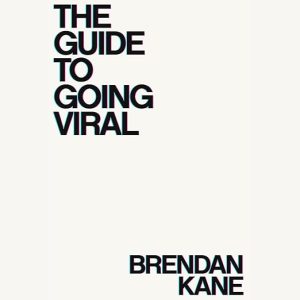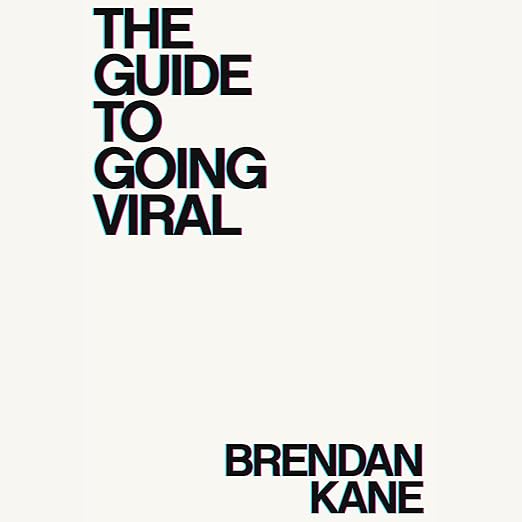
Brendan Kane frames every chapter of this audiobook around a single metaphor: social media as filmmaking, and the content creator as director, producer, actor, and screenwriter all at once. That's a deliberate choice given his own background, blending a career in the film industry with more recent work building viral content strategies for major clients, and it shapes the entire structure of the advice that follows, treating a single social post the way a director treats a scene, with intention behind every choice rather than posting on instinct, a distinction Kane returns to throughout the book's roughly eight hours.
Three Named Frameworks Built at Hook Point
Kane's specific frameworks, the Viral Content Model, Viral Formats, and what he calls the Communication Algorithm, are the backbone of the actual instructional content here, and the synopsis is careful to frame these as genuinely proprietary tools built at his agency, Hook Point, rather than repackaged generic social media advice. Reviewer Jason Calhoun goes as far as calling it close to required reading for content creators across every platform, a strong claim, but the structural, repeatable nature of the frameworks Kane describes does support treating this as more systematic than the average creator-economy advice book.
The filmmaking framing does more real work than a gimmick would; Kane uses concepts like narrative arc, pacing, and audience emotional engagement, ideas with real weight in film theory, and applies them directly to short-form content decisions most creators make on instinct or trend-chasing alone. That grounding in an established creative discipline gives the advice a more durable feel than tactics tied to any single platform's current algorithm, which tend to age out quickly as platforms change their own rules.
The book's structural ambition also shows in how it addresses different experience levels within the same framework rather than writing separately for beginners and professionals; the synopsis explicitly names 'visionary creatives, aspiring influencers, emerging entrepreneurs, and seasoned professionals' as the intended audience, and the Viral Content Model's repeatable structure is presumably meant to scale from a first-time poster's account to an established agency's client roster, though naturally a more experienced creator will extract more immediately from the same material than a total beginner would on a first listen.
Kane's own bio, built across social media strategy, entrepreneurship, and genuine film industry experience, is presented in the synopsis as the direct source of this book's central metaphor, and that specific combination, rather than a purely marketing-focused or purely creative background alone, is what gives the director-producer-actor-screenwriter framing more substance than a catchy tagline; it reflects an actual professional path that moved through both worlds rather than borrowing film language for its own sake.
Hook Point's own positioning as Kane's agency deserves a brief mention: the synopsis presents it as the proving ground where these specific frameworks were tested at scale across billions of views, which gives the book's instructional claims a different footing than an advice book written purely from theory or from a single viral post's success; a framework tested across many different clients and content types has a better claim to being repeatable than one built from a single lucky hit.
De Sousa Prioritizes Clarity Over Personality
Paulo De Sousa narrates with the clarity a step-by-step strategy guide needs, keeping Kane's specific frameworks, tools, and named processes easy to follow by ear even when the material gets technical. That's a meaningfully different narration challenge than a memoir or novel; listeners need to actually retain and later apply specific terminology, and a narrator who prioritizes clarity and pacing over personality is doing the right job for this kind of content.
Reviewer Stella Ogbonna's short but direct praise, describing having 'learnt a lot' and calling it essential for anyone wanting to go viral, reflects the audiobook's real strength as practical, applicable instruction rather than inspirational business-book filler. Kane's own track record, described in the synopsis as amassing tens of billions of views and hundreds of millions of followers for his agency's clients, gives the specific tactics real, stated credibility beyond generic confidence.
The audio format suits a strategy guide built around repeatable frameworks reasonably well, since listeners can return to specific sections, the chapter covering the Communication Algorithm specifically, for instance, as a refresher once they're actually applying the concepts in practice, rather than needing to reread an entire chapter's surrounding context to relocate one specific tool.
One Reviewer's Gift Was Never Actually Heard
This audiobook works best as active, notebook-in-hand listening rather than passive background content, given how much of the value sits in specific, named frameworks meant to be applied rather than simply absorbed once and forgotten. One reviewer's admission is worth mentioning here for honesty's sake: a reviewer using the handle ':)' reports buying this as a gift, never actually reading or listening to it themselves, and relaying only secondhand praise from the recipient, a reminder that not every five-star rating reflects direct firsthand engagement with the content.
Social media strategy content also has a real, honest shelf-life limitation baked into the genre: platform algorithms and format trends shift constantly, and while Kane's underlying storytelling frameworks are built to outlast any single platform update, some of the more specific tactical advice may age faster than the philosophical core. Listeners should treat this as a durable strategic foundation rather than an up-to-the-minute tactical playbook.
At 4.3 stars across 270 ratings, reception is solid without being universally rapturous, and reviewer Jason Calhoun's detailed, specific praise carries more evidentiary weight than the shorter, less detailed five-star reviews attached to this listing; weighing review depth alongside star rating is generally worthwhile for any practical nonfiction title, and it's especially true here. It's worth setting expectations around tone too: this leans confident and results-focused throughout, closer in register to an agency pitch deck than a reflective business memoir, energizing to some listeners and a bit relentless to others depending on personal taste for that kind of delivery.
Closer to a Directing Philosophy Than a Checklist
This audiobook is well suited to content creators, marketers, and entrepreneurs at any stage, from aspiring to established, who want a structured, repeatable system rather than scattered tips, and who are willing to actually apply frameworks rather than just consume them passively. It's also a strong fit for anyone with a film or storytelling background looking to translate those existing instincts into social content specifically. Small business owners looking to build an actual audience rather than just post sporadically will also find real, applicable structure here rather than vague encouragement to just be authentic.
Skip it if you're looking for platform-specific tactical hacks, algorithm timing tricks, hashtag strategies, rather than a broader strategic framework; Kane's approach here sits closer to a directing philosophy than a checklist. Listeners without any real intention of creating content themselves, purely listening for entertainment or general business-book interest, may also find the density of named frameworks more than they need.
The Short Version
- Performance: Paulo De Sousa delivers Kane's strategy-heavy material with the clarity a step-by-step guide needs.
- What it covers: Content strategy, storytelling frameworks, social media growth
- Feel: Energetic, practical, confident
- Our call: Useful for creators and marketers ready to apply a structured system, less useful as passive background listening.
Does the audiobook explain Kane's Viral Content Model and Communication Algorithm in listenable detail?
Yes, these named frameworks are the backbone of the instructional content and get detailed treatment throughout the roughly eight-hour runtime.
Is this audiobook more about filmmaking or social media strategy?
It is social media strategy built around a filmmaking metaphor, using narrative and directing concepts as a framework for planning viral content rather than teaching filmmaking itself.
Who narrates The Guide to Going Viral audiobook?
Paulo De Sousa, delivering the strategy-heavy material with clear, practical pacing.