Quick Take
- Narration: Myriam Berger delivers a calm, grounded performance that suits the book’s anti-anxiety approach to sustainability.
- Themes: Eco-anxiety relief, habit formation, sustainable living without perfectionism
- Mood: Gentle and encouraging, practically minded
- Verdict: A brief, compassionate entry point to sustainable living that prioritizes mindset over dogma, best suited for listeners feeling overwhelmed by environmental guilt rather than those seeking comprehensive green lifestyle guides.
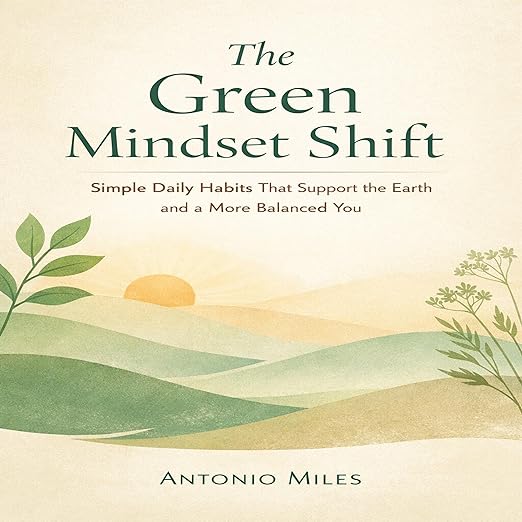
I have listened to enough sustainability audiobooks to recognize a particular genre problem: they tend to make you feel worse before they claim to make you feel better. The litany of what you are doing wrong is exhaustive. The list of what needs to change is comprehensive. The implicit message, whatever the author’s intention, is that your current life is a kind of ongoing environmental crime. The Green Mindset Shift by Antonio Miles takes a different entry point, and it is one that I think is genuinely underserved in this category.
At just over an hour, this is one of the shortest audiobooks I have reviewed in recent memory. That brevity is itself an argument: Miles is not trying to transform your entire life, reorient your politics, or turn you into a zero-waste advocate. He is trying to interrupt the cycle of eco-guilt and all-or-nothing thinking that causes people to disengage from sustainability entirely because the standard feels impossible to meet. The premise is that sustainable habits stick when they fit your actual life rather than an idealized version of it.
Our Take on The Green Mindset Shift
The framework here is psychological before it is practical. Miles begins with what he calls eco-guilt, the grinding awareness that you are not doing enough, and works from there toward a more sustainable way of thinking about sustainability. The shift from perfection to progress is not a new idea, but it is one that this particular genre has been slow to embrace, and Miles applies it with enough specificity to make it feel like genuine advice rather than reassurance. The six core habits outlined in the synopsis, reducing waste, using energy thoughtfully, staying consistent without burnout, building habits that work on low-energy days, are modest in scope and intentionally so.
Why Listen to The Green Mindset Shift
Myriam Berger’s narration is a genuine asset for this particular book. Her voice is calm without being soporific, and she brings a quality of grounded presence to the material that reinforces the book’s emotional argument. Listening to this on a morning walk felt like the right context: it is the kind of audio that asks to be absorbed rather than analyzed, and Berger’s pacing supports that mode of listening. The 4.9 rating among 42 reviews suggests a reader base that has found the approach genuinely useful rather than just aspirationally appealing.
What to Watch For in The Green Mindset Shift
No reader reviews are available for this title, which means any assessment of its weaknesses is necessarily provisional. What the synopsis and framing suggest is a book that will be too brief and too focused on mindset for readers who want practical depth, actionable systems for reducing waste, specific carbon accounting, DIY sustainability projects. The scope is intentionally narrow: this is a mindset intervention, not a how-to manual. At seventy-three minutes, it also cannot do what a longer book can do. If you are already past the eco-anxiety phase and into active sustainability practice, this is probably not the listen you need.
Who Should Listen to The Green Mindset Shift
This is for the listener who has been meaning to live more sustainably but keeps getting paralyzed by how much there is to change at once. It is for the person who has bought the reusable bags and then felt guilty about the plastic packaging on everything else. It is not for the already-committed advocate looking for advanced strategies, and it is not a comprehensive sustainability guide. Come to it as a reset rather than a complete program, and its brevity becomes a feature: you can finish it in your morning commute and carry something useful with you for the rest of the day.
A final word on the 4.9 rating: in a category that attracts a wide range of readers, from the deeply committed to the idly curious, a high rating on a short sustainability book often reflects the experience of people who came to it at exactly the right moment. The Green Mindset Shift is the kind of audiobook that resonates most with listeners who are genuinely stuck rather than those who are looking for their next advanced technique. If you recognize yourself in that description, the rating is probably a reliable signal.
Frequently Asked Questions
Is The Green Mindset Shift primarily a practical how-to guide or more of a mindset book?
It is primarily a mindset book. The focus is on changing your relationship to sustainability, specifically on reducing eco-guilt and building habits that fit real life rather than an ideal one. Practical tips are included, but they are secondary to the psychological reframe.
At just over an hour, is The Green Mindset Shift substantial enough to be worth the time?
That depends on what you are looking for. If you want a comprehensive sustainability guide, no. If you are feeling overwhelmed by environmental pressure and want a realistic, compassionate reorientation to the subject, the brevity is a feature: it is enough to shift a perspective without demanding more time than you have.
How does Myriam Berger’s narration suit this particular book?
Berger has a calm, warm delivery that aligns well with the book’s anti-anxiety approach. The narration reinforces the emotional tone of the content rather than working against it, which matters when the book is specifically trying to lower listener stress.
Is this book appropriate for someone who already practices sustainable living?
Probably not as a primary listen. The book is aimed at people in the early or conflicted stages of engaging with sustainability. Readers already committed to active environmental practice will likely find the scope too introductory.