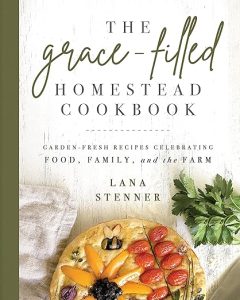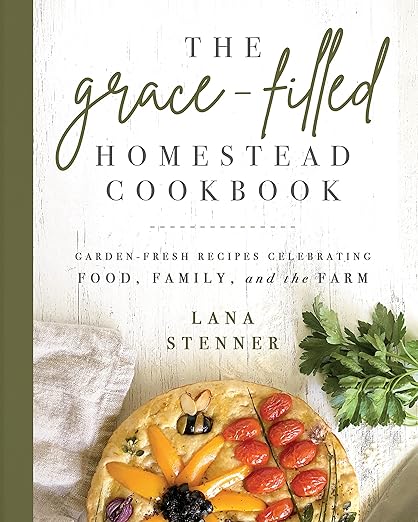
Cookbooks in audio form are a genuine test of whether the material can survive without its photographs. That question is especially pointed for a book like The Grace-Filled Homestead, which reviewers specifically praise for its colorful, beautiful images and its visual presentation. When Lily Barkley begins reading Lana Stenner's recipes into your ears, the lilac-glazed donuts, the wild-violet hot cross buns, the sugar plum cream cheese stuffed French toast, you are working from description alone. What I found, listening during a quiet Saturday morning, was that the descriptions were good enough to hold the imagination in a way I had not entirely expected.
Lana Stenner positions herself as a veteran homesteader, and the book carries that credential authentically. This is not a celebrity chef's glossy production or a trend-driven health cookbook with a restrictive philosophy. It is a seasonal recipe collection organized around what is actually available and beautiful at different times of year, organized into Spring, Summer, Fall, and Winter sections that give the whole book a structural satisfying rhythm.
Cooking as a Gift, Organized by Season
The philosophy underneath the recipes is worth noting because it shapes how the book feels to listen to. Stenner frames cooking not as a chore or an optimization problem but as a gift, something you give yourself and others, a form of connection and slower living that runs counter to the efficiency culture around most contemporary food content. That is not a revolutionary idea, but it is one that the book embodies consistently rather than stating once and forgetting.
The seasonal structure means the book doubles as a kind of agricultural calendar. Spring brings bacon-wrapped asparagus and lilac-glazed donuts. Summer offers raspberry lemonade bloom popsicles and sweet zucchini scones with apricot compote. Fall moves into rosemary roasted concord chicken and salted caramel cookie cake. Winter arrives with buttermilk biscuits with sage sausage gravy and creamy baked potato soup. The progression feels genuinely seasonal rather than arbitrary, and listening through it creates a particular kind of anticipation for each section's produce.
Lily Barkley's Enthusiasm, and Recipes That Actually Work
Lily Barkley's narration is a genuine asset. She reads the recipes with the enthusiasm of someone who actually wants to make them, which sounds like a low bar but is surprisingly uncommon. Cookbook narration can easily become rote, a list reader rather than an engaged voice. Barkley avoids that, and her warm delivery gives the lifestyle sections, about slow living and connection and the meaning of home cooking, appropriate emotional resonance without sentimentality.
Multiple reviewers noted that the recipes work. One described making Meema's Chicken Noodle Soup for in-laws who loved it; another reported that the mother-in-law had tried several recipes with wonderful results. That is the most practical endorsement a cookbook can receive, and it suggests that Stenner's instructions are clear enough to produce reliably good results even for listeners who cannot see the accompanying photographs.
Short on Runtime, Long on Homestead Charm
At three and a half hours, this is a relatively short audiobook. The print edition runs 222 pages with photographs, and the audio is necessarily leaner without the visual component. Listeners who primarily want a recipe reference will find the audio format less convenient than the print for kitchen use, you cannot bookmark an audio recipe the way you can dog-ear a page.
The homestead aesthetic is present throughout, which means the book is clearly speaking to listeners who share a certain affinity for slower, more deliberate domestic life. Those looking for quick weeknight solutions or urban cooking shortcuts will not find their audience here. The book knows exactly what it is for.
Warm Audio Companion for Homestead Cooking Fans
For listeners who already enjoy homestead and seasonal cooking content and want a warm audio companion for the kitchen or morning routine. The recipes are accessible enough for home cooks who are not professionally trained, and the seasonal organization makes it easy to find relevant content throughout the year. If you want to cook from the book regularly, the print edition makes more practical sense, but the audiobook is a genuinely pleasant way to absorb the philosophy and plan what you want to make next.
In Brief
- Narrator: Lily Barkley's warm, unhurried delivery suits the seasonal cookbook material; she brings genuine enthusiasm to the recipe descriptions without tipping into performative cheerfulness.
- Subjects: Seasonal cooking, slower living, farm-to-table home meals
- Tone: Cozy and grounded, with a strong sense of place and rhythm
- Bottom line: A seasonal homestead cookbook that succeeds as both recipe collection and lifestyle companion, the audiobook format works better than you might expect for this kind of material.
Is an audiobook a practical format for a recipe cookbook?
For cooking while you listen, no, you cannot easily reference a specific recipe on demand. For absorbing the seasonal philosophy, planning what to cook, and enjoying the descriptions of dishes, yes. Many listeners use the audio to identify recipes they then look up in the print edition.
How complex are the recipes, are they suitable for beginner cooks?
Reviewers describe the instructions as easy to follow and accessible for family meals or special events. The homestead cooking philosophy tends toward approachable techniques with high-quality seasonal ingredients rather than professional chef complexity.
Does Lily Barkley's narration add to the listening experience?
Yes. Reviewers and the tone of the content both benefit from a narrator who sounds genuinely engaged with the material. Barkley brings warmth to both the recipe sections and the lifestyle passages without over-performing either.