- Performance: Tom Casaletto reads with steady authority and zero editorializing, letting MacArthur's theological argument carry its own weight.
- What it covers: Lordship salvation, the cost of discipleship, faith and obedience
- Feel: Dense and rigorous, with genuine pastoral conviction beneath the theological precision
- Our call: A serious, demanding audiobook on evangelical theology that rewards listeners willing to engage with its full argument rather than skim for comfort.
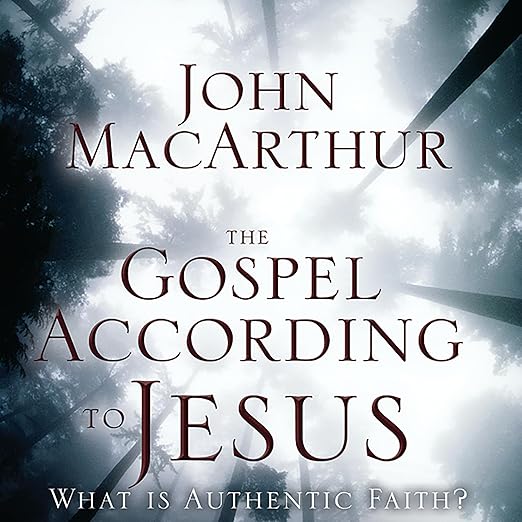
John MacArthur has never been accused of softening the edges. In a publishing landscape where Christian self-help often smooths over doctrinal complexity in favor of accessibility and encouragement, his 20th anniversary edition audiobook of The Gospel According to Jesus reads as a deliberate counterweight. I first came across MacArthur's work through a friend who spent years in evangelical ministry before leaving it, and his take on this particular book was ambivalent: 'The theology is airtight, but it doesn't leave much room.' That tension, between rigor and accessibility, between demand and grace, runs through every chapter of this recording.
The audiobook's central argument is that contemporary Christianity has produced what MacArthur calls 'easy-believism': a version of salvation that requires little more than a momentary assent, with no expectation of ongoing obedience, repentance, or transformation. MacArthur contends that this cheapens the gospel and misrepresents what Jesus actually preached. His method is exegetical, moving through specific passages of the New Testament to argue that faith and lordship submission are inseparable, that you cannot genuinely receive Jesus as Savior while refusing him as Lord. This is sometimes called 'Lordship salvation,' and it was a genuinely contested theological debate when the book first appeared. The 20th anniversary edition adds a new chapter reinforcing these positions, which suggests MacArthur finds the argument no less urgent today.
Tom Casaletto narrates with a voice that suits the material: clear, measured, authoritative without being theatrical. He handles the long expository stretches, where MacArthur works through Greek vocabulary and cross-references multiple Gospel passages simultaneously, with the kind of pacing that keeps the listener anchored rather than lost. Casaletto does not editorialize through his delivery, which is the right call for a text this theologically charged. Listeners who disagree with MacArthur's conclusions should be able to engage with the argument on its merits rather than feeling pushed by a narrator who has already decided.
What Works
For Christians who have spent time in evangelical or Reformed circles, MacArthur's argument will be familiar, if not always comfortable. One reviewer quoted from the text directly: 'The gospel in vogue today holds forth a false hope to sinners. It promises them they can have eternal life yet continue to live in rebellion against God.' That is a serious charge, and MacArthur backs it with extensive Scripture rather than rhetoric alone. The audiobook format at twelve and a half hours gives the argument sufficient room to develop its full weight, which it needs. A shortened version of this argument risks seeming simply severe; the full version reveals the pastoral concern underneath the theological precision.
The book was praised by one reviewer as 'extraordinarily sound and faith affirming,' which captures the experience for readers who already share MacArthur's theological convictions. For those listeners, this audiobook functions as a rigorous articulation of what they believe, with the tools to defend it. For those approaching from outside that tradition, it offers a serious intellectual engagement with questions about faith, obedience, and what salvation actually means, whatever your final conclusions.
Before You Commit to The Gospel According to Jesus
The audiobook's strength is its internal consistency. MacArthur argues from a specific hermeneutical framework and applies it with discipline across the text. Listeners who find his framework persuasive will find this experience rewarding and reinforcing. Listeners who bring different theological assumptions, particularly around the relationship between faith and works, or around once-saved-always-saved positions, will find themselves disagreeing at a structural level rather than at the margins. MacArthur is aware of these counterarguments and addresses several of them directly, which makes for genuine intellectual engagement rather than a one-sided presentation.
At twelve and a half hours, this is a long listening commitment. The pacing is deliberate and the density of scriptural cross-referencing rewards close attention. This is not an audiobook to put on in the background while doing something else. It rewards the kind of focused engagement that theological reading traditionally requires, which the audio format can actually facilitate better than print for some listeners, particularly if you can pause and reflect.
The theological debate MacArthur enters, sometimes called the Lordship Salvation controversy, was particularly acute in the 1980s and 1990s when figures like Zane Hodges argued strenuously that saving faith required no commitment to obedience whatsoever. MacArthur's original text was a direct response to that position, and knowing that context helps the audiobook listener understand why certain arguments are constructed as refutations rather than simple expositions. The 20th anniversary addition extends the argument into the present, suggesting that whatever shifts have occurred in evangelical culture since the original publication, MacArthur finds the core problem, what he characterizes as a cheapening of salvation's demands, as persistent and as urgent as ever. Casaletto's steady narration gives that sense of ongoing urgency a voice that does not feel like polemic, which is the right approach to material that could easily tip into it.
Who John F. MacArthur Is Writing For
Christians from Reformed or evangelical traditions who want a rigorous defense of Lordship salvation theology will find this audiobook carefully argued and deeply sourced. Pastors, theology students, or lay readers engaged with questions about faith, repentance, and obedience will find substantial material here. Listeners who are curious about the internal debates within evangelical Christianity, particularly around what conversion actually requires, will find MacArthur's position clearly and seriously presented. Those who prefer a less doctrinally demanding approach to Christian devotional content will likely find the audiobook more confrontational than encouraging.
Frequently Asked Questions
Does this audiobook require prior theological training to follow?
No, though familiarity with evangelical Christianity will help. MacArthur defines his terms carefully and works through the scriptural basis for each argument, so determined newcomers can follow along, but the book assumes basic biblical literacy.
What does the 20th anniversary edition add to the original audiobook?
A new chapter reinforcing MacArthur's core argument that Lordship salvation is the authentic gospel of Jesus, which suggests he finds the theological debate still relevant rather than settled.
How does this audiobook compare to other MacArthur titles for new listeners?
This is one of MacArthur's most foundational works, dealing with core questions of salvation and conversion that underpin much of his other writing. It is a reasonable starting point for understanding his theology, though it is dense rather than introductory in feel.