Quick Take
- Narration: Virtual Voice narrates this science-forward title, and the mismatch is real, the dry, synthetic delivery flattens the clinical enthusiasm that makes Brind’s central thesis feel urgent. Listenable, but barely.
- Themes: Amino acid deficiency, chronic inflammation, Western diet pathology
- Mood: Dense and clinical, occasionally rallying into genuine conviction
- Verdict: If you’re already researching glycine supplementation and want the research scaffolding, this works as background listening, but the Virtual Voice narration undercuts the passion behind a genuinely interesting scientific argument.
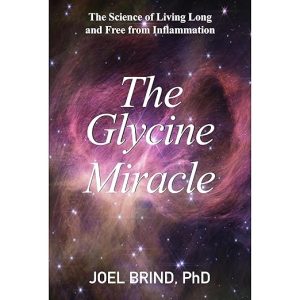
I came to this one on a Tuesday afternoon, driving back from a long errand run, half-listening to a podcast about longevity biomarkers. Someone in the comments section of a forum had mentioned glycine in passing, casually, the way people now mention collagen or magnesium, and I wanted something with actual research behind it rather than another supplement industry newsletter. Joel Brind’s background as a PhD in life sciences lent the title credibility, and four hours felt manageable enough for a single afternoon.
The listening experience is harder to recommend than the underlying material. Virtual Voice renders Brind’s seventeen years of research with the same tonal flatness it brings to instruction manuals. There are moments where the argument builds genuine momentum, particularly when Brind explains why the medical community’s framing of inflammation as inherently pathological may have gotten things backward, and you sense that in a live reading, or even a competent human narration, those moments would land. Through Virtual Voice, they arrive at the same frequency as everything else.
The Inflammation Reframe at the Center of Everything
The most interesting claim in this audiobook is not “take glycine.” It is a more fundamental argument about what inflammation actually is and what conditions allow it to become destructive. Brind contends that inflammation is a natural, appropriate immune response, and that the chronic inflammation epidemic plaguing Western populations isn’t a failure of the immune system itself but a consequence of glycine deficiency making the system’s first-response mechanism impossible to regulate. This is a meaningful distinction, and it’s the kind of scientific reframing that either gets vindicated over decades or gets quietly abandoned. Brind is genuinely making a case, not just recommending a supplement.
Reviewers note that the material skews technical. One listener flagged it as “rather technical” and a potentially difficult listen for some, which is accurate. Brind is writing for a general educated audience but not dumbing the biochemistry down to metaphor alone. There are passages that require actual attention if you want to follow the mechanism he’s describing. In audio, that kind of technical density works only when a narrator can modulate pacing and emphasis to signal what matters. Virtual Voice cannot do this.
What the Research Trajectory Looks Like in Practice
The practical portion of the audiobook covers what a glycine supplementation protocol might look like, dosing, timing, form. One reviewer reported taking three grams in water twice daily with what they described as calm energy and a notably sweet taste, which tracks with glycine’s known flavor profile. Brind situates these practical recommendations inside the research context rather than leading with them, which is the right order of operations for a scientifically serious book. The outcome is that you understand why before you hear what to do, which is exactly how nonfiction health writing should be structured.
The audiobook runs four hours and eighteen minutes, which is relatively short for science nonfiction. That brevity is both a strength and a limit. Brind covers the inflammation-glycine hypothesis, the implications for conditions like arthritis, diabetes, cardiovascular disease, and cancer, and the supplementation argument. What he doesn’t cover is the current regulatory and clinical research landscape beyond his own work, which would have grounded the argument more fully for skeptical listeners.
Who This Actually Serves
The audience for this audiobook is narrower than the supplement-curious public. If you’re already somewhere in the glycine or anti-inflammatory research rabbit hole, Brind’s argument will consolidate and deepen what you’ve already read. If you’re coming in cold, expecting a clean consumer-health listen with accessible analogies and practical meal plans, the technical density and synthetic narration will create real friction. The thesis is specific enough that casual interest alone may not carry you through the harder passages. The four-hour runtime is forgiving, but it asks more of the listener than a typical wellness title.
Who should listen: Readers already familiar with glycine research, longevity science enthusiasts with a tolerance for biochemical specificity, healthcare professionals looking for a patient-accessible summary of Brind’s thesis, anyone who found the general inflammation-diet literature too vague and wants the mechanism explained.
Who should skip: Listeners seeking broad wellness guidance or practical diet advice, anyone for whom Virtual Voice narration is a dealbreaker, people expecting the clinical evidence to be compared against competing research frameworks, Brind argues his position, he doesn’t arbitrate it.
Frequently Asked Questions
Does Joel Brind address the safety of high-dose glycine supplementation in this audiobook?
Brind covers dosing ranges and general safety considerations, framed within his research context. He does not extensively engage with contraindications or interactions with medications, so listeners with existing health conditions should consult their physicians before acting on his protocols.
Is this audiobook suitable for someone with no science background?
It depends on your tolerance for biochemical terminology. One reviewer described it as ‘rather technical’ and noted that it requires effort to follow. Brind does explain concepts rather than assuming prior knowledge, but this is not a simplified wellness audiobook, it reads closer to a condensed research monograph.
What specific conditions does Brind argue glycine supplementation may address?
Brind’s thesis covers chronic inflammatory conditions broadly, with specific mention of arthritis, diabetes, cardiovascular disease, and cancer as conditions he links to glycine deficiency-driven dysregulation of the immune response to physical and chemical stressors.
How does the Virtual Voice narration affect the listening experience for a science-heavy title like this?
Significantly. Virtual Voice cannot modulate pacing or emphasis, which matters considerably when the material requires listeners to distinguish between foundational claims and supporting evidence. The narration renders the argument in a monotonal delivery that makes concentration harder during the denser biochemical passages.